Posts Tagged ‘rules’
National Teacher Appreciation Day
National Teacher Appreciation Day was this week on May 7 2013. This is a wonderful idea. Teachers deserve much more appreciation than they currently receive.
Teaching and education are the tool and the outcome in a student’s life. Much like the artist uses a brush to paint. The teacher is the artist, teaching is the brush and education is the finished canvas.
Teaching has been my journey for the last 27 years. I am not a school teacher any more but I still consider myself an educator. I teach, I coach, I present, I motivate, I do public speaking, I write, I do community work and in all those things I educate kids and grownups to find the gift they have inside let it shine.
Know Your Partner: Appearance, Work, Money and Health
Welcome to the third installment of “Know Your Partner”. In this series war are talking about questions you and your partner should discuss before you move in together, get married or have kids. These questions will help you find your partner’s “musts”. To read more about “musts”, check out Know Your Partner: Musts. In the last post in the series, we listed questions about relationships, every day life, family background and friends. This post covers questions about appearance, work, money and health.
Know Your Partner: Questions to Ask
Last week, we talked about how every person has “musts”, things they absolutely cannot live without. It is important for each person in a couple to know their partner’s “musts” before they decide to move in together, to get married or to have kids. This week, I thought I would give you a list of questions to help you along your journey. This list includes questions about relationships, everyday life, family background and friends.
This list is very important to use in different relationship situations:
Before moving in with someone.
Before marriage.
Before deciding to have kids.
On anniversaries – in order to update each other about the ways we have changed.
When experiencing relationship conflict.
Before making the decision to break up a partnership.
There are a few rules to remember when asking these questions. This will make the question and answer process more effective and successful:
Know Your Partner: Musts
Any relationship is a form of agreement between two or more people. The deeper the relationship, the more things you will need to agree on for your relationship to stay positive. Some relationships, like marriage and having children together, are more important than others. They have a huge impact on our lives and our futures. I call them love agreements.
Love agreements will change over time. Just how they change will depend on the circumstances. Each person changes within themselves and their agreements with each other change accordingly. For couples, it is very important for each side to make sure they are “sailing in the same direction”. While each of them may change in different ways, together, they want to be going the same way. If one wants to sail north and the other’s greatest desire is to sail south, then their relationship will suffer. One or both of them will have to compromise.
When we talk about relationships, the word compromise pops up as a desired outcome. I think compromise is important, but I also believe that some compromises cannot last for very long. They are often the source of conflict and can cause much heartache.
A Good Start for the First Day of School
In Australia, the new school year starts today. I sent some rules about starting the year on a positive note to all my clients, which I would like to share with you too.
Even though the first week of the school year is not very important in terms of learning material (because most teachers do not teach new things), I believe it is one of the most important weeks. It is a pivotal point for setting the right frame of mind to ensure a good year.
Most kids are very excited to start the year. They have mixed emotions of anticipation and fear. Whatever happens in the first week of school, will determine which will take over – the fun and excitement or the dread, from the new teacher, academic performance or lack of friends.
Majority Rules
This post was inspired by Ronit’s diversity education, by our family’s life in several countries around the world, by Eden’s recent foray into academic research, by our many dealings with people of different communication styles, bust mostly by my occasional frustration of being a minority…
Having grown up in one place for 28 years and then moved to another country, Ronit and I had to change many basic assumptions about what everyone knows, how everyone thinks and what everyone expects. It is called Culture Shock. We already knew quite a bit about the United States (I had even been an exchange student there), so the change did not shock us, but boy was it different.
Now imagine going from that to Thailand! Hardly any English, driving on the left, completely different social norms and ethics, hot, humid, rainy, full of mosquitoes… What everyone did in Thailand was very different to what everyone did in Texas.
The thing is, in each one of these places, people who had grown up there and had never been anywhere else could not perceive anything other than what they had been accustomed to. To them, “everyone” was everyone they knew and that was good enough.
How to Keep an Open Mind
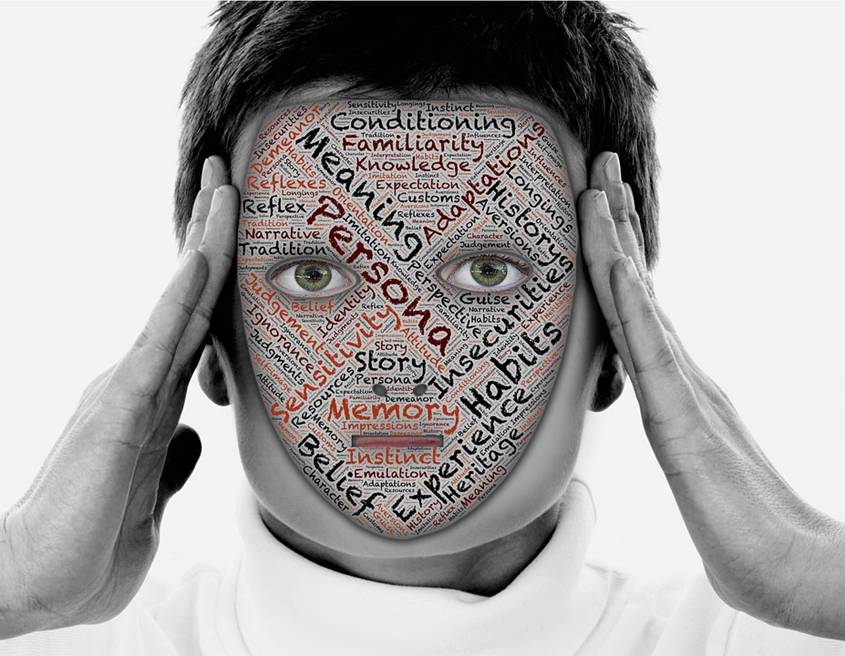
As soon as you start any personal development, you bump into the term “beliefs”. These are thought patterns that are set in our mind, mental shortcuts we use to make decisions quickly. The catch is that by not questioning our beliefs, we no longer have an open mind about everything and sometimes, keeping an open mind is just what we need.
Imagine you are learning to drive. Every little task requires mental effort and after driving around for half an hour, you get out of the car feeling exhausted. Over time and with practice, however, you get the hang of it and then you just go where you want to go.
Now, imagine you have been driving on the right side of the road for 10 or 15 years and you move to a country where driving is done on the left side of the road. Continuing to believe in your training and to assume that everyone drives on the right side of the road can be fatal.
Life is the same. As babies, we have to figure everything out, often with enormous effort, until we know it and start doing it as a matter of course. When we grown up, the circumstances change – we go to school, we grow in size, we move to another environment, we become adults, we have children, we grow old. Holding on to beliefs from our first years of life may not be fatal, but it can seriously complicate our life.
What Did You Expect?
By definition, in order to be disappointed, your expectations must be higher than your perception of reality. I know many parents who are disappointed in their children, sometimes to the point of declaring their disappointment for the whole world to know, but as a parent looking from the outside, I think their expectations are just too high.
During life coach training, we discussed expectations and our instructor said that to be happier with our life, we should lower our expectations. I nearly exploded. I had grown up in a world that operated according to standards. I had been taught those standards, but never realized who had set them or where they had come from. They had just been there as facts of life, so lowering them was out of the question.
But when we broke for lunch, we kept talking about various situations that were causing us disappointment and robbing us of our happiness and it helped me to consider other people’s expectations without being emotionally involved. Since I had no attachment to their expectations, I could compare the options with a cool head just by looking at the outcomes.
For example, one of my course-mates (I will call her Fiona) lived in a blended family, in which she had two teenage children and her husband had two more. She spent most of our lunch break telling us how much better her own kids behaved and how rude her husband’s daughter was for leaving her clothes lying around and having a messy room, saying, “That’s no way to live. She leaves a mess all over the place and I have to pick up after her”.
I decided to be a bit of a pest and asked her, “Do you really have to pick up after her?”
“Of course I do”, she said quickly and confidently, “Somebody’s got to do it”.
“Really? What will happen if you leave her clothes lying around and wait?”
Troubled Teens: Terrible Times
In the last three weeks, I gave you a sneak peek into teenagers’ minds. Many parents say to me, “If I only knew what’s happening in their mind…” and I think they have only forgotten what was on their mind when they were teens, or maybe they have forgotten the struggles their friends had during the toughest periods of their life – adolescence.
Here are the last 5 typical teenager thoughts and tips to prevent or eliminate them.
I prefer to be alone
“Thank God they are going away this weekend. I can have the house to myself. I can watch TV as much as I like, play the computer as much as I like and eat whatever I want. Freedom at last!”
What parents can do
When kids reach the teen years, they loves to be on their own sometimes and it is normal and healthy for them to be on their own. Even bringing a babysitter to stay with them (to take care of the other kids, of course) can give them that sense of freedom and it is not a sign of your good or bad parenting.
Having an evening when they can do something different is very attractive to teenagers and as a parent, you need to provide them with opportunities for such time. I remember myself at the age of 15 having the time of my life when my parents were away for the weekend. I did all the same things I did when they were there, but it felt better. On evenings when they went out, we played hide and seek in the dark and I still have wonderful memories of those special days.
Troubled Teens: Scary Times
This series is meant to help parents of teens and parents of kids who are turning into teens understand what teenagers think and what they go through as part of this tough period of their life. Each “twisted” thought is followed by something parents can do to help their teenagers and everyone else involved.
As in previous chapters, here are 5 things teens think and feel that scare them and make them act weird, and what you can do about them. I hope it will help you find alternative ways to address the issues and prevent them from keeping those thoughts any longer.
My parents are cruel and weak
“I think my parents are cruel. They hate me. They scream, shout and always tell me I’m wrong. They brought me into the world to torture me. They are weak. How can I trust them when I need help if they are so weak?”
What parents can do
When children are upset, they may think that you are behaving the way you do with the ultimate purpose of hurting them. Many parents mistake discipline for power when in fact, abusing your power and yelling, shouting or telling kids they are wrong are signs of weakness and may cause your children, especially teenagers, not to trust you to support them when they need help. This is because using pressure and force is all about you, not them.
| Book your private life coaching with Ronit Baras and learn how to be happy in life |