• Skip to primary navigation
  • Skip to main content
  • Skip to primary sidebar

Family MattersPractical Parenting Blog

  • Home
  • Series
  • About Ronit Baras
  • Books by Ronit Baras
    • Motivating Kids
    • Be Special, Be Yourself for Teenagers
    • Reflections
    • In the Outback with Jasmine Banks
    • The Will
    • * Your Cart
    • * Secure Checkout
  • Contact
    • Join Us

Home » Family Matters » Page 9

Reading Challenges: Children with Weak Visual Perception

Eye

There are many possible causes for kids’ reading challenges. Sometimes, the kids need to deal with such overwhelming emotions they cannot learn anything, including reading. Other time, the teacher is not teaching how to read properly (yes, you will be surprised how many kids cannot read because their teachers did not teach them how to read properly).

However, some children have reading challenges due to their weak visual ability. This means that their brain is wired so that they are not very good at absorbing and processing visual input. It is important to understand that this is a brain function and has nothing to do with eyesight.

Many parents think that when their kids cannot read, we just need to read with them more, but that is not the case. It is like giving someone who cannot hold a pen different kinds of pens to solve the problem. Yes, reading more brings some benefit, but a weak visual ability requires stimulating the visual perception at a more basic level. Once this is done, reading becomes easier and more natural and no longer frustrates the child.

Strong visual perception is essential for good decoding and memory of symbols. Reading requires mostly visual perception to analyze and memorize, and some auditory support for non-basic words.

Read Reading Challenges: Children with Weak Visual Perception »

Published: August 23, 2016 by Ronit Baras
Last modified: December 26, 2019In: Parenting, Education / Learning Tags: perception, reading, activity, k-12 education, academic performance, literacy, vision, kids / children, special education, tips, how to, education / learning, visual, practical parenting / parents, learning disabilities

What Kids Really Need to Grow Up Healthy, Successful and Happy

Little girl looking happy

Children do not really choose their parents (I say “really” because some people claim that we chose our parents in some karmic or spiritual way). Like it or not, they are born helpless and needy. Therefore, the power over the relationship is in the parents’ hands and the fate of the kids depends on the parents’ ability to care for them.

During my parenting workshops and seminars over the last 30 years of my career, I have seen many thousands of parents. I can tell you that parents are full of love for their kids and want to give them the world. If not, I would never have met them in my line of work…

Parents want their children to be healthy, successful and happy. That’s it! If I could sum up all of parents’ desires, they would fit into those three areas. I meet them when they feel they cannot do that, because their kids are not healthy (which is very hard for a parent), they struggle at school, lack social skills, have behavior issues or are simply unhappy. Too many times, their children need to overcome two or even three of these things.

My conclusion is that parents’ hearts are in the right place, but action always beats intention. Parents simply do not know what kids need in order to be healthy, successful and happy.

Read What Kids Really Need to Grow Up Healthy, Successful and Happy »

Published: August 18, 2016 by Ronit Baras
Last modified: February 28, 2020In: Parenting, Kids / Children Tags: acceptance / judgment / tolerance, behavior / discipline, emotional development, practical parenting / parents, focus, how to, role model, social skills, family matters, kids / children

What Others Think about You Is … None of Your Business

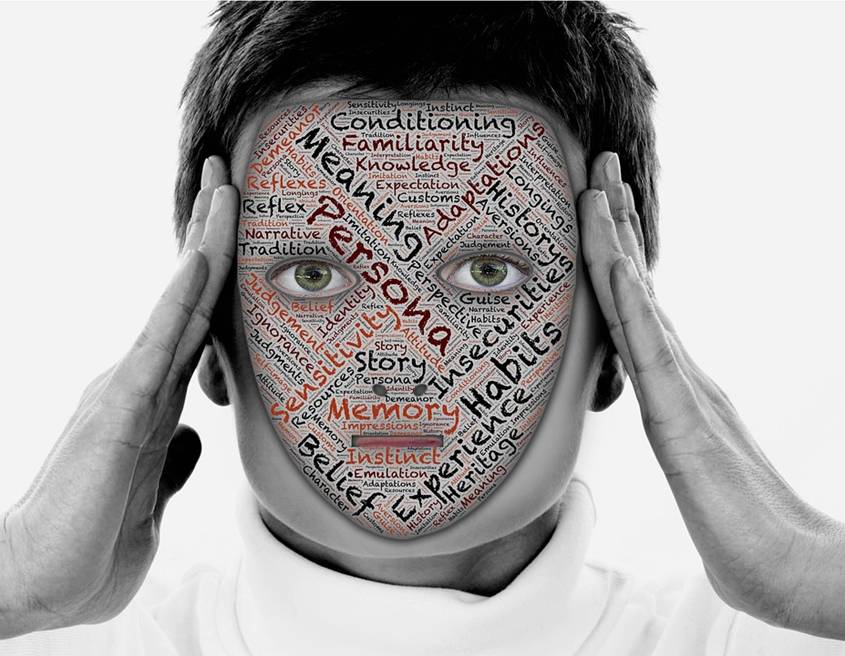
Man covering his face with a mask showing words like meaning, persona, memory, conditioning, etc

When I was young, if someone asked me to complete the sentence “What others think about you is …” I would have said, “the most important thing in life”. I thought that, because of how I grew up. My mom, who is over 75 years old now, still thinks that we live to impress other people and navigate our life based on what they think about us.

When I studied Education, I realized that most parents in the world teach this to their kids. At first, they say, “Whatever your parents think about you is the most important thing in life”. Later on, they say, “What your teachers think about you is also important”.

They are all very surprised when their kids become teenagers and transfer this to their peers and add, “Whatever your friends think about you is the most important thing in the world”.

It is a natural progression. If you practice worrying and navigate your life based on what others think about you, you become good at … worrying and navigating your life based on what others think about you.

Simple!

When you follow this path, you never learn who you are and how to navigate life based on what you think of yourself.

Read What Others Think about You Is … None of Your Business »

Published: August 4, 2016 by Ronit Baras
Last modified: September 25, 2026In: Parenting, Education / Learning Tags: responsibility, conflict, practical parenting / parents, men, positive attitude tips, teaching / teachers, art, leadership, emotional intelligence, stress / pressure, how to, acceptance / judgment / tolerance, role model, behavior / discipline, fear, self confidence / self esteem / self worth, beliefs, personal development / personal growth / personality development / self improvement, rules, education / learning, school, Life Coaching, expectation, love, social skills, emotional development

Children with the Kinesthetic Communication Style

Kinesthetic kids love mess. Two boys cutting out Halloween pumpkins

The idea that all kids are the same is false and brings parents and teachers into lots of trouble. Every time these kids are not “the same” as others, they think something is wrong with them. Nothing is wrong with them! They are just different and we should all be happy that there is not such a thing as “one size fits all”.

In my kids’ assessments, I check children’s communication styles. If I know their communication styles, I know what challenges they have and why, and I know the best ways to introduce new information to them.

During our sessions together, I pay attention to how they move. I check if they stand up while they work and if they move their legs or other body part. I notice if they are social and friendly and pay attention to how they talk about others. Moving a lot and talking about emotions, fairness, kindness and caring are typical for kinesthetic children.

Read Children with the Kinesthetic Communication Style »

Published: July 26, 2016 by Ronit Baras
Last modified: September 25, 2026In: Parenting, Education / Learning Tags: gender, kinesthetic, touch, acceptance / judgment / tolerance, love, behavior / discipline, emotional intelligence, education / learning, motivation, practical parenting / parents, communication styles, teaching / teachers, learning styles, activity, communication, assessment, focus, social, school, academic performance

Play Wizard Games to Strengthen the “Wanting Muscle”

Gandalf the White Wizard

In my kids’ assessments, I often need to discover what motivates the kids, so I play wizard games with them.

I believe that wanting is the essence of life. This is the battery that keeps us moving. I know that many parents tell their kids that life is not about what they want, when they really want to say that in life, we do not always get what we want. This is true, but I think they are making a mistake. Life is all about wanting.

Even in Buddhism, the intention or desire is what starts everything. Without it, we do nothing at all. We do not think, do not feel, do not do, do not move, do not connect and do not even search for happiness and good life. Without wanting, life has not meaning.

What do you want?

This is a simple question and your answer reveals a lot about you. I teach my clients to ask themselves this question from time to time and answer it.

Read Play Wizard Games to Strengthen the “Wanting Muscle” »

Published: July 21, 2016 by Ronit Baras
Last modified: December 26, 2019In: Parenting, Personal Development Tags: change, motivation, assessment, imagination, personal development / personal growth / personality development / self improvement, practical parenting / parents, values, how to, kids coaching

Tips for Teens: How to Make Good Career Choices

Wrench and a note saying "job search" in the back pocket of jeans

Teens have a bad reputation. Many people believe that they generally make bad choices, misbehave and lash out in ways that hurt them (and others) later. Among other things, they think that teens do not know how to make good career choices.

I have had the honor of working with many teens. This has given me a chance to prove to many of them, and to their families, that the bad reputation teens have is wrong. There are always teens who choose well, behave well and do well. And if they can do it, so can other teens!

Many of my clients share teen horror stories, like “You know teens. They never have any money”. I do not know what they are talking about. My own teens have always had money, and it was their own money.

Another common belief is “You know teens. They don’t want to work”. No, I do not know, because my own teens have always wanted to work. My kids also have friends who started working as soon as they could and are doing very well.

Read Tips for Teens: How to Make Good Career Choices »

Published: July 19, 2016 by Ronit Baras
Last modified: December 26, 2019In: Parenting, Teens / Teenagers, Success / Wealth Tags: attitude, teens / teenagers, parenting teens, focus, tips, how to, practical parenting / parents, choice, beliefs, decision making, career, academic performance

Use Your Self-fulfilling Prophecy to Help Your Kids Succeed

3 happy sisters

What does “self-fulfilling prophecy” have to do with good education and helping your kids succeed? Everything!

To raise our children to be successful, happy, healthy and productive grownups, we need a holistic approach. Yet our society and education system take a different approach. Governments spend billions of dollars every year to establish and run educational institutes where kids learn literacy and numeracy. Children dedicate 13 to 15 years of their life to learning things that will play a small part of their adult life.

Do not get me wrong, I think it is important to learn to read. I am also a qualified math teacher and think math is important. But tell me, out of a week of your life, with 24 hours a day and 60 minutes every hour, how much time do you analyze poems or find square roots of numbers? Do your amazing English and math abilities determine how happy, successful, healthy, friendly and productive you are?

I wish!

Learning depends greatly on the self-fulfilling prophecy of the teacher. Yes, I know, it sounds harsh, but the quality of the learning is highly dependent on what goes on in the teacher’s mind (and in the holistic approach, parents are also teachers). Every time I finish a day of professional development for teachers, the teachers are surprised to discover that what they think of the students manifests itself in the students’ behavior, social interactions and academic achievements.

Read Use Your Self-fulfilling Prophecy to Help Your Kids Succeed »

Published: July 14, 2016 by Ronit Baras
Last modified: September 25, 2026In: Education / Learning, Parenting Tags: art, teaching / teachers, success, beliefs, society, perception, intelligence, self-fulfilling prophecy, projection, k-12 education, school, education / learning, love, expectation, men, practical parenting / parents

Your Child’s Subconscious Mind Has No Sense of Humor

Upset expression saying It's not funny!

When people ask me to summarize my studies, I say they were all about how the brain works. The first four years focused on how to use this knowledge to stimulate learning. Later on, I learned how to work with the subconscious mind to avoid misery and have more success and more happiness.

Learning about the brain is a never-ending quest. There is much research in the world about the brain and its functions in health, in success, in relationships, in learning and in everyday life. Over the years, I have tried to share my learning about the brain and its functions through this blog, especially in relation to parenting and education.

Why parenting and education? Because these two areas are very close to my heart. Since you are reading this, you probably care about them too.

Today, I would like to share some insight that is very important in parenting and in education. I want to tell you how the conscious and the subconscious minds work. Specifically, I want to tell you about how the subconscious mind deals with humor.

Read Your Child’s Subconscious Mind Has No Sense of Humor »

Published: July 12, 2016 by Ronit Baras
Last modified: July 12, 2016In: Parenting, Education / Learning Tags: responsibility, behavior / discipline, values, self confidence / self esteem / self worth, emotional intelligence, emotional development, how to, practical parenting / parents, beliefs, Life Coaching, sarcasm, interpretation, humor, kids / children, communication, acceptance / judgment / tolerance

Raising Children with “The Disease to Please”

The Disease to Please

Children are affected strongly by their emotional state. When I work with children, I can see their performance decrease when they are emotionally preoccupied. Some kids are affected more and others less, but all of them drop in performance when they are down.

Kinesthetic children are typically affected more, because they are very sensitive to the people around them. These are the kids who can “sense” others around them and all they want is for “everyone to be happy and nice to each other”.

Children who are highly sensitive to pressure are at risk of developing “the disease to please” – dependence on external rewards and oversensitivity to pressure. It is the perception that other people’s feelings are so important that they trump your own.

In most cases, “the disease to please” comes from fear of rejection, which most people want to avoid. Many people have this disease and they got it during their childhood. We can say that this kind of disease is contagious and we catch it from our parents…

Read Raising Children with “The Disease to Please” »

Published: July 8, 2016 by Ronit Baras
Last modified: September 25, 2026In: Parenting Tags: perception, kinesthetic, drugs, kids / children, communication, acceptance / judgment / tolerance, love, behavior / discipline, men, self confidence / self esteem / self worth, art, emotional development, emotional intelligence, practical parenting / parents, how to, choice, motivation

Addiction in the Family

Young woman smoking

Addiction a dependency on an object, a substance or an activity. As hard as it is to admit, we are all addicted in some way or another. If you want to know if you are addicted do something, take it out of your life for a week and watch your reaction.

People can be addicted to food, phone, TV, a person (like their spouse), work, coffee, alcohol, cigarettes, glue, sex, medication, gambling, drugs and more. I had a friend who was addicted to pain killers. She took them as if she was eating candy, and it became obvious she had an addiction because she could not cope without them and needed more and more of them over time.

It is very important to remember that every addiction we develop is an attempt to fill an emotional and/or physical “hole”. We want it to give us the feeling we are missing without it. This is as true when we talk about drugs as it is when we talk about food.

Read Addiction in the Family »

Published: July 6, 2016 by Ronit Baras
Last modified: March 19, 2021In: Health / Wellbeing, Family Matters Tags: control, change, alcohol, family matters, needs, health / wellbeing, personal development / personal growth / personality development / self improvement, drugs, feeling, responsibility, addiction

  • « Go to Previous Page
  • Page 1
  • Interim pages omitted …
  • Page 7
  • Page 8
  • Page 9
  • Page 10
  • Page 11
  • Interim pages omitted …
  • Page 96
  • Go to Next Page »

Get Happiness by Email

Sign up to receive posts by email and get my free mini-course Seven Emails with Seven Secrets for Seven Weeks to boost your personal development


    Books by Ronit Baras

    • What motivates your child? Read Motivating Kids by Ronit Baras Motivating Kids From: $9.95
    • Reflections by Ronit Baras Reflections From: $5.99
    • Be Special Be Yourself for Teenagers by Ronit Baras Be Special, Be Yourself for Teenagers From: $5.99
    • In the Outback with Jasmine Banks by Ronit Baras In the Outback with Jasmine Banks From: $5.99
    • The Will by Ronit Baras The Will From: $5.99

    Be Happy in LIFE logo
    Book your private life coaching with Ronit Baras and learn how to be happy in life

    Girl speaking at student leadership programLeaders are not born. They are made. Bring this Student Leadership Program to your primary school or high school and you will create a community of empowered, inspired student leaders, parents and teachers.

    You’re Reading a Top Parenting Blog

    Feespot Parenting Blogs80 Best Family Blogs to Follow in 2026Top 50 Amazing Parenting Blogs 2017

    Related Links

    • Be Happy in LIFE – Life Coaching
    • Personal Growth Web
    • Tsoof Baras – percussionist, composer and producer
    • Noff Baras – Screen Actor & Model

    Primary Sidebar

    Your Cart

    Ready to be happy?

    Happy woman holding a cup in the snow
    Be empowered and set your spirit free!

    Engage Ronit as Your Life Coach »

    Speaker Bookings

    Ronit Baras - Practical Parenting Blogger
    Book Ronit as a Speaker for Your event »

    Join Us on Social Media

    Facebook logo Twitter logo Linkedin logo Pinterest logo RSS feed icon

    Give to Receive

    Kiva - loans that change lives

    Contact Us · Subscribe · Terms of Use / Privacy Statement · Return & Refund Policy · Sitemap

    Copyright © 2026 Be Happy in LIFE · Built and powered by Get Business Online

    Secure HTTPS

    • Home
    • Series
    • About Ronit Baras
    • Books by Ronit Baras
      • Motivating Kids
      • Be Special, Be Yourself for Teenagers
      • Reflections
      • In the Outback with Jasmine Banks
      • The Will
      • * Your Cart
      • * Secure Checkout
    • Contact
      • Join Us