• Skip to primary navigation
  • Skip to main content
  • Skip to primary sidebar

Family MattersPractical Parenting Blog

  • Home
  • Series
  • About Ronit Baras
  • Books by Ronit Baras
    • Motivating Kids
    • Be Special, Be Yourself for Teenagers
    • Reflections
    • In the Outback with Jasmine Banks
    • The Will
    • * Your Cart
    • * Secure Checkout
  • Contact
    • Join Us

Home » responsibility » Page 4

Assertiveness: It is better to be Wise than to be Right

I believe in me with a man jumping for joy

What a shame! Assertiveness is not something we learn at school, so if you cannot learn it from your parents, because they never learned it from their own parents, then you can be easily manipulated and pushed over.

Everybody hates being pushed over. I see it as a natural part of life. We all do everything we can to improve our position, and if others are in our way, we push them aside. Sometimes, well, most times, we hurt people along the way without any bad intentions. Assertiveness can help us do better in life without hurting anyone.

Many of my clients mainly need assertiveness. When we do not have it and we cannot express our needs and assert our rights, we resort to either avoidance or aggression. It is the old “fight and flight” response. We see a lion or a snake and we either run away or attack. So when I see aggression or avoidance, I know that assertiveness is needed.

Read Assertiveness: It is better to be Wise than to be Right »
Published: September 15, 2016 by Ronit Baras
Last modified: December 26, 2019In: Personal Development Tags: work life balance, assertive, aggressive, responsibility, decision making, emotional intelligence, positive attitude tips, how to, stress / pressure, choice, acceptance / judgment / tolerance, empowerment, personal development / personal growth / personality development / self improvement, control, freedom, wisdom, expectation, change

The Expectations Paradox: Mindfulness is the Cure

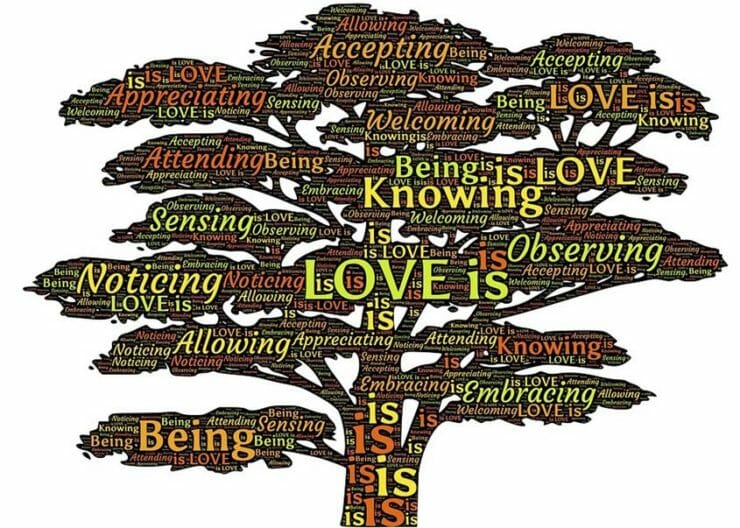
A tree with words about what love is

In the last two posts about the expectations paradox, I explained how expectations from others and ourselves can cause us lots of pain and why respect and acceptance are the keys to overcoming them. It is much better to be prepared for the future than to try to control a specific outcome. Today, I will describe how to develop respect and acceptance with mindfulness.

Mindfulness is a state of reflection with no judgment. This state is similar to mediation. We observe and do not let the ego interfere with our observation and tempt us to label and judge what we experience. In a mindfulness state, we do not give a rating to the event, thought or feeling. We only name it. In a higher state of mindfulness, even naming it is not necessary. We just notice.

I remember the first time I mediated. Gal and I were in California at a meditation course. Every week, we learned a different kind of meditation. We did walking, eating, light, mantra and visualizing meditations and we were very confused. Millions of thoughts ran through our minds and we had no control over them. When we got home, we went to sleep and felt overwhelmed.

Read The Expectations Paradox: Mindfulness is the Cure »

Published: September 13, 2016 by Ronit Baras
Last modified: June 21, 2022In: Personal Development Tags: emotional intelligence, mindfulness, meditation, empowerment, control, change, communication styles, positive attitude tips, acceptance / judgment / tolerance, communication, personal development / personal growth / personality development / self improvement, responsibility, love languages, success, expectation

The Expectations Paradox: Self-inflicted Pain

Rusty sign saying Welcome to Reality

In the last post about the paradox of expectations, I explained how unmet expectations can bring lots of misery to life when we do not understand them properly. Today, I will explore additional aspects of expectations and what happens to us when our expectations are not met.

Many people think that expectations are part of their identity. They expect so much of themselves that they believe this gives them the “right” to expect the same from others. I am sure that if you examine the definition of arrogance (“having or revealing an exaggerated sense of one’s own importance or abilities”), you will see someone who expects a lot from themselves and from others as arrogant. Thinking highly of yourself is great, but expecting others to fulfill your expectations is not!

Most people care a lot about what others think about them. They are in the approval trap and have the disease to please. It is very hard to be assertive and to take care of your own interests when you are busy pleasing others. It may be easier when you are young, but it becomes more complicated during the teenage years, when you realize that that some of the expectations of those around you contradict others.

More people find the pain we experience from unmet expectations unbearable. They think that life is hard when things do not happen the way they expect them to. But this is only because they believe life is supposed to work as they expect.

Read The Expectations Paradox: Self-inflicted Pain »

Published: September 6, 2016 by Ronit Baras
Last modified: March 1, 2020In: Personal Development Tags: acceptance / judgment / tolerance, personal development / personal growth / personality development / self improvement, communication, love languages, responsibility, expectation, success, mindfulness, emotional intelligence, empowerment, control, change, communication styles, positive attitude tips

Mindfulness Questions to Change Your Life for the Better

Woman holding up a button that says I'm a winner

Questions are very important on our way to mindfulness. The ancient Greek philosopher Socrates thought that questions could lead us to many discoveries. One of the most important discoveries is that questions can reveal to us what we think and lead us to a better life.

The formula is simple. When we ask good questions, we get good answers that can help us grow and evolve to a better version of ourselves.

As a life coach, I use questions a lot. I know that some questions I ask (myself or others) will lead to pain and others will empower. Questions can trigger responses like “let’s move on”, “let’s do something”, “let’s think positively”, “let’s plan”, “let’s change perspective” and “let’s appreciate”, like pressing a button.

Every thought we have also triggers a feeling, so by “pressing the button” for that thought, we can create that feeling. For example, the “good memory” button will make us happy and “bad memory” button will bring us pain and suffering.

We may not have more bad memories than good memories, but if we press the “bad memory” button more often, we will have more suffering.

Read Mindfulness Questions to Change Your Life for the Better »

Published: September 1, 2016 by Ronit Baras
Last modified: September 14, 2021In: Personal Development Tags: success, mindfulness, emotional intelligence, action, empowerment, control, happiness, questions, self confidence / self esteem / self worth, personal development / personal growth / personality development / self improvement, focus, thought, responsibility, list

The Expectations Paradox: Danger Ahead

Sign: Danger, expectations ahead!

From the minute I woke up, at the age of 16, and took control of my life, I had a good understanding of the power of expectations. At least this is what I thought for a long time. I thought that I switched from having low expectation to high expectations and believed that high expectations were the key to success in life.

I still think so, although I believe that it is important to distinguish between expectations from ourselves and expectations from others. Even more important is what we do when our expectations are not fulfilled.

Expectations can be a blessing or a curse and we can always determine what they were after the event. Subconsciously, when we succeed, we tend to consider our expectations as blessings, as a ladder that led us to victory. When we fail, we consider them false, frustrating and painful. In victories, we reward ourselves for having “motivating expectations”. In failures, we blame circumstances and/or people, and sometimes, we blame ourselves.

Expectations are a double-edged sword if we do not define them properly.

Read The Expectations Paradox: Danger Ahead »

Published: August 30, 2016 by Ronit Baras
Last modified: December 26, 2019In: Personal Development Tags: motivation, positive attitude tips, acceptance / judgment / tolerance, personal development / personal growth / personality development / self improvement, expectation, responsibility, goals / goal setting, success, emotional intelligence, empowerment, control, change

Emotional Freedom: Let Go and Be FREE!

Barbed fence with plant growing outside it

I do not know about you, but once, whenever I thought about freedom, I thought of a prison. I imagined someone trapped in a closed place against his will. It was always a physical place, with bars and darkness, and just thinking of it upset me.

When I started studying how the brain works, my perception changed. I learned that there is another prison – a very secure place that is the hardest to escape. Most of us live in the prison of our own mind, in which we are limited by our way of thinking.

I remember the time that I experienced the loss of my child. I could feel how quickly I was building my own prison and how each thought was adding one more bar and one more lock around me. The hardest realization was that only I could set myself free.

No one in their normal mind wants to be trapped inside their mind. Yet, in some way or another, we all are. This is because we are not in our normal mind. Yes, me too. Do not take this too hard, but Buddhists think we are all delusional, trapped in the prison of our own ego.

Think about it: imprisonment is the absence of freedom. We only desire freedom when we feel that we do not have it. If you feel free, why would you search for freedom? This comparison between what we have and what we lack, followed by the bad feeling we have about it, is a prison in itself.

Read Emotional Freedom: Let Go and Be FREE! »

Published: August 11, 2016 by Ronit Baras
Last modified: December 26, 2019In: Personal Development Tags: positive, responsibility, personal development / personal growth / personality development / self improvement, emotional intelligence, freedom, depression, expectation, how to, negative, beliefs, control, change, happiness, perception

How to Release Negative Emotions: 10 Constructive and Healthy Ways

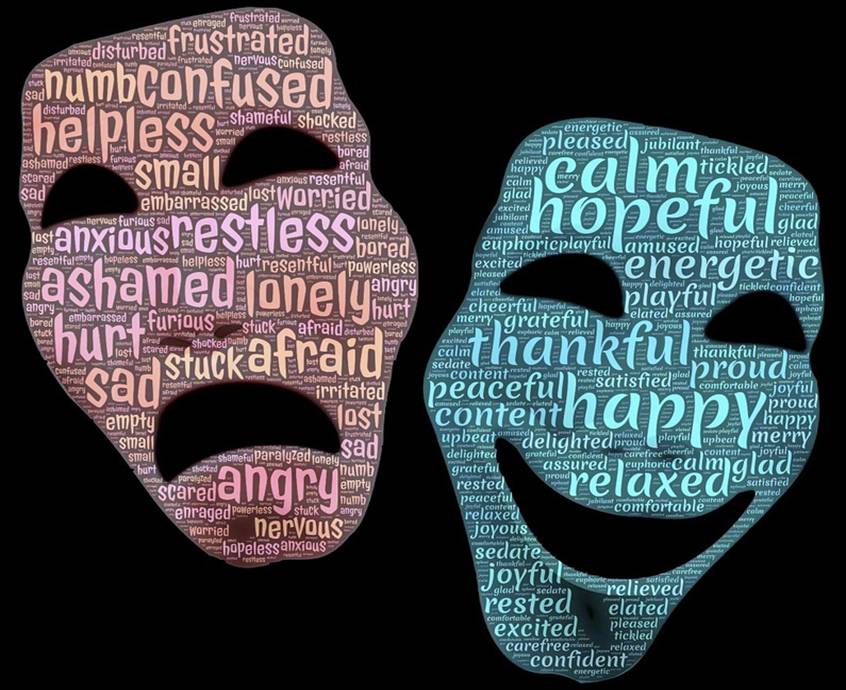
Sad mask with bad feeling words and happy mask with good feeling words

Most people think that emotions are not controlled. They come and go from somewhere in the brain or the body, and we have no control over them. In my coaching, I come across this misconception with every new client. Usually, they are not happy about something in their life and they come to me because they do not think they can change it on their own.

In general, emotions are not a problem. If they are happy emotions and if we feel good about them, we do not want to change them. But if they are painful and make us uncomfortable, then we want them out of our system and fast – and usually for the right reason. Feelings manifest into our physical world. If you think of emotions as vibrations, then we feel their vibration in our body as a physical reaction.

When I was young, my younger sister and I were fans of Louise Hay’s book You Can Heal Your Life.

We borrowed it from the local library and she bought it for me as a birthday gift. In the book, Louise Hay describes the connection between body and mind and explains how every thought, feeling, idea and action has a physical manifestation.

Read How to Release Negative Emotions: 10 Constructive and Healthy Ways »

Published: August 9, 2016 by Ronit Baras
Last modified: December 26, 2019In: Personal Development Tags: happiness, conflict, positive attitude tips, tips, stress / pressure, acceptance / judgment / tolerance, responsibility, personal development / personal growth / personality development / self improvement, emotional intelligence, emotions, meditation, feeling, how to, expectation, negative

What Others Think about You Is … None of Your Business

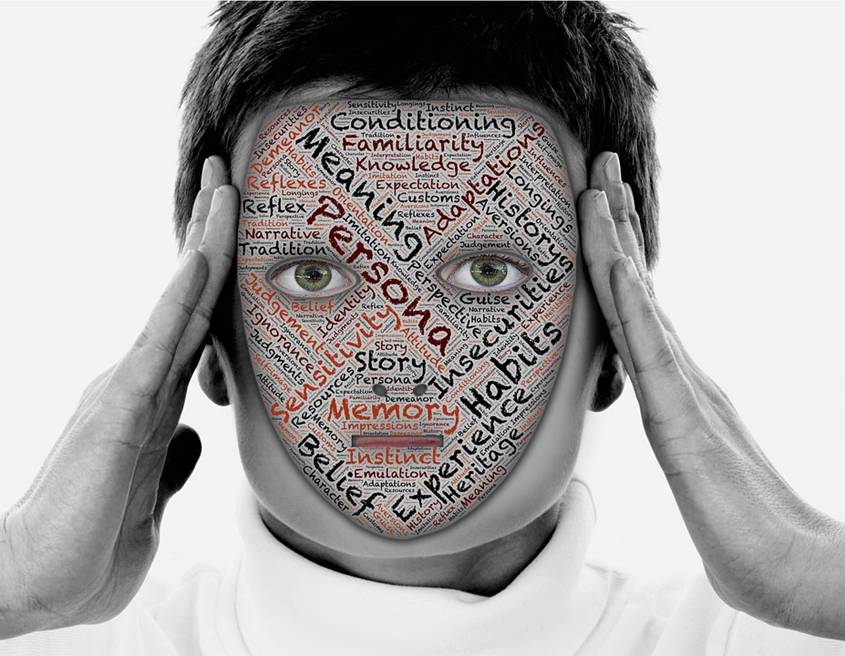
Man covering his face with a mask showing words like meaning, persona, memory, conditioning, etc

When I was young, if someone asked me to complete the sentence “What others think about you is …” I would have said, “the most important thing in life”. I thought that, because of how I grew up. My mom, who is over 75 years old now, still thinks that we live to impress other people and navigate our life based on what they think about us.

When I studied Education, I realized that most parents in the world teach this to their kids. At first, they say, “Whatever your parents think about you is the most important thing in life”. Later on, they say, “What your teachers think about you is also important”.

They are all very surprised when their kids become teenagers and transfer this to their peers and add, “Whatever your friends think about you is the most important thing in the world”.

It is a natural progression. If you practice worrying and navigate your life based on what others think about you, you become good at … worrying and navigating your life based on what others think about you.

Simple!

When you follow this path, you never learn who you are and how to navigate life based on what you think of yourself.

Read What Others Think about You Is … None of Your Business »

Published: August 4, 2016 by Ronit Baras
Last modified: April 15, 2024In: Parenting, Education / Learning Tags: rules, education / learning, Life Coaching, expectation, social skills, emotional development, conflict, practical parenting / parents, positive attitude tips, teaching / teachers, responsibility, leadership, emotional intelligence, stress / pressure, how to, acceptance / judgment / tolerance, role model, behavior / discipline, fear, self confidence / self esteem / self worth, beliefs, personal development / personal growth / personality development / self improvement

Your Child’s Subconscious Mind Has No Sense of Humor

Upset expression saying It's not funny!

When people ask me to summarize my studies, I say they were all about how the brain works. The first four years focused on how to use this knowledge to stimulate learning. Later on, I learned how to work with the subconscious mind to avoid misery and have more success and more happiness.

Learning about the brain is a never-ending quest. There is much research in the world about the brain and its functions in health, in success, in relationships, in learning and in everyday life. Over the years, I have tried to share my learning about the brain and its functions through this blog, especially in relation to parenting and education.

Why parenting and education? Because these two areas are very close to my heart. Since you are reading this, you probably care about them too.

Today, I would like to share some insight that is very important in parenting and in education. I want to tell you how the conscious and the subconscious minds work. Specifically, I want to tell you about how the subconscious mind deals with humor.

Read Your Child’s Subconscious Mind Has No Sense of Humor »

Published: July 12, 2016 by Ronit Baras
Last modified: July 12, 2016In: Parenting, Education / Learning Tags: emotional intelligence, emotional development, how to, practical parenting / parents, beliefs, Life Coaching, sarcasm, interpretation, humor, kids / children, communication, acceptance / judgment / tolerance, responsibility, behavior / discipline, values, self confidence / self esteem / self worth

Addiction in the Family

Young woman smoking

Addiction a dependency on an object, a substance or an activity. As hard as it is to admit, we are all addicted in some way or another. If you want to know if you are addicted do something, take it out of your life for a week and watch your reaction.

People can be addicted to food, phone, TV, a person (like their spouse), work, coffee, alcohol, cigarettes, glue, sex, medication, gambling, drugs and more. I had a friend who was addicted to pain killers. She took them as if she was eating candy, and it became obvious she had an addiction because she could not cope without them and needed more and more of them over time.

It is very important to remember that every addiction we develop is an attempt to fill an emotional and/or physical “hole”. We want it to give us the feeling we are missing without it. This is as true when we talk about drugs as it is when we talk about food.

Read Addiction in the Family »

Published: July 6, 2016 by Ronit Baras
Last modified: March 19, 2021In: Health / Wellbeing, Family Matters Tags: family matters, needs, health / wellbeing, personal development / personal growth / personality development / self improvement, drugs, feeling, responsibility, addiction, control, change, alcohol

  • « Go to Previous Page
  • Page 1
  • Page 2
  • Page 3
  • Page 4
  • Page 5
  • Page 6
  • Interim pages omitted …
  • Page 23
  • Go to Next Page »

Get Happiness by Email

Sign up to receive posts by email and get my free mini-course Seven Emails with Seven Secrets for Seven Weeks to boost your personal development


    Books by Ronit Baras

    • What motivates your child? Read Motivating Kids by Ronit Baras Motivating Kids From: $9.95
    • Reflections by Ronit Baras Reflections From: $5.99
    • Be Special Be Yourself for Teenagers by Ronit Baras Be Special, Be Yourself for Teenagers From: $5.99
    • In the Outback with Jasmine Banks by Ronit Baras In the Outback with Jasmine Banks From: $5.99
    • The Will by Ronit Baras The Will From: $5.99

    Be Happy in LIFE logo
    Book your private life coaching with Ronit Baras and learn how to be happy in life

    Girl speaking at student leadership programLeaders are not born. They are made. Bring this Student Leadership Program to your primary school or high school and you will create a community of empowered, inspired student leaders, parents and teachers.

    You’re Reading a Top Parenting Blog

    Feespot Parenting Blogs
    Top 50 Family Blog Award Top 50 Amazing Parenting Blogs 2017

    Related Links

    • Be Happy in LIFE – Life Coaching
    • Personal Growth Web
    • Tsoof Baras – percussionist, composer and producer
    • Noff Baras – Screen Actor & Model

    Primary Sidebar

    Your Cart

    Ready to be happy?

    Happy woman holding a cup in the snow
    Be empowered and set your spirit free!

    Engage Ronit as Your Life Coach »

    Speaker Bookings

    Ronit Baras - Practical Parenting Blogger
    Book Ronit as a Speaker for Your event »

    Join Us on Social Media

    Facebook logo Twitter logo Linkedin logo Pinterest logo RSS feed icon

    Give to Receive

    Kiva - loans that change lives

    Contact Us · Subscribe · Terms of Use / Privacy Statement · Return & Refund Policy · Sitemap

    Copyright © 2026 Be Happy in LIFE · Built and powered by Get Business Online

    Secure HTTPS

    • Home
    • Series
    • About Ronit Baras
    • Books by Ronit Baras
      ▼
      • Motivating Kids
      • Be Special, Be Yourself for Teenagers
      • Reflections
      • In the Outback with Jasmine Banks
      • The Will
      • * Your Cart
      • * Secure Checkout
    • Contact
      ▼
      • Join Us