• Skip to primary navigation
  • Skip to main content
  • Skip to primary sidebar

Family MattersPractical Parenting Blog

  • Home
  • Series
  • About Ronit Baras
  • Books by Ronit Baras
    • Motivating Kids
    • Be Special, Be Yourself for Teenagers
    • Reflections
    • In the Outback with Jasmine Banks
    • The Will
    • * Your Cart
    • * Secure Checkout
  • Contact
    • Join Us

Home » acceptance / judgment / tolerance » Page 7

Parenting Focus: Point Your Flashlight and Magnifier at Good Things

Flashlight

Parents want to raise happy children. In all of the many parenting workshops I run, regardless of their parenting style, cultural background or socioeconomic status, all the parents want their kids to be happy, healthy and successful. The problem is that parents whose kids are not happy, healthy and successful do not understand how they contribute to this. They just cannot see how their parenting focus and the attention they give to problematic things creates these problems.

When children do not behave like we want them to and when they do things we do not like, we tend to pay attention to their behavior more than when they behave like we want them to and when they do things we like. This attitude only makes them continue to behave “badly” and creates a never-ending cycle of attention to “bad” behavior.

When pay attention to the problems, the problems keep growing, and then we pay attention to them more and we trap ourselves and our kids in this dysfunctional parenting style. In life, we get what we focus on. Some call it “the law of attraction”, I call it “the flashlight model”.

Read Parenting Focus: Point Your Flashlight and Magnifier at Good Things »

Published: June 23, 2016 by Ronit Baras
Last modified: October 9, 2025In: Parenting, Personal Development Tags: happiness, law of attraction, positive, attitude, focus, acceptance / judgment / tolerance, men, self confidence / self esteem / self worth, art, emotional development, success, practical parenting / parents, emotional intelligence, how to, identity

Children with the Auditory Communication Style

Girl playing the piano

In my child assessments, I check children’s communication styles. I have been doing this for so long that my family members can sometimes identify the kids with auditory communication style right away, because they talk. A lot!

I usually pay attention to the way they use verbal stimulation to memorize things, if they whisper as they work and if they can repeat numbers and sounds. I also check the way they respond to verbal encouragement. Generally, they do much better when they can control their auditory space than when they are restricted.

Auditory kids are very influenced by the sounds around them and are unable to block them. They are very sensitive to arguments, shouting, yelling, crying, whining and scolding. Some of them say they feel pain when their teacher or parent shouts. Communicating with them in a loud voice may cause them to shut down completely. On the other hand, speaking to them in a soft, calm voice supports their learning greatly.

Children with the auditory communication style can learn anything, as long as it is associated with sound effects, a funny voice, an accent or even a lisp.

Read Children with the Auditory Communication Style »

Published: June 21, 2016 by Ronit Baras
Last modified: June 21, 2016In: Parenting, Education / Learning Tags: how to, practical parenting / parents, auditory, communication styles, affirmations, assessment, k-12 education, self-talk, questions, school, attention deficit / add / adhd, music, acceptance / judgment / tolerance, emotional intelligence, self confidence / self esteem / self worth

Eddie the Eagle: Determination and Great Parenting

Eddie the Eagle movie poster

Watching the movie Eddie the Eagle this week made me think again about my own children and the many children I work with. I realized that no one ever gets to the top, whether it is a top in a ski slope, the top of a class, the top of a sport or the top of a skill without determination and without someone holding the ladder while they climb up.

Being a different child is not easy. I know what it means, because I was different. There are two reasons for this. One, you cannot look at others and do what they do. Two, others do not like different people. There is something awkward about them, something that means hard work. Being social means building rapport, and it is hard to relate to someone who is different.

Supporting children in their adventures is linked strongly with the permission we give ourselves, their parents, to dream big. When we practice dreaming and following our dreams, we give our children permission to do the same.

In the movie, Eddie’s dad, who is a plasterer, tries constantly to convince his son to stop trying to be in the Olympics, while his mom is supportive of his adventures. At one point, Eddie asks his dad, “Have you ever had a dream?” and his dad said, “Yes… to be a plasterer”.

Michael (Eddie) Edwards was a clumsy young boy with a physical disability who dreamed of being an Olympic athlete. He is physically challenged and socially unaccepted, and while his mom supports his dreams, his dad does everything in his power to get him “off the clouds” and be “normal”.

Read Eddie the Eagle: Determination and Great Parenting »

Published: May 10, 2016 by Ronit Baras
Last modified: August 22, 2016In: Parenting, Personal Development Tags: affirmations, persistence, acceptance / judgment / tolerance, self confidence / self esteem / self worth, personal development / personal growth / personality development / self improvement, practical parenting / parents, inspiration, success, emotional intelligence, dreams, determination

How to Switch Your Parenting from Preaching to Teaching

The best teachers are those who show you where to look, but don't tell you what to see - Alexander K. Trenfor

In Parenting is Teaching, not Preaching, I explained why kids resent parents who take too long to explain things and why a relationship based on lecturing your kids is not healthy and makes the kids just not listen to you.

Today, I share five tips that will make the communication and cooperation at home better for you and show you how to switch your parenting from preaching to teaching.

1. No Pink Elephants

Parents are used to telling their kids what not to do. The words “don’t”, “stop” and “no” are very common in the parenting vocabulary. Unfortunately, using them only makes the child do more of what you are trying to stop. Read Beware of Pink Elephants for more.

Rather than telling your kids what not to do, tell them what you want them to do and notice how their behavior changes dramatically.

Read How to Switch Your Parenting from Preaching to Teaching »

Published: March 22, 2016 by Ronit Baras
Last modified: October 2, 2023In: Parenting Tags: control, expectation, rules, emotional development, communication, generation gap, practical parenting / parents, abuse, change, values, anger, emotional intelligence, sarcasm, how to, listening, role model, tips, choice, acceptance / judgment / tolerance, trust, behavior / discipline, beliefs, education / learning

Parenting is Teaching, not Preaching

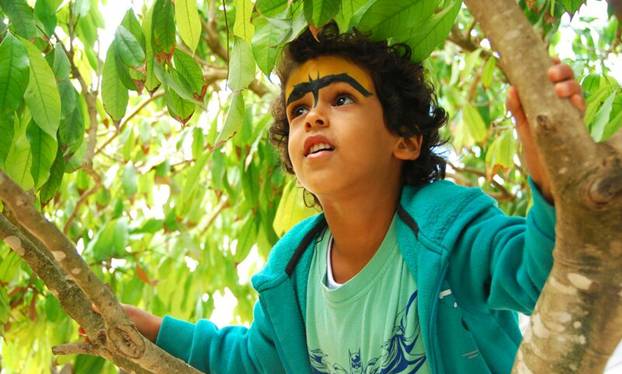
Boy in tree with Batman symbol on his forehead

Last week, I ran a parenting workshop and parents’ biggest frustration was “My kids don’t listen to me”. Everyone in the workshop shared this frustration whether their children were toddlers or teens. It took me some time to change the focus of the workshop from complaining about it, which is suitable for psychology or “recovery”, to thinking about what we can do about it and how to move forward, which is more suitable for coaching or “discovery”.

Going through life is like sailing a ship and being its captain (see Sailing the Ship of Life for more). When we complain, it is like dropping an anchor, and when we consider what to do about the situation, it is like raising an anchor and moving forward. Progress may be slow at first, but it is better to move than to be stuck.

Parenting is just the same.

Read Parenting is Teaching, not Preaching »

Published: March 17, 2016 by Ronit Baras
Last modified: March 23, 2021In: Parenting Tags: practical parenting / parents, trust, beliefs, generation gap, change, listening, acceptance / judgment / tolerance, communication, behavior / discipline, abuse, education / learning, emotional intelligence, expectation, how to, emotional development, role model

I am not Black, You are not White and We are not Labels

I have been doing diversity education for the last ten years. The more people I saw, the more I realized how important this work was. For some unknown reason, people like labels. They think that labels help them define the world. I believe they shrink the world, limit thinking and restrict our range of experiences.

When I was 21, I was greatly inspired by one of my psychology teachers at university. She came to class and asked us, “Who are you?” At first, we thought she was weird. Well, she was weird (at least this is how we labeled her), but the more we discussed this topic, the more we realized that this weird question was all about the labels we put on others to help us define ourselves.

In one of the classes, she asked me, “Ronit, who would you be if your parents gave you a different name?” I looked at her, unsure if I had understood the question. I was puzzled for a while, and then said, “Me!”

In our psychology classes, we discussed identity and how the labels we give to everything around us limit the range of the experiences we have. At one stage, she told us to move around the room based on our labels. She asked all females to move to one side, all males to the other. Then, she moved us around based on other labels we are given in everyday life, like height, age, race, religion, the area of the country where we grew up, etc. It didn’t take us long to realize that labels divide us into groups, and when this is done, it is very easy to control us.

Read I am not Black, You are not White and We are not Labels »

Published: February 25, 2016 by Ronit Baras
Last modified: November 9, 2021In: Personal Development, Parenting Tags: video, diversity, acceptance / judgment / tolerance, personal development / personal growth / personality development / self improvement, practical parenting / parents, special education, role model, control, identity, conflict, social

The Importance of Traveling with Kids

Traveling with kids is great fun. This is me and my kids posing on the beach

Traveling has been part of my life in the last 22 years. It started with a move from one country to another with a 4-year-old daughter and ended up being a passion. Last month, Gal and I went on a 3-week road trip with our 2 younger kids, Tsoof, my 20-year-old son, who had just graduated from university, and Noff, my 14-year-old daughter, who was starting 10th Grade. This road trip it reminded me again that taking kids out of the comfort zone of their rooms, TV, computer, mobile phones and friends, and introducing them to a different world, can do magic.

Recently, I worked with a couple (let’s call them Bob and Matilda) who had a conflict. He dreamed of taking the kids (16 and 14) on a 6-month road trip and she was shocked and concerned about the kids not going to school during that time. Bob had memories of his family, at the age of 9 years old, taking 6 months off to travel in England and he wanted to give his kids the same experience, before it was too late. Matilda had memories of a different childhood, in which she was never ever allowed to miss school, not even for a day.

I understood them both.

I grow up like Matilda did. We were not “allowed” to be sick (my mom had to work, my dad had to work, and we had no one to stay with us at home), so we didn’t miss school. I have to say there was something good about it, because in my adult life, I’ve never missed work or study due to sickness.

I also understood Bob, because I had traveled with my kids and witnessed the huge growth we all went through as a family and as individuals. I guess when you experience it once, you understand the value of it forever.

Read The Importance of Traveling with Kids »

Published: February 11, 2016 by Ronit Baras
Last modified: February 11, 2016In: Kids / Children, Personal Development, Parenting Tags: freedom, school, education / learning, responsibility, practical parenting / parents, emotional intelligence, travel, change, flexibility, tips, acceptance / judgment / tolerance, personal development / personal growth / personality development / self improvement

How to Encourage: Ronit’s List of Compliments

Drawing of hand with the words You Are Beautiful

Since I wrote the first chapter of the compliments series, I have received some requests from readers to give them some ideas about compliments, so I thought it may be a good exercise to make a list of 100 compliments we can give others that will cover different areas of life.

By limiting myself to phrases that only focus on the other person and not on myself (because complimenting is giving, not taking credit and focusing on yourself), I got to 182.

Here’s my list of compliments. I suggest that you mark the compliments you find useful, change them to suit your needs and keep them somewhere handy. Then, refer to the examples when you need a compliment idea.

Read How to Encourage: Ronit’s List of Compliments »

Published: January 28, 2016 by Ronit Baras
Last modified: September 1, 2020In: Personal Development, Relationships / Marriage Tags: how to, relationships / marriage, affirmations, positive attitude tips, attitude, acceptance / judgment / tolerance, self confidence / self esteem / self worth, communication, personal development / personal growth / personality development / self improvement, focus, projection, emotional intelligence

How to Accept Compliments with Grace

Thank You!

As I said in Compliments: Give to Receive, most people don’t receive many compliments, because they don’t give many compliments to others, and this is caused by not feeling good about themselves. I hope everyone started the compliment challenge and that you already see the impact on your own confidence and sense of wellbeing.

Not feeling good about yourself also makes you feel uncomfortable when someone else gives you a compliment. As you might expect, an awkward response to a compliment will discourage the other person from giving you any more compliments.

In this post, you will learn how to accept compliments with grace.

Some people are not used to compliments, so they are shocked when someone says something good about them. Most people say something that reduces the compliment, like “It was nothing”, “You should have seen me do it last time” or “This time was not that good”, which is just like getting a gift from someone and saying, “Sorry, I can’t accept your gift, because I don’t deserve it”…

Read How to Accept Compliments with Grace »

Published: December 17, 2015 by Ronit Baras
Last modified: January 28, 2016In: Personal Development, Relationships / Marriage Tags: attitude, acceptance / judgment / tolerance, self confidence / self esteem / self worth, communication, personal development / personal growth / personality development / self improvement, focus, projection, emotional intelligence, how to, relationships / marriage, affirmations, positive attitude tips

Compliments: Give to Receive

Young Asian girl at sunrise

Giving and receiving compliments are very important communication skills that boost our self-confidence and the confidence of the people around us. We grow up in a society that struggles with giving and receiving compliments. People are stingy at the giving end and uncomfortable at the receiving end.

What many people don’t realize is that complimenting others is a projection of a trait, skill or beauty that we see in ourselves. It is a gift of kindness that when we give, we also receive.

Recently, I ran leadership training with a group of high school students and we talked about compliments. It took us 10 hours to change the lives of all those students and increase their self-confidence ratings by 20% to 50%. Yes, in just 10 hours of a very busy training day, we change their attitude towards themselves and other people.

One of the leaders came to me in the evening, after the session with the parents, to say “Thank you”. She said that the part about compliments was very meaningful for her. She felt that it was a shame they didn’t teach communication skills in primary school and that it was important to give compliments to others, and even more important to accept compliments. On the ride home, I thought about it and realized I had never written about compliments in my blog, so I thanked this girl for bringing it to my attention.

Read Compliments: Give to Receive »

Published: December 15, 2015 by Ronit Baras
Last modified: January 28, 2016In: Personal Development, Relationships / Marriage Tags: how to, role model, relationships / marriage, affirmations, positive attitude tips, attitude, leadership, communication, acceptance / judgment / tolerance, focus, self confidence / self esteem / self worth, projection, personal development / personal growth / personality development / self improvement, emotional intelligence

  • « Go to Previous Page
  • Page 1
  • Interim pages omitted …
  • Page 5
  • Page 6
  • Page 7
  • Page 8
  • Page 9
  • Interim pages omitted …
  • Page 39
  • Go to Next Page »

Get Happiness by Email

Sign up to receive posts by email and get my free mini-course Seven Emails with Seven Secrets for Seven Weeks to boost your personal development


    Books by Ronit Baras

    • What motivates your child? Read Motivating Kids by Ronit Baras Motivating Kids From: $9.95
    • Reflections by Ronit Baras Reflections From: $5.99
    • Be Special Be Yourself for Teenagers by Ronit Baras Be Special, Be Yourself for Teenagers From: $5.99
    • In the Outback with Jasmine Banks by Ronit Baras In the Outback with Jasmine Banks From: $5.99
    • The Will by Ronit Baras The Will From: $5.99

    Be Happy in LIFE logo
    Book your private life coaching with Ronit Baras and learn how to be happy in life

    Girl speaking at student leadership programLeaders are not born. They are made. Bring this Student Leadership Program to your primary school or high school and you will create a community of empowered, inspired student leaders, parents and teachers.

    You’re Reading a Top Parenting Blog

    Feespot Parenting Blogs80 Best Family Blogs to Follow in 2026Top 50 Amazing Parenting Blogs 2017

    Related Links

    • Be Happy in LIFE – Life Coaching
    • Personal Growth Web
    • Tsoof Baras – percussionist, composer and producer
    • Noff Baras – Screen Actor & Model

    Primary Sidebar

    Your Cart

    Ready to be happy?

    Happy woman holding a cup in the snow
    Be empowered and set your spirit free!

    Engage Ronit as Your Life Coach »

    Speaker Bookings

    Ronit Baras - Practical Parenting Blogger
    Book Ronit as a Speaker for Your event »

    Join Us on Social Media

    Facebook logo Twitter logo Linkedin logo Pinterest logo RSS feed icon

    Give to Receive

    Kiva - loans that change lives

    Contact Us · Subscribe · Terms of Use / Privacy Statement · Return & Refund Policy · Sitemap

    Copyright © 2026 Be Happy in LIFE · Built and powered by Get Business Online

    Secure HTTPS

    • Home
    • Series
    • About Ronit Baras
    • Books by Ronit Baras
      ▼
      • Motivating Kids
      • Be Special, Be Yourself for Teenagers
      • Reflections
      • In the Outback with Jasmine Banks
      • The Will
      • * Your Cart
      • * Secure Checkout
    • Contact
      ▼
      • Join Us