• Skip to primary navigation
  • Skip to main content
  • Skip to primary sidebar

Family MattersPractical Parenting Blog

  • Home
  • Series
  • About Ronit Baras
  • Books by Ronit Baras
    • Motivating Kids
    • Be Special, Be Yourself for Teenagers
    • Reflections
    • In the Outback with Jasmine Banks
    • The Will
    • * Your Cart
    • * Secure Checkout
  • Contact
    • Join Us

Home » acceptance / judgment / tolerance » Page 6

How to Release Negative Emotions: 10 Constructive and Healthy Ways

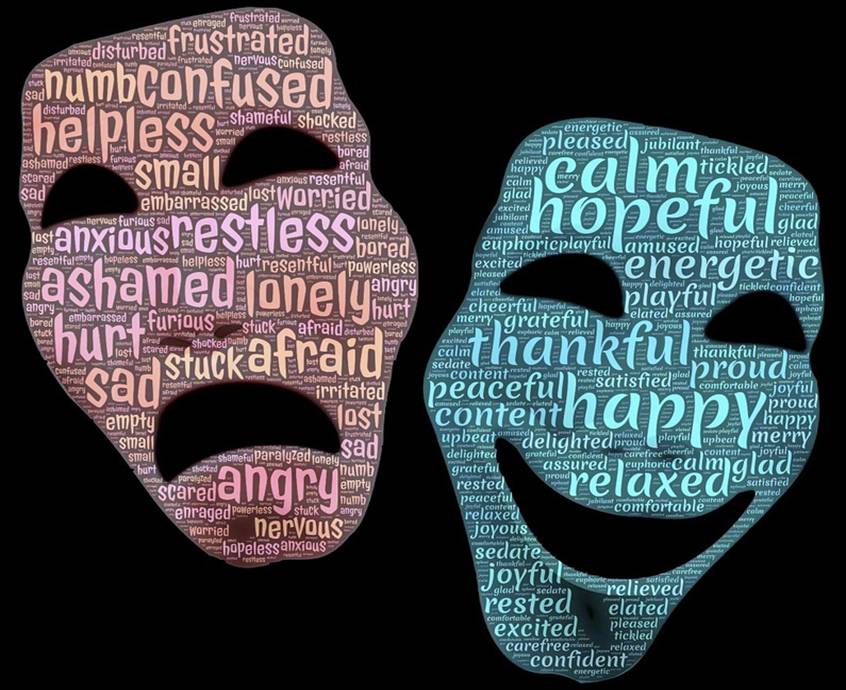
Sad mask with bad feeling words and happy mask with good feeling words

Most people think that emotions are not controlled. They come and go from somewhere in the brain or the body, and we have no control over them. In my coaching, I come across this misconception with every new client. Usually, they are not happy about something in their life and they come to me because they do not think they can change it on their own.

In general, emotions are not a problem. If they are happy emotions and if we feel good about them, we do not want to change them. But if they are painful and make us uncomfortable, then we want them out of our system and fast – and usually for the right reason. Feelings manifest into our physical world. If you think of emotions as vibrations, then we feel their vibration in our body as a physical reaction.

When I was young, my younger sister and I were fans of Louise Hay’s book You Can Heal Your Life.

We borrowed it from the local library and she bought it for me as a birthday gift. In the book, Louise Hay describes the connection between body and mind and explains how every thought, feeling, idea and action has a physical manifestation.

Read How to Release Negative Emotions: 10 Constructive and Healthy Ways »

Published: August 9, 2016 by Ronit Baras
Last modified: December 26, 2019In: Personal Development Tags: conflict, positive attitude tips, tips, stress / pressure, acceptance / judgment / tolerance, responsibility, personal development / personal growth / personality development / self improvement, emotional intelligence, emotions, meditation, feeling, how to, expectation, negative, happiness

What Others Think about You Is … None of Your Business

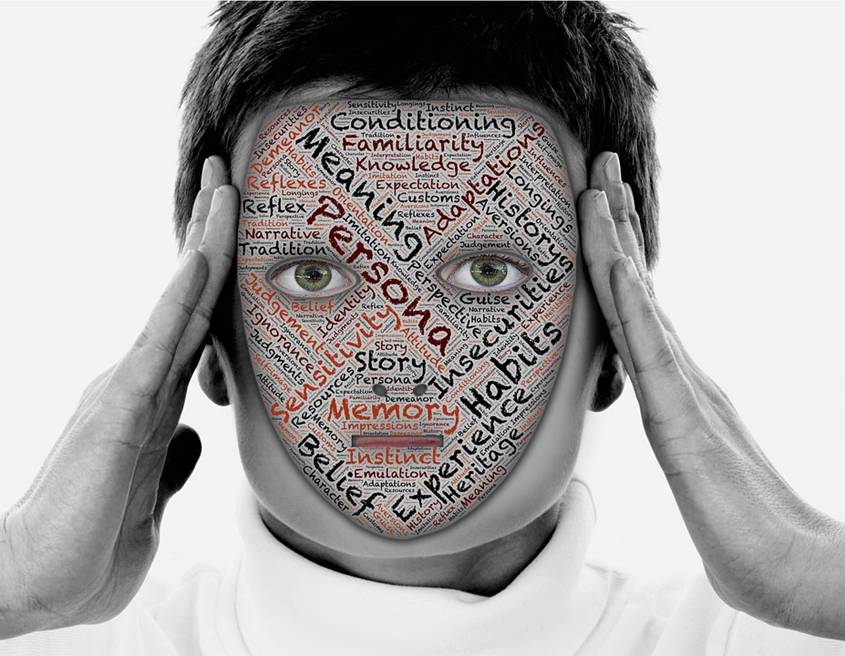
Man covering his face with a mask showing words like meaning, persona, memory, conditioning, etc

When I was young, if someone asked me to complete the sentence “What others think about you is …” I would have said, “the most important thing in life”. I thought that, because of how I grew up. My mom, who is over 75 years old now, still thinks that we live to impress other people and navigate our life based on what they think about us.

When I studied Education, I realized that most parents in the world teach this to their kids. At first, they say, “Whatever your parents think about you is the most important thing in life”. Later on, they say, “What your teachers think about you is also important”.

They are all very surprised when their kids become teenagers and transfer this to their peers and add, “Whatever your friends think about you is the most important thing in the world”.

It is a natural progression. If you practice worrying and navigate your life based on what others think about you, you become good at … worrying and navigating your life based on what others think about you.

Simple!

When you follow this path, you never learn who you are and how to navigate life based on what you think of yourself.

Read What Others Think about You Is … None of Your Business »

Published: August 4, 2016 by Ronit Baras
Last modified: April 15, 2024In: Parenting, Education / Learning Tags: expectation, social skills, emotional development, conflict, practical parenting / parents, positive attitude tips, teaching / teachers, responsibility, leadership, emotional intelligence, stress / pressure, how to, acceptance / judgment / tolerance, role model, behavior / discipline, fear, self confidence / self esteem / self worth, beliefs, personal development / personal growth / personality development / self improvement, rules, education / learning, Life Coaching

Reasons: The Search for Cause and Effect

A row of dominos with a hand in the middle stopping them from continuing to fall

I often hear that finding the reasons for things we do is the way to have a happy life. There are many public claims that understanding why we do things cures bad decisions and is the way to contentment.

However, it is important to distinguish between the search for a reason and finding a reason. Searching for a reason is a continuous state of limbo, based on the belief there is one true reason for something. Finding a reason is just an illusion that the reason we found is the one true reason.

There is a big challenge in searching for the one reason, mainly because most of our decision making (in fact, more than 90%) is done by our subconscious mind, which means we are not aware of it. We only know of 10% of it.

Our conscious mind can process a limited number of thoughts and memories, so it is unlikely to lead us to the “right” reason, or right decision. At the same time, our subconscious mind can process millions of thoughts and memories in a split second. We can never hope to be aware of everything that goes on “down there”.

So in humans, the concept of cause and effect is not that simple. There is no single cause that will lead to the same effect.

Read Reasons: The Search for Cause and Effect »

Published: July 28, 2016 by Ronit Baras
Last modified: December 26, 2019In: Personal Development Tags: assumptions, emotional intelligence, choice, control, happiness, interpretation, decision making, acceptance / judgment / tolerance, behavior / discipline, personal development / personal growth / personality development / self improvement

Children with the Kinesthetic Communication Style

Kinesthetic kids love mess. Two boys cutting out Halloween pumpkins

The idea that all kids are the same is false and brings parents and teachers into lots of trouble. Every time these kids are not “the same” as others, they think something is wrong with them. Nothing is wrong with them! They are just different and we should all be happy that there is not such a thing as “one size fits all”.

In my kids’ assessments, I check children’s communication styles. If I know their communication styles, I know what challenges they have and why, and I know the best ways to introduce new information to them.

During our sessions together, I pay attention to how they move. I check if they stand up while they work and if they move their legs or other body part. I notice if they are social and friendly and pay attention to how they talk about others. Moving a lot and talking about emotions, fairness, kindness and caring are typical for kinesthetic children.

Read Children with the Kinesthetic Communication Style »

Published: July 26, 2016 by Ronit Baras
Last modified: August 13, 2020In: Parenting, Education / Learning Tags: teaching / teachers, learning styles, activity, assessment, social, academic performance, kinesthetic, school, acceptance / judgment / tolerance, touch, behavior / discipline, emotional intelligence, education / learning, motivation, practical parenting / parents, communication styles

Your Child’s Subconscious Mind Has No Sense of Humor

Upset expression saying It's not funny!

When people ask me to summarize my studies, I say they were all about how the brain works. The first four years focused on how to use this knowledge to stimulate learning. Later on, I learned how to work with the subconscious mind to avoid misery and have more success and more happiness.

Learning about the brain is a never-ending quest. There is much research in the world about the brain and its functions in health, in success, in relationships, in learning and in everyday life. Over the years, I have tried to share my learning about the brain and its functions through this blog, especially in relation to parenting and education.

Why parenting and education? Because these two areas are very close to my heart. Since you are reading this, you probably care about them too.

Today, I would like to share some insight that is very important in parenting and in education. I want to tell you how the conscious and the subconscious minds work. Specifically, I want to tell you about how the subconscious mind deals with humor.

Read Your Child’s Subconscious Mind Has No Sense of Humor »

Published: July 12, 2016 by Ronit Baras
Last modified: July 12, 2016In: Parenting, Education / Learning Tags: responsibility, behavior / discipline, values, self confidence / self esteem / self worth, emotional intelligence, emotional development, how to, practical parenting / parents, beliefs, Life Coaching, sarcasm, interpretation, humor, kids / children, communication, acceptance / judgment / tolerance

Raising Children with “The Disease to Please”

The Disease to Please

Children are affected strongly by their emotional state. When I work with children, I can see their performance decrease when they are emotionally preoccupied. Some kids are affected more and others less, but all of them drop in performance when they are down.

Kinesthetic children are typically affected more, because they are very sensitive to the people around them. These are the kids who can “sense” others around them and all they want is for “everyone to be happy and nice to each other”.

Children who are highly sensitive to pressure are at risk of developing “the disease to please” – dependence on external rewards and oversensitivity to pressure. It is the perception that other people’s feelings are so important that they trump your own.

In most cases, “the disease to please” comes from fear of rejection, which most people want to avoid. Many people have this disease and they got it during their childhood. We can say that this kind of disease is contagious and we catch it from our parents…

Read Raising Children with “The Disease to Please” »

Published: July 8, 2016 by Ronit Baras
Last modified: August 13, 2020In: Parenting Tags: kinesthetic, kids / children, acceptance / judgment / tolerance, behavior / discipline, communication, self confidence / self esteem / self worth, love, emotional development, emotional intelligence, practical parenting / parents, how to, choice, motivation, perception

Parenting Focus: Point Your Flashlight and Magnifier at Good Things

Flashlight

Parents want to raise happy children. In all of the many parenting workshops I run, regardless of their parenting style, cultural background or socioeconomic status, all the parents want their kids to be happy, healthy and successful. The problem is that parents whose kids are not happy, healthy and successful do not understand how they contribute to this. They just cannot see how their parenting focus and the attention they give to problematic things creates these problems.

When children do not behave like we want them to and when they do things we do not like, we tend to pay attention to their behavior more than when they behave like we want them to and when they do things we like. This attitude only makes them continue to behave “badly” and creates a never-ending cycle of attention to “bad” behavior.

When pay attention to the problems, the problems keep growing, and then we pay attention to them more and we trap ourselves and our kids in this dysfunctional parenting style. In life, we get what we focus on. Some call it “the law of attraction”, I call it “the flashlight model”.

Read Parenting Focus: Point Your Flashlight and Magnifier at Good Things »

Published: June 23, 2016 by Ronit Baras
Last modified: October 9, 2025In: Parenting, Personal Development Tags: men, self confidence / self esteem / self worth, art, emotional development, success, practical parenting / parents, emotional intelligence, how to, identity, happiness, law of attraction, positive, attitude, focus, acceptance / judgment / tolerance

Children with the Auditory Communication Style

Girl playing the piano

In my child assessments, I check children’s communication styles. I have been doing this for so long that my family members can sometimes identify the kids with auditory communication style right away, because they talk. A lot!

I usually pay attention to the way they use verbal stimulation to memorize things, if they whisper as they work and if they can repeat numbers and sounds. I also check the way they respond to verbal encouragement. Generally, they do much better when they can control their auditory space than when they are restricted.

Auditory kids are very influenced by the sounds around them and are unable to block them. They are very sensitive to arguments, shouting, yelling, crying, whining and scolding. Some of them say they feel pain when their teacher or parent shouts. Communicating with them in a loud voice may cause them to shut down completely. On the other hand, speaking to them in a soft, calm voice supports their learning greatly.

Children with the auditory communication style can learn anything, as long as it is associated with sound effects, a funny voice, an accent or even a lisp.

Read Children with the Auditory Communication Style »

Published: June 21, 2016 by Ronit Baras
Last modified: June 21, 2016In: Parenting, Education / Learning Tags: k-12 education, self-talk, questions, school, attention deficit / add / adhd, music, acceptance / judgment / tolerance, emotional intelligence, self confidence / self esteem / self worth, how to, practical parenting / parents, auditory, communication styles, affirmations, assessment

Eddie the Eagle: Determination and Great Parenting

Eddie the Eagle movie poster

Watching the movie Eddie the Eagle this week made me think again about my own children and the many children I work with. I realized that no one ever gets to the top, whether it is a top in a ski slope, the top of a class, the top of a sport or the top of a skill without determination and without someone holding the ladder while they climb up.

Being a different child is not easy. I know what it means, because I was different. There are two reasons for this. One, you cannot look at others and do what they do. Two, others do not like different people. There is something awkward about them, something that means hard work. Being social means building rapport, and it is hard to relate to someone who is different.

Supporting children in their adventures is linked strongly with the permission we give ourselves, their parents, to dream big. When we practice dreaming and following our dreams, we give our children permission to do the same.

In the movie, Eddie’s dad, who is a plasterer, tries constantly to convince his son to stop trying to be in the Olympics, while his mom is supportive of his adventures. At one point, Eddie asks his dad, “Have you ever had a dream?” and his dad said, “Yes… to be a plasterer”.

Michael (Eddie) Edwards was a clumsy young boy with a physical disability who dreamed of being an Olympic athlete. He is physically challenged and socially unaccepted, and while his mom supports his dreams, his dad does everything in his power to get him “off the clouds” and be “normal”.

Read Eddie the Eagle: Determination and Great Parenting »

Published: May 10, 2016 by Ronit Baras
Last modified: August 22, 2016In: Parenting, Personal Development Tags: practical parenting / parents, inspiration, success, emotional intelligence, dreams, determination, affirmations, persistence, acceptance / judgment / tolerance, self confidence / self esteem / self worth, personal development / personal growth / personality development / self improvement

How to Switch Your Parenting from Preaching to Teaching

The best teachers are those who show you where to look, but don't tell you what to see - Alexander K. Trenfor

In Parenting is Teaching, not Preaching, I explained why kids resent parents who take too long to explain things and why a relationship based on lecturing your kids is not healthy and makes the kids just not listen to you.

Today, I share five tips that will make the communication and cooperation at home better for you and show you how to switch your parenting from preaching to teaching.

1. No Pink Elephants

Parents are used to telling their kids what not to do. The words “don’t”, “stop” and “no” are very common in the parenting vocabulary. Unfortunately, using them only makes the child do more of what you are trying to stop. Read Beware of Pink Elephants for more.

Rather than telling your kids what not to do, tell them what you want them to do and notice how their behavior changes dramatically.

Read How to Switch Your Parenting from Preaching to Teaching »

Published: March 22, 2016 by Ronit Baras
Last modified: October 2, 2023In: Parenting Tags: emotional intelligence, sarcasm, how to, listening, role model, tips, choice, acceptance / judgment / tolerance, trust, behavior / discipline, beliefs, education / learning, control, expectation, rules, emotional development, communication, generation gap, practical parenting / parents, abuse, change, values, anger

  • « Go to Previous Page
  • Page 1
  • Interim pages omitted …
  • Page 4
  • Page 5
  • Page 6
  • Page 7
  • Page 8
  • Interim pages omitted …
  • Page 38
  • Go to Next Page »

Get Happiness by Email

Sign up to receive posts by email and get my free mini-course Seven Emails with Seven Secrets for Seven Weeks to boost your personal development


    Join Us on Social Media

    Facebook logo Twitter logo Linkedin logo Pinterest logo RSS feed icon

    Books by Ronit Baras

    • What motivates your child? Read Motivating Kids by Ronit Baras Motivating Kids From: $9.95
    • Reflections by Ronit Baras Reflections From: $5.99
    • Be Special Be Yourself for Teenagers by Ronit Baras Be Special, Be Yourself for Teenagers From: $5.99
    • In the Outback with Jasmine Banks by Ronit Baras In the Outback with Jasmine Banks From: $5.99
    • The Will by Ronit Baras The Will From: $5.99

    Be Happy in LIFE logo
    Book your private life coaching with Ronit Baras and learn how to be happy in life

    Girl speaking at student leadership programLeaders are not born. They are made. Bring this Student Leadership Program to your primary school or high school and you will create a community of empowered, inspired student leaders, parents and teachers.

    Related Links

    • Be Happy in LIFE – Life Coaching
    • Noff Baras – Screen Actor & Model
    • Personal Growth Web
    • The Motivational Speaker
    • Tsoof Baras – percussionist, composer and producer

    Primary Sidebar

    Your Cart

    Speaker Bookings

    Ronit Baras - Practical Parenting Blogger
    Book Ronit as a Speaker for Your event »

    Ready to be happy?

    Happy woman holding a cup in the snow
    Be empowered and set your spirit free!

    Engage Ronit as Your Life Coach »

    Give to Receive

    Kiva - loans that change lives

    Contact Us · Subscribe · Terms of Use / Privacy Statement · Return & Refund Policy · Sitemap

    Copyright © 2025 Be Happy in LIFE · Built and powered by Get Business Online

    Secure HTTPS

    • Home
    • Series
    • About Ronit Baras
    • Books by Ronit Baras
      ▼
      • Motivating Kids
      • Be Special, Be Yourself for Teenagers
      • Reflections
      • In the Outback with Jasmine Banks
      • The Will
      • * Your Cart
      • * Secure Checkout
    • Contact
      ▼
      • Join Us