• Skip to primary navigation
  • Skip to main content
  • Skip to primary sidebar

Family MattersPractical Parenting Blog

  • Home
  • Series
  • About Ronit Baras
  • Books by Ronit Baras
    • Motivating Kids
    • Be Special, Be Yourself for Teenagers
    • Reflections
    • In the Outback with Jasmine Banks
    • The Will
    • * Your Cart
    • * Secure Checkout
  • Contact
    • Join Us

Home » responsibility » Page 4

The Expectations Paradox: Danger Ahead

Sign: Danger, expectations ahead!

From the minute I woke up, at the age of 16, and took control of my life, I had a good understanding of the power of expectations. At least this is what I thought for a long time. I thought that I switched from having low expectation to high expectations and believed that high expectations were the key to success in life.

I still think so, although I believe that it is important to distinguish between expectations from ourselves and expectations from others. Even more important is what we do when our expectations are not fulfilled.

Expectations can be a blessing or a curse and we can always determine what they were after the event. Subconsciously, when we succeed, we tend to consider our expectations as blessings, as a ladder that led us to victory. When we fail, we consider them false, frustrating and painful. In victories, we reward ourselves for having “motivating expectations”. In failures, we blame circumstances and/or people, and sometimes, we blame ourselves.

Expectations are a double-edged sword if we do not define them properly.

Read The Expectations Paradox: Danger Ahead »

Published: August 30, 2016 by Ronit Baras
Last modified: December 26, 2019In: Personal Development Tags: success, emotional intelligence, empowerment, control, change, motivation, positive attitude tips, acceptance / judgment / tolerance, personal development / personal growth / personality development / self improvement, expectation, responsibility, goals / goal setting

Emotional Freedom: Let Go and Be FREE!

Barbed fence with plant growing outside it

I do not know about you, but once, whenever I thought about freedom, I thought of a prison. I imagined someone trapped in a closed place against his will. It was always a physical place, with bars and darkness, and just thinking of it upset me.

When I started studying how the brain works, my perception changed. I learned that there is another prison – a very secure place that is the hardest to escape. Most of us live in the prison of our own mind, in which we are limited by our way of thinking.

I remember the time that I experienced the loss of my child. I could feel how quickly I was building my own prison and how each thought was adding one more bar and one more lock around me. The hardest realization was that only I could set myself free.

No one in their normal mind wants to be trapped inside their mind. Yet, in some way or another, we all are. This is because we are not in our normal mind. Yes, me too. Do not take this too hard, but Buddhists think we are all delusional, trapped in the prison of our own ego.

Think about it: imprisonment is the absence of freedom. We only desire freedom when we feel that we do not have it. If you feel free, why would you search for freedom? This comparison between what we have and what we lack, followed by the bad feeling we have about it, is a prison in itself.

Read Emotional Freedom: Let Go and Be FREE! »

Published: August 11, 2016 by Ronit Baras
Last modified: December 26, 2019In: Personal Development Tags: control, change, happiness, perception, positive, responsibility, personal development / personal growth / personality development / self improvement, emotional intelligence, freedom, depression, expectation, how to, negative, beliefs

How to Release Negative Emotions: 10 Constructive and Healthy Ways

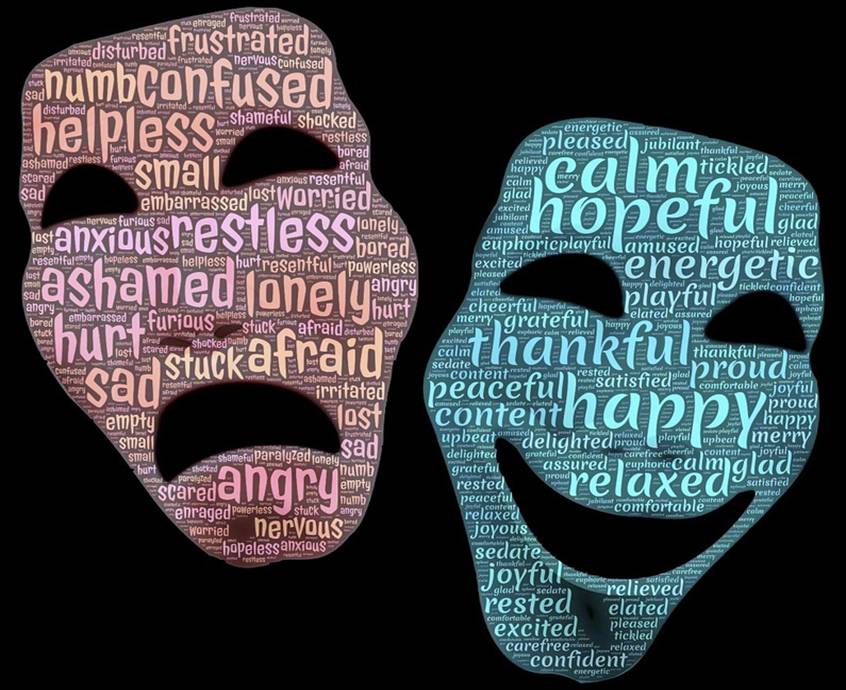
Sad mask with bad feeling words and happy mask with good feeling words

Most people think that emotions are not controlled. They come and go from somewhere in the brain or the body, and we have no control over them. In my coaching, I come across this misconception with every new client. Usually, they are not happy about something in their life and they come to me because they do not think they can change it on their own.

In general, emotions are not a problem. If they are happy emotions and if we feel good about them, we do not want to change them. But if they are painful and make us uncomfortable, then we want them out of our system and fast – and usually for the right reason. Feelings manifest into our physical world. If you think of emotions as vibrations, then we feel their vibration in our body as a physical reaction.

When I was young, my younger sister and I were fans of Louise Hay’s book You Can Heal Your Life.

We borrowed it from the local library and she bought it for me as a birthday gift. In the book, Louise Hay describes the connection between body and mind and explains how every thought, feeling, idea and action has a physical manifestation.

Read How to Release Negative Emotions: 10 Constructive and Healthy Ways »

Published: August 9, 2016 by Ronit Baras
Last modified: December 26, 2019In: Personal Development Tags: responsibility, personal development / personal growth / personality development / self improvement, emotional intelligence, emotions, meditation, feeling, how to, expectation, negative, happiness, conflict, positive attitude tips, tips, stress / pressure, acceptance / judgment / tolerance

What Others Think about You Is … None of Your Business

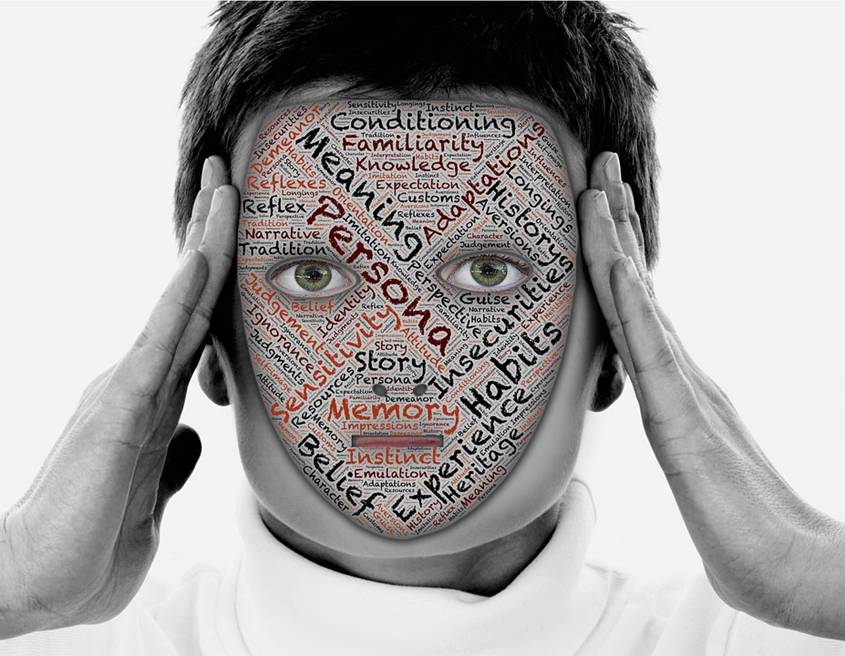
Man covering his face with a mask showing words like meaning, persona, memory, conditioning, etc

When I was young, if someone asked me to complete the sentence “What others think about you is …” I would have said, “the most important thing in life”. I thought that, because of how I grew up. My mom, who is over 75 years old now, still thinks that we live to impress other people and navigate our life based on what they think about us.

When I studied Education, I realized that most parents in the world teach this to their kids. At first, they say, “Whatever your parents think about you is the most important thing in life”. Later on, they say, “What your teachers think about you is also important”.

They are all very surprised when their kids become teenagers and transfer this to their peers and add, “Whatever your friends think about you is the most important thing in the world”.

It is a natural progression. If you practice worrying and navigate your life based on what others think about you, you become good at … worrying and navigating your life based on what others think about you.

Simple!

When you follow this path, you never learn who you are and how to navigate life based on what you think of yourself.

Read What Others Think about You Is … None of Your Business »

Published: August 4, 2016 by Ronit Baras
Last modified: April 15, 2024In: Parenting, Education / Learning Tags: how to, acceptance / judgment / tolerance, role model, behavior / discipline, fear, self confidence / self esteem / self worth, beliefs, personal development / personal growth / personality development / self improvement, rules, education / learning, Life Coaching, expectation, social skills, emotional development, conflict, practical parenting / parents, positive attitude tips, teaching / teachers, responsibility, leadership, emotional intelligence, stress / pressure

Your Child’s Subconscious Mind Has No Sense of Humor

Upset expression saying It's not funny!

When people ask me to summarize my studies, I say they were all about how the brain works. The first four years focused on how to use this knowledge to stimulate learning. Later on, I learned how to work with the subconscious mind to avoid misery and have more success and more happiness.

Learning about the brain is a never-ending quest. There is much research in the world about the brain and its functions in health, in success, in relationships, in learning and in everyday life. Over the years, I have tried to share my learning about the brain and its functions through this blog, especially in relation to parenting and education.

Why parenting and education? Because these two areas are very close to my heart. Since you are reading this, you probably care about them too.

Today, I would like to share some insight that is very important in parenting and in education. I want to tell you how the conscious and the subconscious minds work. Specifically, I want to tell you about how the subconscious mind deals with humor.

Read Your Child’s Subconscious Mind Has No Sense of Humor »

Published: July 12, 2016 by Ronit Baras
Last modified: July 12, 2016In: Parenting, Education / Learning Tags: humor, kids / children, communication, acceptance / judgment / tolerance, responsibility, behavior / discipline, values, self confidence / self esteem / self worth, emotional intelligence, emotional development, how to, practical parenting / parents, beliefs, Life Coaching, sarcasm, interpretation

Addiction in the Family

Young woman smoking

Addiction a dependency on an object, a substance or an activity. As hard as it is to admit, we are all addicted in some way or another. If you want to know if you are addicted do something, take it out of your life for a week and watch your reaction.

People can be addicted to food, phone, TV, a person (like their spouse), work, coffee, alcohol, cigarettes, glue, sex, medication, gambling, drugs and more. I had a friend who was addicted to pain killers. She took them as if she was eating candy, and it became obvious she had an addiction because she could not cope without them and needed more and more of them over time.

It is very important to remember that every addiction we develop is an attempt to fill an emotional and/or physical “hole”. We want it to give us the feeling we are missing without it. This is as true when we talk about drugs as it is when we talk about food.

Read Addiction in the Family »

Published: July 6, 2016 by Ronit Baras
Last modified: March 19, 2021In: Health / Wellbeing, Family Matters Tags: control, change, alcohol, family matters, needs, health / wellbeing, personal development / personal growth / personality development / self improvement, drugs, feeling, responsibility, addiction

Biological Parents are Best for Child Safety

Parents and toddler walking on a beach

When children are born, their parents are typically concerned for their safety. People spend a fortune making sure their children use the safest beds, the safest car seat and safest stroller. This is very natural and very important. For some reason, when the same parents’ relationship breaks down and they separate, the importance of their kids’ physical and emotional safety is often neglected.

Why?

Because once they separate, the decision-making process about the children is divided. Unfortunately, in some cases, parents’ separation means that one parent raises the kids and the other poses a risk to their safety. In other cases, the conflict between the parents puts the kids’ emotional, and sometimes physical, wellbeing at risk. In severe cases, both parents are a risk to their children’s safety and there is a need to remove them from their home completely.

My sister is a social worker in a special unit that takes kids away from their family and puts them in foster care. This always happens because the emotional and/or physical safety of the child is at risk and none of the parents is able to keep them safe. My sister claims that this just moves the kids from one unsafe place to another unsafe place. Unlike Cinderella’s fairy tale, their stories never end in living happily ever after. Instead, stepparents and foster parents struggle greatly to supply a safe environment for the children.

Read Biological Parents are Best for Child Safety »

Published: June 9, 2016 by Ronit Baras
Last modified: June 9, 2016In: Parenting Tags: divorce, violence, separation, relationships / marriage, society, kids / children, health / wellbeing, practical parenting / parents, abuse, responsibility, safety

The Truth About Teachers’ Poor Social Responsibility

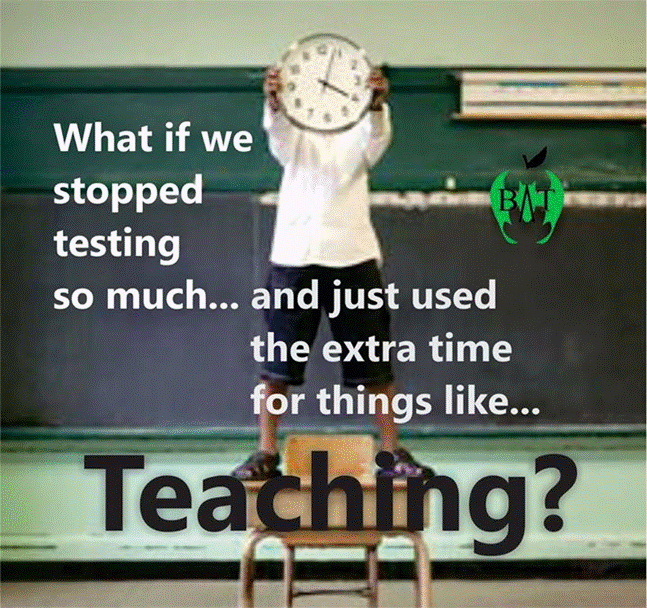
What if we stopped testing so much and just used thhe extra time for things like ... teaching?

I think that teachers have a social responsibility. Teaching is all about making a difference in the world by inspiring children to be the best they can be. Being in education myself, I often think of my role as that of a social activist.

You see, teaching is the best way to make the ripple continue. I have a social responsibility to give my students the tools to build this world. And to live in it in peace and harmony, with themselves, with the land they live, on and with others. This way, they will continue this cycle with everyone they meet in their life.

Making a difference is on the agenda of everyone who considers becoming a teacher. It’s part of the job description nobody ever reads before embarking on their teaching adventure, but everyone totally understands within a very short time of teaching.

Read The Truth About Teachers’ Poor Social Responsibility »

Published: May 26, 2016 by Ronit Baras
Last modified: June 5, 2023In: Education / Learning, Parenting Tags: social skills, k-12 education, academic performance, literacy, education / learning, practical parenting / parents, school, responsibility, success, role model, change

There is Life after Relationship Breakup

Woman punching man in anger with boxing glove

Relationships are at the heart of human society. Some say that being in a relationship is a basic need. In the bible, even the animals in Noah’s ark were in pairs. I think we are meant to be in relationships. Having a partner to share our life and be with us along the way gives lots of certainty in life. Together we share love, friendship, adventures, struggles, finance and children, and together, it is always easier and more fun. Unfortunately, sometimes, it just does not work. In fact, in our society today, relationship breakup comes more often than not and with it comes pain, grief and loss of hope.

I work with many couples through relationship breakups and with individuals rebuilding their life after breaking up with a partner, and I can reassure you, there is life after a relationship breakup. Usually, couples feel a hole in their heart that they wish to fill up. The desire to fill this hole drives them quickly into a new relationship that looks exactly like the one they left in pain.

Why?

Because the separation originated from a hole inside of them, which they thought the other did not fill, and they enter the new relationship with the same mindset. After a short time of excitement and attention, they realize that the new partner, lover or boyfriend/girlfriend cannot fulfill their needs and they go through the same breakup with more pain, more grief and more loss.

Read There is Life after Relationship Breakup »

Published: May 17, 2016 by Ronit Baras
Last modified: June 5, 2023In: Relationships / Marriage, Personal Development Tags: attitude, personal development / personal growth / personality development / self improvement, projection, feeling, responsibility, expectation, how to, choice, divorce, separation, change, relationships / marriage, perception

Excuses, Excuses

Stick figure dragging a block saying Excuses, Excuses, Excuses...

We all have excuses for many things in life. If we examine our excuses, we will find that we only use them for the things that aren’t working in our life. We never make excuses for what works, do we?

Excuses are stories we tell ourselves to justify things that didn’t go according to the expectations of others and even our own. We have excuses for why we didn’t succeed, why we forgot, why we couldn’t and even why we missed opportunities. The list is endless.

Usually, we bounce between blame and justifications to overcome disappointment. It’s important to understand that it is not necessary to be hard on yourself whenever you come up with an excuse, and you should practice acceptance as another coping mechanism. Excuses are essential for our survival. Without them, we would not be able to overcome failure, but if we use them too often, we do more damage than good to our emotional state.

Read Excuses, Excuses »

Published: February 16, 2016 by Ronit Baras
Last modified: September 9, 2020In: Personal Development Tags: focus, responsibility, emotional intelligence, failure, positive attitude tips, attitude, personal development / personal growth / personality development / self improvement, expectation

  • « Go to Previous Page
  • Page 1
  • Page 2
  • Page 3
  • Page 4
  • Page 5
  • Page 6
  • Interim pages omitted …
  • Page 23
  • Go to Next Page »

Get Happiness by Email

Sign up to receive posts by email and get my free mini-course Seven Emails with Seven Secrets for Seven Weeks to boost your personal development


    Join Us on Social Media

    Facebook logo Twitter logo Linkedin logo Pinterest logo RSS feed icon

    Books by Ronit Baras

    • What motivates your child? Read Motivating Kids by Ronit Baras Motivating Kids From: $9.95
    • Reflections by Ronit Baras Reflections From: $5.99
    • Be Special Be Yourself for Teenagers by Ronit Baras Be Special, Be Yourself for Teenagers From: $5.99
    • In the Outback with Jasmine Banks by Ronit Baras In the Outback with Jasmine Banks From: $5.99
    • The Will by Ronit Baras The Will From: $5.99

    Be Happy in LIFE logo
    Book your private life coaching with Ronit Baras and learn how to be happy in life

    Girl speaking at student leadership programLeaders are not born. They are made. Bring this Student Leadership Program to your primary school or high school and you will create a community of empowered, inspired student leaders, parents and teachers.

    Related Links

    • Be Happy in LIFE – Life Coaching
    • Noff Baras – Screen Actor & Model
    • Personal Growth Web
    • The Motivational Speaker
    • Tsoof Baras – percussionist, composer and producer

    Primary Sidebar

    Your Cart

    Speaker Bookings

    Ronit Baras - Practical Parenting Blogger
    Book Ronit as a Speaker for Your event »

    Ready to be happy?

    Happy woman holding a cup in the snow
    Be empowered and set your spirit free!

    Engage Ronit as Your Life Coach »

    Give to Receive

    Kiva - loans that change lives

    Contact Us · Subscribe · Terms of Use / Privacy Statement · Return & Refund Policy · Sitemap

    Copyright © 2026 Be Happy in LIFE · Built and powered by Get Business Online

    Secure HTTPS

    • Home
    • Series
    • About Ronit Baras
    • Books by Ronit Baras
      ▼
      • Motivating Kids
      • Be Special, Be Yourself for Teenagers
      • Reflections
      • In the Outback with Jasmine Banks
      • The Will
      • * Your Cart
      • * Secure Checkout
    • Contact
      ▼
      • Join Us