• Skip to primary navigation
  • Skip to main content
  • Skip to primary sidebar

Family MattersPractical Parenting Blog

  • Home
  • Series
  • About Ronit Baras
  • Books by Ronit Baras
    • Motivating Kids
    • Be Special, Be Yourself for Teenagers
    • Reflections
    • In the Outback with Jasmine Banks
    • The Will
    • * Your Cart
    • * Secure Checkout
  • Contact
    • Join Us

Home » communication » Page 6

How to Destroy Good Character Traits for Children: A to F

Little girls dressed as snow white

In the last chapter, of the Helping Kids Build Character Series, I explained the nature of watering with weed killer. There are certain things we do as parents that prevent good character traits from developing.

If you want to encourage good character traits in your children, there are some important things you should do differently.

Here is a list of good character traits that will not develop in the presence of bad beliefs (“weed killers”). Read them. If there are phrases on the list that you recognize in yourself, try removing them from your day to day speech. See if you can replace them with more positive phrases.

Over the years, I have worked with many parents who succeeded in changing the seeds they were planting, from poisonous communication and planting helpful beliefs. Being a parent can be a burden and a blessing. If you were the one who watered your child’s character with weed killer (rather than nutritious water), only you have the power to change it.

Parents have an amazing power. I have seen many kids and coached many people about beliefs. Working with parents has always been the best solution because me telling a kid “your parents love you” is meaningless compared to a parent saying “I love you”.

Read How to Destroy Good Character Traits for Children: A to F »

Like this:

Like Loading…

Published: June 18, 2015 by Ronit Baras
Last modified: August 14, 2015In: Parenting, Kids / Children Tags: how to, humor, fear, kids / children, choice, self confidence / self esteem / self worth, trust, personal development / personal growth / personality development / self improvement, negative, feeling, beliefs, list, mind, emotional development, communication, change, practical parenting / parents, focus, parent coaching, skills, sarcasm, compassion

Positive Character Traits for Children: Watering with Weed Killer

Mum, you plant the seeds...

The previous Character Traits posts focused on what parents should say to instill positive character traits in their kids. Character traits are like plants or trees that grow over time – all they need is for parents to plant good beliefs as seeds and provide reinforcement as water. Unfortunately, some parents use weed killer as water. This ensures this plant will never grow big and strong and even makes room for some nasty “bad” plants to grow.

It is amazing how the seeds of character sown in childhood can have a long-term impact. Some of my grown up clients (aged 25 to 65) are being held back by some very old and poisonous trees that creep into everything they do. It is as if there is a space in the brain dedicated for each good trait. As soon as the area has been poisoned by weed killer, nothing good can grow there. If a person feels fundamentally inadequate, this becomes part of their identity. If anything were to suggest that they are adequate, they will subconsciously resist with all their might. The subconscious minds is a tricky thing and it takes time and courage to access and heal.

Read Positive Character Traits for Children: Watering with Weed Killer »

Like this:

Like Loading…

Published: June 9, 2015 by Ronit Baras
Last modified: September 25, 2026In: Parenting, Kids / Children Tags: truth, list, trust, guilt, negative, emotional development, beliefs, practical parenting / parents, communication, control, focus, identity, school, sarcasm, gender, positive, love, kids / children, success, personal development / personal growth / personality development / self improvement, thought

Language Acquisition: Do Young children Need a Second Language?

Hello in Different Languages

For years, people have been researching the acquisition of languages. One aspect mentioned in some of this research is the distinction between Primary (“mother tongue”) and Secondary language. I believe this distinction is essential for maximizing the power of learning another language.

Primary and secondary languages are stored in different places in the brain and through a different process. First, second and third primary languages are learned by creating patterns from a load of seemingly random information, while secondary languages are learned by using the primary languages as reference and building a “translation net” to map the secondary language back to them.

Experts still argue about the critical age for forming primary languages, but they all estimate it to end between the ages of 7 and 12. This leaves the early childhood educators to deal with this important channel of education in the most critical age – the early years.

Read Language Acquisition: Do Young children Need a Second Language? »

Like this:

Like Loading…

Published: April 21, 2015 by Ronit Baras
Last modified: November 28, 2022In: Education / Learning Tags: literacy, education / learning, practical parenting / parents, communication, early childhood, school, language, social skills, k-12 education, cultural, diversity

If-then Parenting Style

Here's to the things left unsaid and the thoughts unexpressed

Ashley was a very successful woman. She was brilliant and smart. She had been in a very solid and stable relationship with her husband of 12 years before they decided to have their daughter Mira.

When Mira was born, Ashley was 39, with a booming and successful business that took her away from home 2-3 days a week. Her husband Daryl decided he would take over the responsibilities of caring for Mira. He changed jobs and started working from home. Ashley continued to travel 2-3 days a week.

This seemed like a good arrangement in the beginning but the gap between Ashley and Daryl increased and they often had arguments about the best parenting style for Mira.

I met them both when Mira was 1 year old. At first, I thought they wanted to do the parenting program with me. After a while, I realized each of them was trying to convince me that their parenting style was the better one and that I should tell their partner this.

Read If-then Parenting Style »

Like this:

Like Loading…

Published: April 16, 2015 by Ronit Baras
Last modified: February 28, 2022In: Life Coaching, Parenting Tags: communication, practical parenting / parents, abuse, how to, beliefs, control, change, happiness, Life Coaching, kids / children, behavior / discipline

Trust (or The Boy Who Cried Wolf)

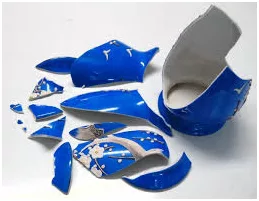
Broken vase

Trust is a very important currency in marriage. It gives both partners a sense of certainty in the relationship, which helps it survive and remain strong. Certainty is a need we all have in life. Subconsciously, we would be willing to do a lot in order to have it met. When our sense of certainty is a bit shaky, we get anxious. This can be a killer in a relationship.

If you know the story of the boy who cried wolf, you understand why trust is so valuable. In the story, they boy would run to the village to beg the townspeople to help him. A wolf was chasing his sheep. The villagers rushed to help, only to discover that there was no wolf and the boy had lied. A week later, the boy did it again, and again, and again. The villagers came once, twice and even three time, and each time, there was no wolf. Until one day, the boy came running in a real panic, begging for help. A wolf was really chasing his sheep this time. But the villagers did not believe him. He had lied to them too many times. And the boy could only watch in horror as the wolf ate his sheep.

Read Trust (or The Boy Who Cried Wolf) »

Like this:

Like Loading…

Published: March 31, 2015 by Ronit Baras
Last modified: December 25, 2019In: Relationships / Marriage Tags: communication, partner, truth, trust, rules, relationships / marriage, story, decision making, tips, personal development / personal growth / personality development / self improvement, certainty

How to Handle Conflict Resolution in the Family

Big family photo

Every family has fights. Even in the most wonderful family, people fight sometimes. Fights can be between the parents, between parents and kid and between kids themselves. Fight create conflict and can damage the delicate fabric of relationships.

However, if you come out of the other side of the fight stronger, it can in fact strengthen the bond between family members. This is why conflict resolution in the family is so important.

If you are a parent and you have fights in your family, rest assures you are perfectly normal. The science of conflict resolution is easy to learn and master. Once you learn the tricks, life can be much easier.

Read How to Handle Conflict Resolution in the Family »

Like this:

Like Loading…

Published: March 26, 2015 by Ronit Baras
Last modified: October 16, 2020In: Parenting, Relationships / Marriage Tags: rules, change, parent coaching, relationships / marriage, communication, conflict, school, kids / children, skills, personal development / personal growth / personality development / self improvement, emotional intelligence, feeling, how to, partner, trust, practical parenting / parents, control

Attachment Theory: Secure and Insecure Attachment in Adult Life

Baby walking down the beach

Secure and insecure attachment styles in babies produce different life styles in adults. Researchers have found that the relationship between babies and their parents (mainly moms) has a direct impact on their self-esteem and relationships as they grow older. Children who have a secure attachment will be more independent, have healthy connections with others, show higher emotional intelligence, perform better at school and have strong, steady relationships as adults.

If the world we live in is full of stress (which it is), then children with secure attachment will experience less depression and anxiety as adults, because they can manage their feelings better.

Through verbal and non-verbal communication, the relationship between parents and their babies in that first year of life gives the child a map with which to navigate the world and their experiences. This bond between parent and child during this critical time will shape their future relationship, teach them ways to calm themselves, manage stress, build their resilience and teach them how to find happiness and success in life.

I have often heard that babies only need to be fed, put to sleep, and changed in order to grow healthy. In fact, it is how we feed them and the way we put them to sleep or change and bath them that shapes the formation of attachment. It teaches them how life works and how they should behave.

Read Attachment Theory: Secure and Insecure Attachment in Adult Life »

Like this:

Like Loading…

Published: March 5, 2015 by Ronit Baras
Last modified: December 25, 2019In: Babies / Maternity, Parenting, Kids / Children Tags: fear, research, father, relationships / marriage, kids / children, teens / teenagers, self confidence / self esteem / self worth, communication, baby / babies, success, emotions, practical parenting / parents

Attachment Theory: Main Characteristics of Attachment

Baby boy in a sailors hat sitting in a lifesaver float

The emotional bond between people depends on their ability to connect and the style of the connection. The attachment we have with the people in our lives (partners, children, siblings, friends and even our own parents) are strongly associated with the attachment we formed in our early years of life, with our primary caregiver (usually our parents). Similarly, the challenges we experience in our relationships as adults are shaped by the patterns of challenge from our early attachments.

According to John Bowlby, attachment is the connection a baby forms with its parent to ensure their basic needs of safety, comfort, care and pleasure are met. He described this attachment as “lasting psychological connectedness between human beings”. Bowlby believed that the style of the relationship between the parent (mainly the mother) and the child in this critical period of the baby’s development becomes a blue print for later relationships.

The main idea of attachment theory is that the caregivers provides the baby with a safe and secure base from which to explore the world. The baby knows that it is safe to venture out and explore the world, and that the caregiver will always be there to come back to for comfort in times of stress and discomfort.

Read Attachment Theory: Main Characteristics of Attachment »

Like this:

Like Loading…

Published: February 12, 2015 by Ronit Baras
Last modified: February 29, 2020In: Parenting, Kids / Children Tags: stress / pressure, mother, self confidence / self esteem / self worth, father, baby / babies, communication, mom, feeling, early childhood, dad, emotional development, anxiety, toddlers, practical parenting / parents, anger, trust, aggressive, safety, family matters, security, needs, research, kids / children, separation

Raising Babies: Talk, Talk, Talk

Baby girl and little boy

I have three kids and they all started talking very early. Many new parents ask me if it is better for babies to talk early or not? Is it something they are born with?

Firstly, I personally do not think this is hard-wired. There is no timer in the brain of a baby that says, now you are 1 years old, you should start saying words. It is very much dependent on the stimulation the baby gets from their environment.

Secondly, babies who can communicate early are very easygoing babies.

Why?

Because they can express themselves and are not as frustrated as a baby who uses sounds to communicate.

Read Raising Babies: Talk, Talk, Talk »

Like this:

Like Loading…

Published: January 20, 2015 by Ronit Baras
Last modified: March 2, 2020In: Parenting, Babies / Maternity Tags: kids / children, behavior / discipline, self confidence / self esteem / self worth, baby / babies, education / learning, communication, emotional development, early childhood, practical parenting / parents, language, family matters, environment

Don’t Clam Up

Clam shell

In previous chapters of the “Save your Marriage” series I explained the two communication patterns that can destroy every marriage: The king/queen and the nitpicker. As I said before, no one becomes a “king” or a “nitpicker” because they enjoy it. Most of the time, they do it on a subconscious level, because they grew up in a house where one or both parents were kings or nitpickers and made them feel small and helpless.

In the last chapters, I explained how parents who abuse or bully, like the “king/queen” or the “nitpicker”, can raise kids who are constantly on guard. In this chapter, I will explain how some parenting styles can “breed” kids who clam up and withdraw into their shells. This communication style can be very devastating for them in their future relationships and marriage.

Read Don’t Clam Up »

Like this:

Like Loading…

Published: November 27, 2014 by Ronit Baras
Last modified: September 25, 2026In: Personal Development, Relationships / Marriage Tags: change, emotions, communication styles, feeling, relationships / marriage, partner, hope, practical parenting / parents, communication, conflict, focus, anger, abuse, positive, art, kids / children, success, fear, self confidence / self esteem / self worth, choice, personal development / personal growth / personality development / self improvement

  • « Go to Previous Page
  • Page 1
  • Interim pages omitted …
  • Page 4
  • Page 5
  • Page 6
  • Page 7
  • Page 8
  • Interim pages omitted …
  • Page 39
  • Go to Next Page »

Get Happiness by Email

Sign up to receive posts by email and get my free mini-course Seven Emails with Seven Secrets for Seven Weeks to boost your personal development


    Books by Ronit Baras

    • What motivates your child? Read Motivating Kids by Ronit Baras Motivating Kids From: $9.95
    • Reflections by Ronit Baras Reflections From: $5.99
    • Be Special Be Yourself for Teenagers by Ronit Baras Be Special, Be Yourself for Teenagers From: $5.99
    • In the Outback with Jasmine Banks by Ronit Baras In the Outback with Jasmine Banks From: $5.99
    • The Will by Ronit Baras The Will From: $5.99

    Be Happy in LIFE logo
    Book your private life coaching with Ronit Baras and learn how to be happy in life

    Girl speaking at student leadership programLeaders are not born. They are made. Bring this Student Leadership Program to your primary school or high school and you will create a community of empowered, inspired student leaders, parents and teachers.

    You’re Reading a Top Parenting Blog

    Feespot Parenting Blogs80 Best Family Blogs to Follow in 2026Top 50 Amazing Parenting Blogs 2017

    Related Links

    • Be Happy in LIFE – Life Coaching
    • Personal Growth Web
    • Tsoof Baras – percussionist, composer and producer
    • Noff Baras – Screen Actor & Model

    Primary Sidebar

    Your Cart

    Ready to be happy?

    Happy woman holding a cup in the snow
    Be empowered and set your spirit free!

    Engage Ronit as Your Life Coach »

    Speaker Bookings

    Ronit Baras - Practical Parenting Blogger
    Book Ronit as a Speaker for Your event »

    Join Us on Social Media

    Facebook logo Twitter logo Linkedin logo Pinterest logo RSS feed icon

    Give to Receive

    Kiva - loans that change lives

    Contact Us · Subscribe · Terms of Use / Privacy Statement · Return & Refund Policy · Sitemap

    Copyright © 2026 Be Happy in LIFE · Built and powered by Get Business Online

    Secure HTTPS

    • Home
    • Series
    • About Ronit Baras
    • Books by Ronit Baras
      • Motivating Kids
      • Be Special, Be Yourself for Teenagers
      • Reflections
      • In the Outback with Jasmine Banks
      • The Will
      • * Your Cart
      • * Secure Checkout
    • Contact
      • Join Us
    %d