• Skip to primary navigation
  • Skip to main content
  • Skip to primary sidebar

Family MattersPractical Parenting Blog

  • Home
  • Series
  • About Ronit Baras
  • Books by Ronit Baras
    • Motivating Kids
    • Be Special, Be Yourself for Teenagers
    • Reflections
    • In the Outback with Jasmine Banks
    • The Will
    • * Your Cart
    • * Secure Checkout
  • Contact
    • Join Us

Home » communication » Page 4

Assertiveness: Successful Communication Summary

Middle-aged woman in a suit looking assertive

You can learn assertiveness skills at any stage of life and you can always improve them and gain more respect for yourself and others. In this post, I have gathered all of my assertiveness tips in one big list. I hope this summary will be useful for you and for your children and students.

If we create a society full of assertive people, we will not have conflicts and we will live with each other with respect, so pass this along to everyone you know.

Read Assertiveness: Successful Communication Summary »

Like this:

Like Loading…

Published: October 20, 2016 by Ronit Baras
Last modified: September 25, 2026In: Personal Development Tags: change, responsibility, assertive, values, aggressive, skills, positive attitude tips, men, tips, emotional intelligence, acceptance / judgment / tolerance, how to, self confidence / self esteem / self worth, choice, personal development / personal growth / personality development / self improvement, beliefs, empowerment, communication, control, love

Assertiveness: Know Your Rights

Assertive woman writing "I'll do it My Way"

So far, I have covered things that affect our ability to be assertive. This post adds some tips on how to know your rights, keep them and be assertive about them. I hope they will help you on your quest to develop your emotional intelligence and communicate with assertiveness.

When you are assertive, you express yourself with confidence without hurting others. You are firm, not a bully. You are clear, not manipulative. You are honest, not aggressive. Healthy communication is based on honesty, clarity and confidence.

First, you have to know your rights in every communication. It takes two to tango and when one has more rights than the other does, this will not be an assertive relationship. I suggest teaching kids these rights too and giving them opportunities to practice them.

Read Assertiveness: Know Your Rights »

Like this:

Like Loading…

Published: October 13, 2016 by Ronit Baras
Last modified: April 4, 2026In: Personal Development Tags: change, assertive, communication, positive attitude tips, responsibility, tips, values, acceptance / judgment / tolerance, emotional intelligence, self confidence / self esteem / self worth, how to, personal development / personal growth / personality development / self improvement, trust, beliefs, empowerment, control

Assertiveness: Live by Your Own Standards

Faceless woman with a sign showing arrows pointing at the word CONFIDENCE

Assertiveness is a helpful skill in life, yet most people do not have it. They do not have it because they could not learn it at home or from anyone else except professionals. You see, the people who teach assertiveness must be very confident and not afraid that you might use assertiveness with them, and these people are hard to find.

Am I assertive all the time? No, not really. Sometimes, I choose avoidance or aggression, and every time I use them, I feel uncomfortable. They either hurt me or others, which is not very good. Still, I aim to use assertiveness in my communication with others and most of the time, I do.

Assertiveness requires confidence to express your own thoughts and feeling without fear and without the need, desire or intention to hurt anyone else. It is important to distinguish between having the intention to hurt and actually hurting someone else.

Read Assertiveness: Live by Your Own Standards »

Like this:

Like Loading…

Published: October 6, 2016 by Ronit Baras
Last modified: February 28, 2020In: Personal Development Tags: control, change, assertive, communication, positive attitude tips, responsibility, stress / pressure, values, acceptance / judgment / tolerance, emotional intelligence, self confidence / self esteem / self worth, how to, personal development / personal growth / personality development / self improvement, choice, freedom, beliefs, expectation, empowerment

Be Your Child’s Speech Therapist with Mouth Gym

Girl looking thoughtful

Over the last 30 years, I have had a chance to see many children with speech difficulties. Children who do not speak properly may sound cute at first, but this might become an obstacle as they grow up. At some stage, their parents stress about it and take them to a speech therapist or a speech pathologist.

But parents can fix some of the speech problems very easily. This post includes my tips for fixing one of the major speech difficulties – physical sound production. Hundreds of parents around the world have used them and changed their children’s life. If your child has trouble pronouncing words, you do not need a speech therapist.

Using the suggestions below will do the same for your child.

Read Be Your Child’s Speech Therapist with Mouth Gym »

Like this:

Like Loading…

Published: September 20, 2016 by Ronit Baras
Last modified: May 24, 2020In: Parenting, Education / Learning Tags: practical parenting / parents, teaching / teachers, communication, how to, auditory, learning disabilities, activity, fun, kids / children, tips

The Expectations Paradox: Mindfulness is the Cure

A tree with words about what love is

In the last two posts about the expectations paradox, I explained how expectations from others and ourselves can cause us lots of pain and why respect and acceptance are the keys to overcoming them. It is much better to be prepared for the future than to try to control a specific outcome. Today, I will describe how to develop respect and acceptance with mindfulness.

Mindfulness is a state of reflection with no judgment. This state is similar to mediation. We observe and do not let the ego interfere with our observation and tempt us to label and judge what we experience. In a mindfulness state, we do not give a rating to the event, thought or feeling. We only name it. In a higher state of mindfulness, even naming it is not necessary. We just notice.

I remember the first time I mediated. Gal and I were in California at a meditation course. Every week, we learned a different kind of meditation. We did walking, eating, light, mantra and visualizing meditations and we were very confused. Millions of thoughts ran through our minds and we had no control over them. When we got home, we went to sleep and felt overwhelmed.

Read The Expectations Paradox: Mindfulness is the Cure »

Like this:

Like Loading…

Published: September 13, 2016 by Ronit Baras
Last modified: June 21, 2022In: Personal Development Tags: empowerment, control, change, communication styles, positive attitude tips, acceptance / judgment / tolerance, communication, personal development / personal growth / personality development / self improvement, responsibility, love languages, success, expectation, emotional intelligence, mindfulness, meditation

The Expectations Paradox: Self-inflicted Pain

Rusty sign saying Welcome to Reality

In the last post about the paradox of expectations, I explained how unmet expectations can bring lots of misery to life when we do not understand them properly. Today, I will explore additional aspects of expectations and what happens to us when our expectations are not met.

Many people think that expectations are part of their identity. They expect so much of themselves that they believe this gives them the “right” to expect the same from others. I am sure that if you examine the definition of arrogance (“having or revealing an exaggerated sense of one’s own importance or abilities”), you will see someone who expects a lot from themselves and from others as arrogant. Thinking highly of yourself is great, but expecting others to fulfill your expectations is not!

Most people care a lot about what others think about them. They are in the approval trap and have the disease to please. It is very hard to be assertive and to take care of your own interests when you are busy pleasing others. It may be easier when you are young, but it becomes more complicated during the teenage years, when you realize that that some of the expectations of those around you contradict others.

More people find the pain we experience from unmet expectations unbearable. They think that life is hard when things do not happen the way they expect them to. But this is only because they believe life is supposed to work as they expect.

Read The Expectations Paradox: Self-inflicted Pain »

Like this:

Like Loading…

Published: September 6, 2016 by Ronit Baras
Last modified: September 25, 2026In: Personal Development Tags: responsibility, personal development / personal growth / personality development / self improvement, values, love languages, men, expectation, success, mindfulness, emotional intelligence, empowerment, control, change, communication, communication styles, projection, positive attitude tips, love, acceptance / judgment / tolerance

The Devastating Relationship between Expectations and Conflicts

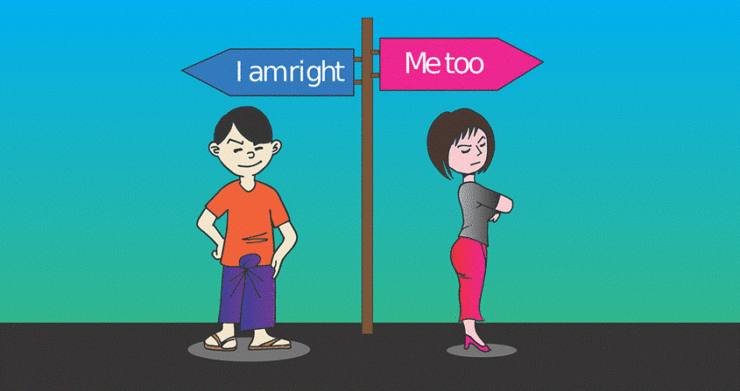
Couple under signs in opposite directions saying "I am right" and "Me too"

Conflicts determine the quality of every relationship. Even the most loving couples, friends or family members face conflict in their life. It is because we are different people, with different life experiences, tendencies, desires, fears, challenges and upbringing.

Every moment in time, whether we have judged it as a negative, positive or neutral, has molded us into the people we are today. We can define ourselves as the accumulation of all those split-second moments of experience and how they have affected us.

It is important to remember that even twins, having the same genetic code, do not have the same path in life, because each of them was in a different place in their mother’s womb, was born at a different time, has a different name and reacts differently to the same experiences. As hard as it may be to accept, the chances that two people will go through the same experience and come out of it the same way is zero.

Read The Devastating Relationship between Expectations and Conflicts »

Like this:

Like Loading…

Published: August 16, 2016 by Ronit Baras
Last modified: September 20, 2022In: Personal Development Tags: hope, conflict, positive attitude tips, acceptance / judgment / tolerance, personal development / personal growth / personality development / self improvement, expectation, communication, emotional intelligence, change, happiness

Children with the Kinesthetic Communication Style

Kinesthetic kids love mess. Two boys cutting out Halloween pumpkins

The idea that all kids are the same is false and brings parents and teachers into lots of trouble. Every time these kids are not “the same” as others, they think something is wrong with them. Nothing is wrong with them! They are just different and we should all be happy that there is not such a thing as “one size fits all”.

In my kids’ assessments, I check children’s communication styles. If I know their communication styles, I know what challenges they have and why, and I know the best ways to introduce new information to them.

During our sessions together, I pay attention to how they move. I check if they stand up while they work and if they move their legs or other body part. I notice if they are social and friendly and pay attention to how they talk about others. Moving a lot and talking about emotions, fairness, kindness and caring are typical for kinesthetic children.

Read Children with the Kinesthetic Communication Style »

Like this:

Like Loading…

Published: July 26, 2016 by Ronit Baras
Last modified: September 25, 2026In: Parenting, Education / Learning Tags: gender, kinesthetic, touch, acceptance / judgment / tolerance, love, behavior / discipline, emotional intelligence, education / learning, motivation, practical parenting / parents, communication styles, teaching / teachers, learning styles, activity, communication, assessment, focus, social, school, academic performance

Your Child’s Subconscious Mind Has No Sense of Humor

Upset expression saying It's not funny!

When people ask me to summarize my studies, I say they were all about how the brain works. The first four years focused on how to use this knowledge to stimulate learning. Later on, I learned how to work with the subconscious mind to avoid misery and have more success and more happiness.

Learning about the brain is a never-ending quest. There is much research in the world about the brain and its functions in health, in success, in relationships, in learning and in everyday life. Over the years, I have tried to share my learning about the brain and its functions through this blog, especially in relation to parenting and education.

Why parenting and education? Because these two areas are very close to my heart. Since you are reading this, you probably care about them too.

Today, I would like to share some insight that is very important in parenting and in education. I want to tell you how the conscious and the subconscious minds work. Specifically, I want to tell you about how the subconscious mind deals with humor.

Read Your Child’s Subconscious Mind Has No Sense of Humor »

Like this:

Like Loading…

Published: July 12, 2016 by Ronit Baras
Last modified: July 12, 2016In: Parenting, Education / Learning Tags: communication, acceptance / judgment / tolerance, responsibility, behavior / discipline, values, self confidence / self esteem / self worth, emotional intelligence, emotional development, how to, practical parenting / parents, beliefs, Life Coaching, sarcasm, interpretation, humor, kids / children

Raising Children with “The Disease to Please”

The Disease to Please

Children are affected strongly by their emotional state. When I work with children, I can see their performance decrease when they are emotionally preoccupied. Some kids are affected more and others less, but all of them drop in performance when they are down.

Kinesthetic children are typically affected more, because they are very sensitive to the people around them. These are the kids who can “sense” others around them and all they want is for “everyone to be happy and nice to each other”.

Children who are highly sensitive to pressure are at risk of developing “the disease to please” – dependence on external rewards and oversensitivity to pressure. It is the perception that other people’s feelings are so important that they trump your own.

In most cases, “the disease to please” comes from fear of rejection, which most people want to avoid. Many people have this disease and they got it during their childhood. We can say that this kind of disease is contagious and we catch it from our parents…

Read Raising Children with “The Disease to Please” »

Like this:

Like Loading…

Published: July 8, 2016 by Ronit Baras
Last modified: September 25, 2026In: Parenting Tags: motivation, perception, kinesthetic, drugs, kids / children, communication, acceptance / judgment / tolerance, love, behavior / discipline, men, self confidence / self esteem / self worth, art, emotional development, emotional intelligence, practical parenting / parents, how to, choice

  • « Go to Previous Page
  • Page 1
  • Page 2
  • Page 3
  • Page 4
  • Page 5
  • Page 6
  • Interim pages omitted …
  • Page 39
  • Go to Next Page »

Get Happiness by Email

Sign up to receive posts by email and get my free mini-course Seven Emails with Seven Secrets for Seven Weeks to boost your personal development


    Books by Ronit Baras

    • What motivates your child? Read Motivating Kids by Ronit Baras Motivating Kids From: $9.95
    • Reflections by Ronit Baras Reflections From: $5.99
    • Be Special Be Yourself for Teenagers by Ronit Baras Be Special, Be Yourself for Teenagers From: $5.99
    • In the Outback with Jasmine Banks by Ronit Baras In the Outback with Jasmine Banks From: $5.99
    • The Will by Ronit Baras The Will From: $5.99

    Be Happy in LIFE logo
    Book your private life coaching with Ronit Baras and learn how to be happy in life

    Girl speaking at student leadership programLeaders are not born. They are made. Bring this Student Leadership Program to your primary school or high school and you will create a community of empowered, inspired student leaders, parents and teachers.

    You’re Reading a Top Parenting Blog

    Feespot Parenting Blogs80 Best Family Blogs to Follow in 2026Top 50 Amazing Parenting Blogs 2017

    Related Links

    • Be Happy in LIFE – Life Coaching
    • Personal Growth Web
    • Tsoof Baras – percussionist, composer and producer
    • Noff Baras – Screen Actor & Model

    Primary Sidebar

    Your Cart

    Ready to be happy?

    Happy woman holding a cup in the snow
    Be empowered and set your spirit free!

    Engage Ronit as Your Life Coach »

    Speaker Bookings

    Ronit Baras - Practical Parenting Blogger
    Book Ronit as a Speaker for Your event »

    Join Us on Social Media

    Facebook logo Twitter logo Linkedin logo Pinterest logo RSS feed icon

    Give to Receive

    Kiva - loans that change lives

    Contact Us · Subscribe · Terms of Use / Privacy Statement · Return & Refund Policy · Sitemap

    Copyright © 2026 Be Happy in LIFE · Built and powered by Get Business Online

    Secure HTTPS

    • Home
    • Series
    • About Ronit Baras
    • Books by Ronit Baras
      • Motivating Kids
      • Be Special, Be Yourself for Teenagers
      • Reflections
      • In the Outback with Jasmine Banks
      • The Will
      • * Your Cart
      • * Secure Checkout
    • Contact
      • Join Us
    %d