• Skip to primary navigation
  • Skip to main content
  • Skip to primary sidebar

Family MattersPractical Parenting Blog

  • Home
  • Series
  • About Ronit Baras
  • Books by Ronit Baras
    • Motivating Kids
    • Be Special, Be Yourself for Teenagers
    • Reflections
    • In the Outback with Jasmine Banks
    • The Will
    • * Your Cart
    • * Secure Checkout
  • Contact
    • Join Us

Home » how to » Page 20

Handy Family Tips: Wake Up With a Smile

Cute girl in pink robe

In every family, some mornings are harder than others. How the morning goes often sets the tone for the rest of the day, so the way all the family members wake up can determine whether the day will be easy and relaxed or stressed and chaotic.

Imagine a rushed morning. You find yourself saying things like, “Get ready”, “Get dressed”, “Come on, put your shoes on”, “We are going to be late”. The kids are late for school, you are late for work, you spill coffee in the car, the kids forget their lunch boxes and when you think it could not possibly get any worse, you find yourself stuck in traffic. You end up thinking if only you had those 5 minutes you wasted hurrying the kids, you would have been ready on time.

It is not always easy to wake up kids. If they went to sleep later than usual, or they stayed up late in front of a screen, it can be even harder. The best way to help them wake up in the morning is to give them time. I know it sounds funny but enough time to wake up at their own pace is all it takes. Regardless of their age, waking up at their own speed is essential for a good start to the day.

Read Handy Family Tips: Wake Up With a Smile »

Published: January 16, 2014 by Ronit Baras
Last modified: December 25, 2019In: Home, Parenting Tags: tips, stress / pressure, how to, practical parenting / parents, choice, home / house, lifestyle, relaxation, family matters, sleep, kids / children

The Art of Listening: Things to Watch Out For

Listen to hear, not to speak

To conclude The Art of Listening series, here are some tips on things to watch out for in deciding which listening style to adopt.

In previous posts, I covered situations when it is hard to listen, types of listening and how to become good listeners. However, putting all this into practice means you need to know when it is appropriate to adopt one style over another. There are some things to watch out for in making that decision.

Be a kind listener when:
1. The speaker is angry or in a bad mood.
2. The speaker feels judged or stressed.
3. When you want to please the listener or need something from him/her.

Read The Art of Listening: Things to Watch Out For »

Published: January 14, 2014 by Ronit Baras
Last modified: December 25, 2019In: Personal Development, Relationships / Marriage Tags: personal development / personal growth / personality development / self improvement, how to, empathy, negative, feeling, change, relationships / marriage, social skills, listening, positive, tips, acceptance / judgment / tolerance, focus, friends / friendship, emotional intelligence

School Holiday Activities for Kids

Little blonde and blue-eyed girl

In Australia, we are halfway through another school holiday season. I love school holidays, even though I finished school many years ago. For parents, the holidays can be a stressful time. Here is an A-to-Z guide of what you can do with your kids these school holidays to make the time a bit easier.

Acting is a very healthy and fun thing for kids to do. Give them opportunities to rehearse a play and present it to you. They can make puppets and use a table as a stage. Be a very supportive audience and encourage them to perfume for you.

Beach is a great place to be in the school holiday. Give the kids a ball and some boxes to build sand castles and they will be busy for hours.

Read School Holiday Activities for Kids »

Published: January 9, 2014 by Ronit Baras
Last modified: June 5, 2019In: Parenting, Education / Learning Tags: activity, fun, kids / children, education / learning, practical parenting / parents, school, home / house, art, how to, holidays, social skills

The Art of Listening: How to Listen

Listen more, talk less

To wrap up our the “The Art of Listening” series , here are some great tips on how to become a better listener.

To start off, we discussed 10 situations that turn off the listening switch and make it harder to keep engaged. In the previous post, I shared four listening types: the kind listener, the empathetic listener, the critical listener and the solution focused listener.

In this post, I will share ideas of how to become a kind listener, an empathetic listener, a critical listener and a solution focused listener and how to use each of these listening styles when appropriate.

Read The Art of Listening: How to Listen »

Published: December 19, 2013 by Ronit Baras
Last modified: December 25, 2019In: Personal Development, Relationships / Marriage Tags: personal development / personal growth / personality development / self improvement, change, empathy, motivation, assumptions, relationships / marriage, listening, social, positive, questions, tips, focus, acceptance / judgment / tolerance, emotional intelligence, friends / friendship, how to

How to Overcome Shyness: Extra Tips

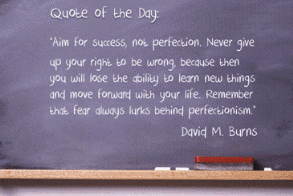
Quote written on a blackboard

In this final post of How to Overcome Shyness, I have added a few more tip to help you and your child.

If strangers are your greatest fear, practice. Conquer your fear by starting conversations with total strangers. Say something to the bus driver or the supermarket cashier. You will conquer your feelings by feeling the fear and doing it anyway. Take the risk. It gets easier after.

If your need to control things causes you to be shy, try letting go of your attachment to the outcome. Give it a go and wait to see what will happen. Accept things as they are. “Whatever will, be will be”.

If your shyness comes from a fear of being hurt by someone you trust, try opening up slowly. Share something small with someone. Take small risks of self exposure. Most people will share a similar sized ‘something’. If you are a parent helping a child, expose yourself first to encourage your child to do the same.

Read How to Overcome Shyness: Extra Tips »

Published: December 17, 2013 by Ronit Baras
Last modified: December 25, 2019In: Personal Development Tags: social, tips, self confidence / self esteem / self worth, personal development / personal growth / personality development / self improvement, emotional intelligence, feeling, anxiety, how to, fear, control, change, social skills

How to Overcome Shyness: Tips

How to overcome shyness

Being shy can be pretty debilitating. And surprisingly, most people have experienced it at least once in their lives. In this part of “How to Overcome Shyness”, I want to share some tips with you on overcoming shyness.

We know from part one that there are three types of shyness: situational shyness (in specific situations), transitional shyness (during transitions or the process of change), and permanent shyness (in most social situations).

In the last post, I covered the four main causes of shyness: need for control, lack of trust, fear of being judged and being critical.

Now that we know the what and why behind shyness, I want to share some tips with you on how to overcome it. If you have kids, escort them in this exercise and help them practice the tips. You may have to be their facilitator.

Read How to Overcome Shyness: Tips »

Published: December 10, 2013 by Ronit Baras
Last modified: December 25, 2019In: Personal Development Tags: friends / friendship, skills, personal development / personal growth / personality development / self improvement, emotional intelligence, anxiety, how to, control, change, social skills, social, tips, self confidence / self esteem / self worth

How to Overcome Shyness: Causes of Shyness

Biting Fingernails

In the previous shyness post, I explained about the three types of shyness: situational shyness (in specific situations), transitional shyness (during transitions or change) and permanent shyness (pretty much in all social situations).

To be able to overcome our shyness, we need to understand the reasons behind it. Here are the four main reasons why shyness occurs:

The first is a need for control. Shyness can start when people feel like they are outside their comfort zone. People who experience this kind of shyness usually know what is socially acceptable in certain situations, they ask questions to be sure, and they are good at thinking on their feet. These people prefer to talk about their strengths and things within their comfort zone, they are well prepared and like consistency. When things are unclear, unpredictable, or when someone pressures them, they worry and become anxious because they lose their sense of control.

Read How to Overcome Shyness: Causes of Shyness »

Published: December 3, 2013 by Ronit Baras
Last modified: December 25, 2019In: Personal Development Tags: fear, trust, control, change, social skills, social, self confidence / self esteem / self worth, skills, personal development / personal growth / personality development / self improvement, emotional intelligence, feeling, anxiety, how to

How to Overcome Shyness: Types of Shyness

Shy emoticon

Most people, young and old, have experienced being shy in social situations. Most people also seem to think they are shier than everyone else. Surprisingly, they are wrong. 98% of people think of themselves as shy. As children, some people lack the skills and lived experiences of coping in social environments, which makes them feel crippled and develop a sense of helplessness because of it.

Shyness can be debilitating. The good news is that it can be changed.

Shyness is a form of anxiety. The severity of the anxiety depends on the type of shyness.

Situational Shyness

Situational Shyness means experiencing anxiety in certain, specific situations. Examples include, during a test, in a big group, when standing on stage, while having to present or make a speech, when answering a question, having to think on your feet or trying to make a good impression. The main challenge in this shyness is the timing. It never feels like the ‘right’. You never feel ready to tackle the task before you.

Read How to Overcome Shyness: Types of Shyness »

Published: November 26, 2013 by Ronit Baras
Last modified: December 25, 2019In: Personal Development Tags: social skills, social, self confidence / self esteem / self worth, personal development / personal growth / personality development / self improvement, skills, feeling, emotional intelligence, anxiety, how to, fear, control, change

Self Regulation: Tips

Mother and son in conflict

Self regulation is the ability to control ourselves and not do things impulsively. This skill is like a muscle – the more we practice, the stronger it gets. Once it is strong, it is much easier to resist temptation and function according to a “plan”, rather than going with whatever comes your way or whoever applies more pressure.

In the last two posts in this series, I explained the mechanism of self regulation and shared some research on its importance, particularly in parenting. Today, I want to share some tips with you on how to strengthen the self regulation ‘muscle’. It can be easy to find self control and be the role model you want to be for your children.

Read Self Regulation: Tips »

Published: November 5, 2013 by Ronit Baras
Last modified: December 25, 2019In: Personal Development, Parenting Tags: sport, practical parenting / parents, exercise, change, food, conflict, listening, focus, imagination, emotional intelligence, kids / children, meditation, tips, how to, personal development / personal growth / personality development / self improvement, control, hobbies

I’m OK, You’re OK Parenting: Parenting Styles

3 nice kids on the street

As a parent, it is important to be aware of which parenting style you use. The ideal is an “I’m OK – You’re OK” style. What’s your parenting style?

Once you know how you parent, you can slowly shift towards a more positive mindset. According to psychiatrist Thomas Harris, there are four types of parenting style:

– I’m OK – You’re OK
– I’m OK – You’re not OK
– I’m not OK – You’re OK
– I’m not OK – You’re not OK

The I’m OK – You’re OK mindset is important in all kinds of relationships: parent-child relationships, love relationships, family relationships and even work relationship.

Read I’m OK, You’re OK Parenting: Parenting Styles »

Published: September 12, 2013 by Ronit Baras
Last modified: September 24, 2015In: Parenting Tags: expectation, emotional intelligence, anxiety, guilt, how to, practical parenting / parents, control, motivation, social skills, attitude, acceptance / judgment / tolerance, self confidence / self esteem / self worth, emotions

  • « Go to Previous Page
  • Page 1
  • Interim pages omitted …
  • Page 18
  • Page 19
  • Page 20
  • Page 21
  • Page 22
  • Interim pages omitted …
  • Page 68
  • Go to Next Page »

Get Happiness by Email

Sign up to receive posts by email and get my free mini-course Seven Emails with Seven Secrets for Seven Weeks to boost your personal development


    Books by Ronit Baras

    • What motivates your child? Read Motivating Kids by Ronit Baras Motivating Kids From: $9.95
    • Reflections by Ronit Baras Reflections From: $5.99
    • Be Special Be Yourself for Teenagers by Ronit Baras Be Special, Be Yourself for Teenagers From: $5.99
    • In the Outback with Jasmine Banks by Ronit Baras In the Outback with Jasmine Banks From: $5.99
    • The Will by Ronit Baras The Will From: $5.99

    Be Happy in LIFE logo
    Book your private life coaching with Ronit Baras and learn how to be happy in life

    Girl speaking at student leadership programLeaders are not born. They are made. Bring this Student Leadership Program to your primary school or high school and you will create a community of empowered, inspired student leaders, parents and teachers.

    You’re Reading a Top Parenting Blog

    Feespot Parenting Blogs
    Top 50 Family Blog Award Top 50 Amazing Parenting Blogs 2017

    Related Links

    • Be Happy in LIFE – Life Coaching
    • Personal Growth Web
    • Tsoof Baras – percussionist, composer and producer
    • Noff Baras – Screen Actor & Model

    Primary Sidebar

    Your Cart

    Ready to be happy?

    Happy woman holding a cup in the snow
    Be empowered and set your spirit free!

    Engage Ronit as Your Life Coach »

    Speaker Bookings

    Ronit Baras - Practical Parenting Blogger
    Book Ronit as a Speaker for Your event »

    Join Us on Social Media

    Facebook logo Twitter logo Linkedin logo Pinterest logo RSS feed icon

    Give to Receive

    Kiva - loans that change lives

    Contact Us · Subscribe · Terms of Use / Privacy Statement · Return & Refund Policy · Sitemap

    Copyright © 2026 Be Happy in LIFE · Built and powered by Get Business Online

    Secure HTTPS

    • Home
    • Series
    • About Ronit Baras
    • Books by Ronit Baras
      ▼
      • Motivating Kids
      • Be Special, Be Yourself for Teenagers
      • Reflections
      • In the Outback with Jasmine Banks
      • The Will
      • * Your Cart
      • * Secure Checkout
    • Contact
      ▼
      • Join Us