• Skip to primary navigation
  • Skip to main content
  • Skip to primary sidebar

Family MattersPractical Parenting Blog

  • Home
  • Series
  • About Ronit Baras
  • Books by Ronit Baras
    • Motivating Kids
    • Be Special, Be Yourself for Teenagers
    • Reflections
    • In the Outback with Jasmine Banks
    • The Will
    • * Your Cart
    • * Secure Checkout
  • Contact
    • Join Us

Home » Emotional Intelligence » Personal Development » Page 10

How to Have a Good Day Everyday

Every day may not be good but there is something good in every day

Martin was a gorgeous 7-year-old who came to me for child coaching. His mom called and said she felt she could not help him. He never had a good day. He did not even know what one looked like.

After an abusive relationship with her husband, she divorced him and moved away to start a new life. They had been living in a nice place and their life changed dramatically.

For the first six months after they divorced, Martin’s mom insisted on taking him to see his dad, but his dad did not show up. When his dad did show up, he was angry and aggressive and Martin refused to spend time with him.

Since his dad did not care whether he came or not, his mom decided to stop putting pressure on them to see each other. “Martin is way better than before. He used to cry and have nightmares, but it’s much better now”, she said.

Still, six months passed and Martin was angry, negative and grumpy and life was tough on him. He never smiled, the whole world was bad, it is everyone else’s fault and every tiny thing made him blow up with anger and throw temper tantrums. After years of abuse, Martin’s mom told me she needed help, because she felt she was losing her son.

So first, we played “If I were a wizard”.

Read How to Have a Good Day Everyday »

Published: May 3, 2016 by Ronit Baras
Last modified: August 13, 2020In: Parenting, Personal Development Tags: emotional intelligence, how to, personal development / personal growth / personality development / self improvement, kids coaching, feeling, change, practical parenting / parents, happiness, Life Coaching, neurolinguistic programmiing / NLP, hope, memory, focus, positive attitude tips, success, positive

Living with Passion and Purpose is Within Your Reach!

SoundStruck playing Etna, a paint drumming piece by Tsoof Baras

Living with passion and purpose seems like a fluffy dream to many people who have settled on their job and career, but there are many others who are living proof that living with passion and purpose is possible, maybe with a little bit of guidance.

My son Tsoof, who is 20 years old, finished his four-year degree in music recently. 3 days a week, he teaches school students the joy of percussion playing and the rest of the time, he works on his show and his band SoundStruck.

This week, in one of his musical performances, I had a chance to talk to many of the young musicians there about their plans for the future. Some of them looked for a job that would bring them money. They worked in a retail shop, in the bakery, played a gig once every two months, and the rest of the time, they had to pay the rent somehow. Others, like Tsoof, worked in the music industry and lived with purpose and passion.

I was a proud mother. You see, Tsoof leaves home 3 days a week at 6:30am, works full days, never complains, never says it is too hard. When one of his students is away, he uses the time to practice and write music, and he loves his students, loves the work, loves music and gets excited about the compositions and the work he does for his show.

My son is not the only one in that group. Others are also passionate and dedicated, working hard and loving every minute of it. I was happy to discover this.

Read Living with Passion and Purpose is Within Your Reach! »

Published: April 28, 2016 by Ronit Baras
Last modified: February 5, 2026In: Success / Wealth, Personal Development Tags: purpose, Life Coaching, dreams, school, career, love, attitude, men, personal development / personal growth / personality development / self improvement, art, music, success, emotional intelligence

Turn Your Dreams of the Dream Job into Reality

Coffee cup, laptop and a woman's hands writing on a notepad

Most people do not have their dream job. Many people around the world go to work because they have to, because it pays the bills, because this is what expected of them or because they have nothing else to do. The lucky ones get up in the morning with excitement, leave home (or not) and spend most of their days doing something they feel passionate about.

I have to say I am one of the lucky ones. I get up every day and get paid to do something I love. It does not feel like work, more like living my passion and my purpose, which is inspiring and motivating and helps a lot with getting up in the morning.

Research shows that doing the work we love improves many aspects of our life and makes us happier. Happiness, as you know, affects our health, our relationships, our finances, our mental wellbeing and our work. It is a never-ending cycle. We love our work, which makes us happy and improves our productivity and the enjoyment of our work, which bring us more happiness. This way, being happy about your work is like passive income that keeps on growing.

This upcoming event will give you a unique opportunity to turn your dreams of a dream job into reality too.

Read Turn Your Dreams of the Dream Job into Reality »

Published: April 19, 2016 by Ronit Baras
Last modified: February 5, 2026In: Success / Wealth, Personal Development Tags: money, personal development / personal growth / personality development / self improvement, success, income, emotional intelligence, choice, beliefs, focus, purpose, touch, happiness, love, Life Coaching, men, dreams, art, attitude

Gratitude: The Happiness Attitude

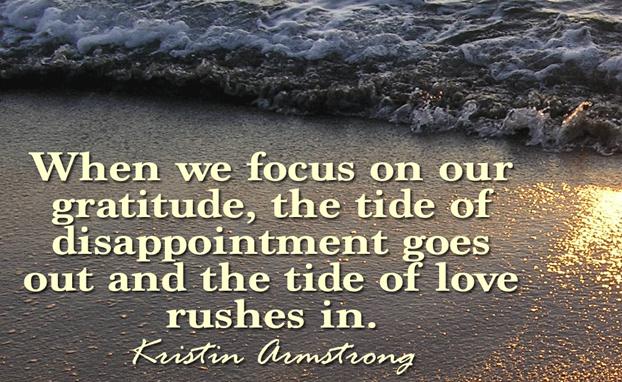
When we focus on our gratitude, the tide of disappointment goes out and the tide of love rushes in - Kristin Armstrong

Over years of learning about happiness and success, emotional stamina and wellbeing, I realized that gratitude is the best antidote for frustration. Frustration is a feeling, a thought. If we change the thought to gratitude, we will no longer feel any pain.

Life is full of challenges as we grow and become more aware of our surrounding. We are born into total dependency and we learn from our parents and other adults around us how to be frustrated when our desires are not fulfilled. This brings us lots of heartache and suffering.

The way we react to frustrations in life as kids is the way we will react to frustrations in life as grownups. We also pass this way of reacting to our children and the cycle never ends. If our reaction to frustration is positive and empowered, we hope the cycle will continue, but if our reaction to frustration is painful, we must stop the cycle NOW!

This week, I had a chat to my 14-year-old daughter Noff. We talked about her being very frustrated about an upcoming school assembly, which she hated. I told her about Pollyanna, the girl who inspired me to be a positive person and change my life from frustration to success. I asked her, “What is good about the assembly tomorrow?” She answered straight away, “It’s the last assembly of the year and there are no classes during assembly”. This made her feel better.

You see, there is something good in everything, even if it seems all bad at first glance.

Read Gratitude: The Happiness Attitude »

Published: April 14, 2016 by Ronit Baras
Last modified: April 14, 2016In: Personal Development Tags: attitude, focus, personal development / personal growth / personality development / self improvement, gratitude, feeling, success, frustration, emotional intelligence, how to, choice, change, happiness, positive attitude tips, positive

Distorted Definition of Depression Increases Depression

Young man walking head down in a wide fied

Depression is a big problem in our society. People think that nowadays we have more depression, when in fact we do not. What we have is a distorted definition of happiness and depression.

Here are some myths about happiness and depression that make people feel even more depressed.

Myth 1: Happy people are happy at all the time

When I go over the happiness scale with my clients, many of them think that they are supposed to be happy all the time. I can understand how people with this distorted definition of happiness can feel depressed. Some of them say that on a scale of 1-100, a happy person feels 95 happy or even 100. Since 100 is a state of total excitement and bliss, we cannot experience the excitement if we are high all the time.

Human beings’ nervous system notices differences. Feeling just a little bit happier than before works just as well when you go from 32 to 35 as when you go from 62 to 65. So every day, focus on being just a little happier than you were yesterday.

Read Distorted Definition of Depression Increases Depression »

Published: April 12, 2016 by Ronit Baras
Last modified: April 12, 2016In: Health / Wellbeing, Personal Development Tags: focus, depression, control, change, happiness, attitude, health / wellbeing, personal development / personal growth / personality development / self improvement, emotions, feeling

How to Get Rid of Procrastination

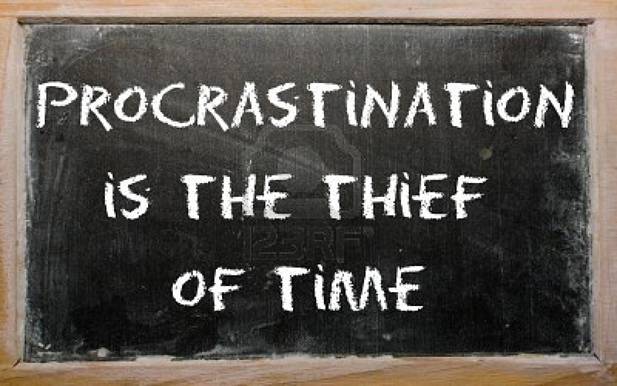
Procrastination is the thief of time written on a blackboard

Procrastination is a big problem for anyone who would like to achieve anything. Although from the outside it looks like it is not a problem to do nothing at all, it is not a state of doing nothing from the inside. Inside, there is a fear that right now, doing nothing seems better than anything we can think of doing.

It is important not to confuse a state of bliss and contentment with procrastination. Bliss is doing nothing and enjoying it. Procrastination is doing nothing from fear of the outcome of anything we do.

Procrastination and anxiety are twins and anxiety is the elder. Anxiety is a fear of some imaginary bad future and procrastination is our coping mechanism with anxiety (not a very effective strategy, but a very common one).

When we use it too often, we reach the “whatever” stage, when we “pretend” we do not care what the outcome will be. We always care! Unless you are a Buddhist in your heart and soul (which is a good aspiration), you care about the outcome. You can say you do not care, but you cannot cheat your own subconscious mind into believing you are the Dalai Lama and will be happy with whatever happens.

When our mind thinks we are in danger (because of something someone said or because of what someone might say), it has three choices: fight, flight or freeze. Procrastination is equivalent to the “flight” response – running away at the sight of danger.

Read How to Get Rid of Procrastination »

Published: April 7, 2016 by Ronit Baras
Last modified: April 7, 2016In: Personal Development Tags: choice, action, control, change, happiness, motivation, personal development / personal growth / personality development / self improvement, focus, feeling, emotional intelligence, procrastination, anxiety, fear

Emotional Intelligence Helps Raise Stress-Free Kids

Little boy crying with a runny nose

We would all love to have stress-free kids, but we don’t. In fact, most parents today are stressed about their children’s stress level, which is a Catch 22.

My philosophy is that what we feel as parents is projected onto our children through very sophisticated neural mirroring functions that we all have. So stressed parents raise stressed kids, and when kids are feeling anxious or stressed, we feel even more stressed. This is a never-ending vicious cycle.

I think high emotional intelligence is the cure for stress and parents need to focus on increasing their own emotional intelligence and that of their children.

You are probably asking yourself, “What is the connection between emotional intelligence and stress-free kids?”

High emotional intelligence is the ability to recognize our own feelings and manage them. So if our children recognize our stress, they can learn ways to deal with this situation and can grow up without taking our feelings on themselves.

As hard as it is to admit, our children are stressed due to their relationships, schooling, academic achievements, digital connections, peer pressure and intense exposure to the media. This is part of their everyday life, and as their parents, we need to seek alternative ways to medication in order to switch this pressure off.

Read Emotional Intelligence Helps Raise Stress-Free Kids »

Published: March 31, 2016 by Ronit Baras
Last modified: November 28, 2022In: Parenting, Personal Development Tags: how to, neurolinguistic programmiing / NLP, kids / children, stress / pressure, feeling, practical parenting / parents, emotional intelligence, anxiety

3 Emotional Painkillers

Man holding his face in his hands in pain

In Holistic Approach to Emotional Pain, I explained why pain is not a punishment and we do not need to fight it. I also explained how the use of physical or emotional “substances” only makes us feel the pain longer and disrupts the function of the natural pharmacy we have in our body, which is in charge of flooding our system with “painkillers”.

In this post, I will share 3 “emotional painkillers” that will make pain go away faster.

1. The Rating Technique

The first emotional painkiller is used frequently by nurses and doctors. When you are in a hospital, before giving you your painkillers, the nurse will ask you to rate your pain from 1 to 10 and use this as a guide to determine your dosage.

This makes you develop an awareness of your feeling. If you say that the pain is a 9, the nurse will give you more painkillers and you will feel a bigger relief from them. If you say the pain is 3, the nurse may ask if you can wait a little longer and give you nothing for an hour.

Read 3 Emotional Painkillers »

Published: March 29, 2016 by Ronit Baras
Last modified: March 25, 2019In: Personal Development Tags: positive attitude tips, focus, attitude, emotional intelligence, stress / pressure, meditation, health / wellbeing, depression, personal development / personal growth / personality development / self improvement, how to, feeling, fear, expectation, beliefs, change, happiness, anger

How to Simplify Your Life and Reduce Stress and Overwhelm

Sign saying Good morning, let the stress begin

Life seems to be stressful and overwhelming to most people. The more we are on “automatic pilot”, the more we feel out of control. When people are stressed, they think life is very complicated, so it is easy to see that simplifying life can reduce stress and overwhelm.

All around the world, stress is increasing. It affects mental and physical health, with severe challenges to cognitive abilities, behavior, sleep, academic achievement and health. Some say it is the number one cause of illness and death in our society. Unfortunately, the magnitude of stress is increasing as our lifestyle is not simple and more and more children are affected by it, directly or indirectly.

The Catch 22 of stress

The Australian Psychological Society 2014 Stress & Wellbeing Survey found that the main causes of stress are finances, health, family, the desire to be healthy and the health of loved ones. You can see the results in this infographic, which shows how the Australian society reacts to stress.

When you see the causes of stress, you can realize how we create a loop, a Catch 22, in our mind, which leads to stress. For example, financial problems causes stress and stress causes more financial problems. It is a never-ending cycle, which we must stop.

Read How to Simplify Your Life and Reduce Stress and Overwhelm »

Published: March 24, 2016 by Ronit Baras
Last modified: November 24, 2022In: Personal Development Tags: meditation, how to, action, change, Life Coaching, lifestyle, time management, tips, stress / pressure, personal development / personal growth / personality development / self improvement, emotional intelligence

Holistic Approach to Emotional Pain

H.O.P.E. Hold on, pain ends

Unfortunately, I have had a lot of pain in my life. Sometimes, it was physical pain and others times it was emotional pain. I know how pain feels, sounds, looks and what it does to my ability to think.

I think every person in the world experiences pain. In fact, everything that doesn’t happen the way we expect, causes us pain, and we can separate the pain by intensity or level of importance.

Many people separate physical and emotional pain. I strongly believe they work the same way in our mind.

I am not a medical doctor, more of a “heart” or “mind” doctor, and I mainly work with my clients on emotional pain. In my work as a happiness coach, I take clients through a process that uses their happiness as a tool to overcome their emotional pain. I tell all of them that it does not mean they will have no pain in their lives, but we will make sure that in the competition between pain and pleasure, pleasure will win.

First, it is important to remember that pain is an emotion that is important for us. Together with happiness and satisfaction, pain functions as guide, like a compass or GPS. When we feel great, this tells us, “Keep moving in the direction you are now”. And when we feel pain, this tells us, “Recalculating … please make a u-turn at the nearest available point”.

Read Holistic Approach to Emotional Pain »

Published: March 10, 2016 by Ronit Baras
Last modified: October 21, 2020In: Health / Wellbeing, Personal Development Tags: focus, emotional intelligence, depression, happiness, attitude, stress / pressure, health / wellbeing, personal development / personal growth / personality development / self improvement

  • « Go to Previous Page
  • Page 1
  • Interim pages omitted …
  • Page 8
  • Page 9
  • Page 10
  • Page 11
  • Page 12
  • Interim pages omitted …
  • Page 57
  • Go to Next Page »

Get Happiness by Email

Sign up to receive posts by email and get my free mini-course Seven Emails with Seven Secrets for Seven Weeks to boost your personal development


    Books by Ronit Baras

    • What motivates your child? Read Motivating Kids by Ronit Baras Motivating Kids From: $9.95
    • Reflections by Ronit Baras Reflections From: $5.99
    • Be Special Be Yourself for Teenagers by Ronit Baras Be Special, Be Yourself for Teenagers From: $5.99
    • In the Outback with Jasmine Banks by Ronit Baras In the Outback with Jasmine Banks From: $5.99
    • The Will by Ronit Baras The Will From: $5.99

    Be Happy in LIFE logo
    Book your private life coaching with Ronit Baras and learn how to be happy in life

    Girl speaking at student leadership programLeaders are not born. They are made. Bring this Student Leadership Program to your primary school or high school and you will create a community of empowered, inspired student leaders, parents and teachers.

    You’re Reading a Top Parenting Blog

    Feespot Parenting Blogs80 Best Family Blogs to Follow in 2026Top 50 Amazing Parenting Blogs 2017

    Related Links

    • Be Happy in LIFE – Life Coaching
    • Personal Growth Web
    • Tsoof Baras – percussionist, composer and producer
    • Noff Baras – Screen Actor & Model

    Primary Sidebar

    Your Cart

    Ready to be happy?

    Happy woman holding a cup in the snow
    Be empowered and set your spirit free!

    Engage Ronit as Your Life Coach »

    Speaker Bookings

    Ronit Baras - Practical Parenting Blogger
    Book Ronit as a Speaker for Your event »

    Join Us on Social Media

    Facebook logo Twitter logo Linkedin logo Pinterest logo RSS feed icon

    Give to Receive

    Kiva - loans that change lives

    Contact Us · Subscribe · Terms of Use / Privacy Statement · Return & Refund Policy · Sitemap

    Copyright © 2026 Be Happy in LIFE · Built and powered by Get Business Online

    Secure HTTPS

    • Home
    • Series
    • About Ronit Baras
    • Books by Ronit Baras
      ▼
      • Motivating Kids
      • Be Special, Be Yourself for Teenagers
      • Reflections
      • In the Outback with Jasmine Banks
      • The Will
      • * Your Cart
      • * Secure Checkout
    • Contact
      ▼
      • Join Us