• Skip to primary navigation
  • Skip to main content
  • Skip to primary sidebar

Family MattersPractical Parenting Blog

  • Home
  • Series
  • About Ronit Baras
  • Books by Ronit Baras
    • Motivating Kids
    • Be Special, Be Yourself for Teenagers
    • Reflections
    • In the Outback with Jasmine Banks
    • The Will
    • * Your Cart
    • * Secure Checkout
  • Contact
    • Join Us

Home » positive attitude tips » Page 3

Assertiveness: Keeping Things Private

A private sign on a gate

In order for us to be assertive, we need to create clear boundaries between us and other people. In the previous post about assertiveness, I explained that assertiveness is the ability to express our needs and desires without hurting others and that this skill is important, yet nobody learns it at school. In this post, I will describe the things we do (and should not do) that sacrifice our own best interest and let other people into our personal space.

In order to be assertive, we must understand that everyone is entitled to his or her own thoughts, beliefs and actions. At the same time, we do not have to accept them as applicable to us. We should always stick to the things that are important to us and take care of ourselves first.


Read Assertiveness: Keeping Things Private »

Published: September 22, 2016 by Ronit Baras
Last modified: December 26, 2019In: Personal Development, Parenting Tags: choice, practical parenting / parents, empowerment, control, change, assertive, aggressive, positive attitude tips, stress / pressure, responsibility, acceptance / judgment / tolerance, emotional intelligence, personal development / personal growth / personality development / self improvement, how to, freedom

Assertiveness: It is better to be Wise than to be Right

I believe in me with a man jumping for joy

What a shame! Assertiveness is not something we learn at school, so if you cannot learn it from your parents, because they never learned it from their own parents, then you can be easily manipulated and pushed over.

Everybody hates being pushed over. I see it as a natural part of life. We all do everything we can to improve our position, and if others are in our way, we push them aside. Sometimes, well, most times, we hurt people along the way without any bad intentions. Assertiveness can help us do better in life without hurting anyone.

Many of my clients mainly need assertiveness. When we do not have it and we cannot express our needs and assert our rights, we resort to either avoidance or aggression. It is the old “fight and flight” response. We see a lion or a snake and we either run away or attack. So when I see aggression or avoidance, I know that assertiveness is needed.

Read Assertiveness: It is better to be Wise than to be Right »

Published: September 15, 2016 by Ronit Baras
Last modified: December 26, 2019In: Personal Development Tags: stress / pressure, choice, acceptance / judgment / tolerance, empowerment, personal development / personal growth / personality development / self improvement, control, freedom, wisdom, expectation, change, work life balance, assertive, aggressive, responsibility, decision making, emotional intelligence, positive attitude tips, how to

The Expectations Paradox: Mindfulness is the Cure

A tree with words about what love is

In the last two posts about the expectations paradox, I explained how expectations from others and ourselves can cause us lots of pain and why respect and acceptance are the keys to overcoming them. It is much better to be prepared for the future than to try to control a specific outcome. Today, I will describe how to develop respect and acceptance with mindfulness.

Mindfulness is a state of reflection with no judgment. This state is similar to mediation. We observe and do not let the ego interfere with our observation and tempt us to label and judge what we experience. In a mindfulness state, we do not give a rating to the event, thought or feeling. We only name it. In a higher state of mindfulness, even naming it is not necessary. We just notice.

I remember the first time I mediated. Gal and I were in California at a meditation course. Every week, we learned a different kind of meditation. We did walking, eating, light, mantra and visualizing meditations and we were very confused. Millions of thoughts ran through our minds and we had no control over them. When we got home, we went to sleep and felt overwhelmed.

Read The Expectations Paradox: Mindfulness is the Cure »

Published: September 13, 2016 by Ronit Baras
Last modified: June 21, 2022In: Personal Development Tags: positive attitude tips, acceptance / judgment / tolerance, communication, personal development / personal growth / personality development / self improvement, responsibility, love languages, success, expectation, emotional intelligence, mindfulness, meditation, empowerment, control, change, communication styles

The Expectations Paradox: Self-inflicted Pain

Rusty sign saying Welcome to Reality

In the last post about the paradox of expectations, I explained how unmet expectations can bring lots of misery to life when we do not understand them properly. Today, I will explore additional aspects of expectations and what happens to us when our expectations are not met.

Many people think that expectations are part of their identity. They expect so much of themselves that they believe this gives them the “right” to expect the same from others. I am sure that if you examine the definition of arrogance (“having or revealing an exaggerated sense of one’s own importance or abilities”), you will see someone who expects a lot from themselves and from others as arrogant. Thinking highly of yourself is great, but expecting others to fulfill your expectations is not!

Most people care a lot about what others think about them. They are in the approval trap and have the disease to please. It is very hard to be assertive and to take care of your own interests when you are busy pleasing others. It may be easier when you are young, but it becomes more complicated during the teenage years, when you realize that that some of the expectations of those around you contradict others.

More people find the pain we experience from unmet expectations unbearable. They think that life is hard when things do not happen the way they expect them to. But this is only because they believe life is supposed to work as they expect.

Read The Expectations Paradox: Self-inflicted Pain »

Published: September 6, 2016 by Ronit Baras
Last modified: March 1, 2020In: Personal Development Tags: empowerment, control, change, communication styles, positive attitude tips, acceptance / judgment / tolerance, personal development / personal growth / personality development / self improvement, communication, love languages, responsibility, expectation, success, mindfulness, emotional intelligence

The Expectations Paradox: Danger Ahead

Sign: Danger, expectations ahead!

From the minute I woke up, at the age of 16, and took control of my life, I had a good understanding of the power of expectations. At least this is what I thought for a long time. I thought that I switched from having low expectation to high expectations and believed that high expectations were the key to success in life.

I still think so, although I believe that it is important to distinguish between expectations from ourselves and expectations from others. Even more important is what we do when our expectations are not fulfilled.

Expectations can be a blessing or a curse and we can always determine what they were after the event. Subconsciously, when we succeed, we tend to consider our expectations as blessings, as a ladder that led us to victory. When we fail, we consider them false, frustrating and painful. In victories, we reward ourselves for having “motivating expectations”. In failures, we blame circumstances and/or people, and sometimes, we blame ourselves.

Expectations are a double-edged sword if we do not define them properly.

Read The Expectations Paradox: Danger Ahead »

Published: August 30, 2016 by Ronit Baras
Last modified: December 26, 2019In: Personal Development Tags: positive attitude tips, acceptance / judgment / tolerance, personal development / personal growth / personality development / self improvement, expectation, responsibility, goals / goal setting, success, emotional intelligence, empowerment, control, change, motivation

The Devastating Relationship between Expectations and Conflicts

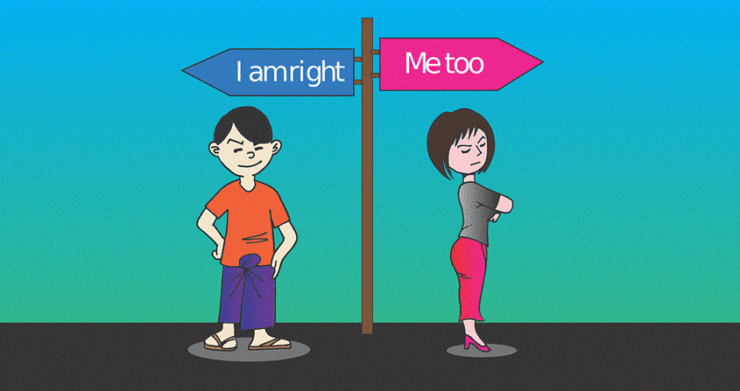
Couple under signs in opposite directions saying "I am right" and "Me too"

Conflicts determine the quality of every relationship. Even the most loving couples, friends or family members face conflict in their life. It is because we are different people, with different life experiences, tendencies, desires, fears, challenges and upbringing.

Every moment in time, whether we have judged it as a negative, positive or neutral, has molded us into the people we are today. We can define ourselves as the accumulation of all those split-second moments of experience and how they have affected us.

It is important to remember that even twins, having the same genetic code, do not have the same path in life, because each of them was in a different place in their mother’s womb, was born at a different time, has a different name and reacts differently to the same experiences. As hard as it may be to accept, the chances that two people will go through the same experience and come out of it the same way is zero.

Read The Devastating Relationship between Expectations and Conflicts »

Published: August 16, 2016 by Ronit Baras
Last modified: September 20, 2022In: Personal Development Tags: acceptance / judgment / tolerance, personal development / personal growth / personality development / self improvement, expectation, communication, emotional intelligence, change, happiness, hope, conflict, positive attitude tips

How to Release Negative Emotions: 10 Constructive and Healthy Ways

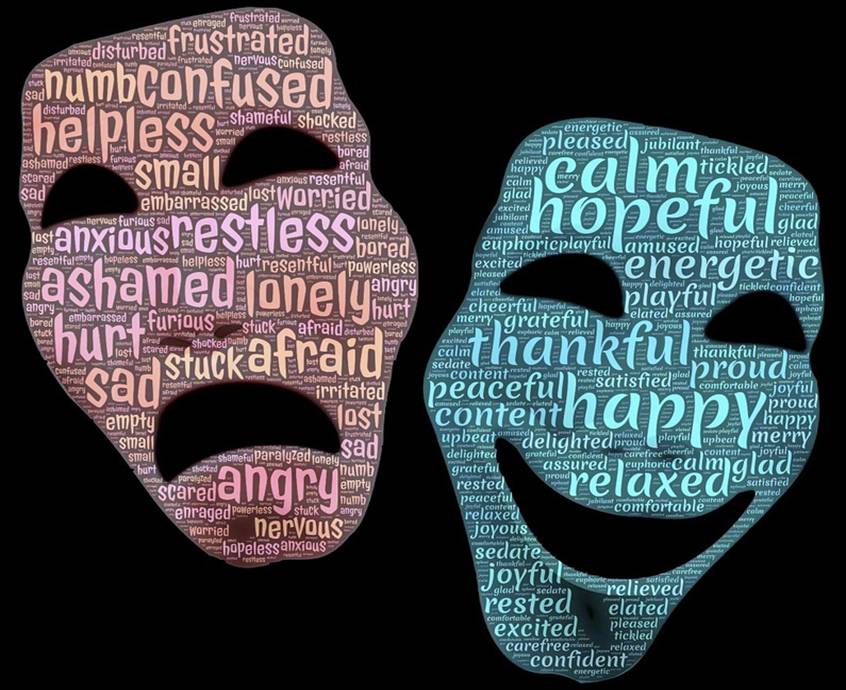
Sad mask with bad feeling words and happy mask with good feeling words

Most people think that emotions are not controlled. They come and go from somewhere in the brain or the body, and we have no control over them. In my coaching, I come across this misconception with every new client. Usually, they are not happy about something in their life and they come to me because they do not think they can change it on their own.

In general, emotions are not a problem. If they are happy emotions and if we feel good about them, we do not want to change them. But if they are painful and make us uncomfortable, then we want them out of our system and fast – and usually for the right reason. Feelings manifest into our physical world. If you think of emotions as vibrations, then we feel their vibration in our body as a physical reaction.

When I was young, my younger sister and I were fans of Louise Hay’s book You Can Heal Your Life.

We borrowed it from the local library and she bought it for me as a birthday gift. In the book, Louise Hay describes the connection between body and mind and explains how every thought, feeling, idea and action has a physical manifestation.

Read How to Release Negative Emotions: 10 Constructive and Healthy Ways »

Published: August 9, 2016 by Ronit Baras
Last modified: December 26, 2019In: Personal Development Tags: meditation, feeling, how to, expectation, negative, happiness, conflict, positive attitude tips, tips, stress / pressure, acceptance / judgment / tolerance, responsibility, personal development / personal growth / personality development / self improvement, emotional intelligence, emotions

What Others Think about You Is … None of Your Business

Man covering his face with a mask showing words like meaning, persona, memory, conditioning, etc

When I was young, if someone asked me to complete the sentence “What others think about you is …” I would have said, “the most important thing in life”. I thought that, because of how I grew up. My mom, who is over 75 years old now, still thinks that we live to impress other people and navigate our life based on what they think about us.

When I studied Education, I realized that most parents in the world teach this to their kids. At first, they say, “Whatever your parents think about you is the most important thing in life”. Later on, they say, “What your teachers think about you is also important”.

They are all very surprised when their kids become teenagers and transfer this to their peers and add, “Whatever your friends think about you is the most important thing in the world”.

It is a natural progression. If you practice worrying and navigate your life based on what others think about you, you become good at … worrying and navigating your life based on what others think about you.

Simple!

When you follow this path, you never learn who you are and how to navigate life based on what you think of yourself.

Read What Others Think about You Is … None of Your Business »

Published: August 4, 2016 by Ronit Baras
Last modified: April 15, 2024In: Parenting, Education / Learning Tags: behavior / discipline, fear, self confidence / self esteem / self worth, beliefs, personal development / personal growth / personality development / self improvement, rules, education / learning, Life Coaching, expectation, social skills, emotional development, conflict, practical parenting / parents, positive attitude tips, teaching / teachers, responsibility, leadership, emotional intelligence, stress / pressure, how to, acceptance / judgment / tolerance, role model

The 10,000-hour Rule and Becoming a Facebook Expert

10,000 Hours

When my son had some friends over for lunch one day, we had a talk about what they did in their spare time. This question always interested me, because my son, Tsoof, never had any spare time in high school. In the last year of high school, he started at 7am and finished around 5pm most days of the week. Since he was in bed by 8:30-9:00pm, there was not much time left for other things.

I was very surprised when some of them told me they spent 3-4 hours during weekdays on Facebook, and on the weekend, they even got to 6-8 hours.

I was shocked!

It made me realize why Tsoof was in a different state to them. Back then, he had no Facebook account, he was a student leader, he was taking a university course, he had 8 before-school and after-school activities every week and he was an excellent student.

I told them that if they understood the 10,000-hour rule, they would see that they were gearing up to be experts in … Facebook.

Read The 10,000-hour Rule and Becoming a Facebook Expert »

Published: May 12, 2016 by Ronit Baras
Last modified: February 5, 2024In: Personal Development, Parenting Tags: personal development / personal growth / personality development / self improvement, education / learning, procrastination, practical parenting / parents, skills, social media, success, how to, motivation, academic performance, positive attitude tips, self confidence / self esteem / self worth

How to Have a Good Day Everyday

Every day may not be good but there is something good in every day

Martin was a gorgeous 7-year-old who came to me for child coaching. His mom called and said she felt she could not help him. He never had a good day. He did not even know what one looked like.

After an abusive relationship with her husband, she divorced him and moved away to start a new life. They had been living in a nice place and their life changed dramatically.

For the first six months after they divorced, Martin’s mom insisted on taking him to see his dad, but his dad did not show up. When his dad did show up, he was angry and aggressive and Martin refused to spend time with him.

Since his dad did not care whether he came or not, his mom decided to stop putting pressure on them to see each other. “Martin is way better than before. He used to cry and have nightmares, but it’s much better now”, she said.

Still, six months passed and Martin was angry, negative and grumpy and life was tough on him. He never smiled, the whole world was bad, it is everyone else’s fault and every tiny thing made him blow up with anger and throw temper tantrums. After years of abuse, Martin’s mom told me she needed help, because she felt she was losing her son.

So first, we played “If I were a wizard”.

Read How to Have a Good Day Everyday »

Published: May 3, 2016 by Ronit Baras
Last modified: August 13, 2020In: Parenting, Personal Development Tags: feeling, change, practical parenting / parents, happiness, Life Coaching, neurolinguistic programmiing / NLP, hope, memory, focus, positive attitude tips, success, positive, emotional intelligence, how to, personal development / personal growth / personality development / self improvement, kids coaching

  • « Go to Previous Page
  • Page 1
  • Page 2
  • Page 3
  • Page 4
  • Page 5
  • Interim pages omitted …
  • Page 20
  • Go to Next Page »

Get Happiness by Email

Sign up to receive posts by email and get my free mini-course Seven Emails with Seven Secrets for Seven Weeks to boost your personal development


    Books by Ronit Baras

    • What motivates your child? Read Motivating Kids by Ronit Baras Motivating Kids From: $9.95
    • Reflections by Ronit Baras Reflections From: $5.99
    • Be Special Be Yourself for Teenagers by Ronit Baras Be Special, Be Yourself for Teenagers From: $5.99
    • In the Outback with Jasmine Banks by Ronit Baras In the Outback with Jasmine Banks From: $5.99
    • The Will by Ronit Baras The Will From: $5.99

    Be Happy in LIFE logo
    Book your private life coaching with Ronit Baras and learn how to be happy in life

    Girl speaking at student leadership programLeaders are not born. They are made. Bring this Student Leadership Program to your primary school or high school and you will create a community of empowered, inspired student leaders, parents and teachers.

    You’re Reading a Top Parenting Blog

    Feespot Parenting Blogs
    Top 50 Family Blog Award Top 50 Amazing Parenting Blogs 2017

    Related Links

    • Be Happy in LIFE – Life Coaching
    • Personal Growth Web
    • Tsoof Baras – percussionist, composer and producer
    • Noff Baras – Screen Actor & Model

    Primary Sidebar

    Your Cart

    Ready to be happy?

    Happy woman holding a cup in the snow
    Be empowered and set your spirit free!

    Engage Ronit as Your Life Coach »

    Speaker Bookings

    Ronit Baras - Practical Parenting Blogger
    Book Ronit as a Speaker for Your event »

    Join Us on Social Media

    Facebook logo Twitter logo Linkedin logo Pinterest logo RSS feed icon

    Give to Receive

    Kiva - loans that change lives

    Contact Us · Subscribe · Terms of Use / Privacy Statement · Return & Refund Policy · Sitemap

    Copyright © 2026 Be Happy in LIFE · Built and powered by Get Business Online

    Secure HTTPS

    • Home
    • Series
    • About Ronit Baras
    • Books by Ronit Baras
      ▼
      • Motivating Kids
      • Be Special, Be Yourself for Teenagers
      • Reflections
      • In the Outback with Jasmine Banks
      • The Will
      • * Your Cart
      • * Secure Checkout
    • Contact
      ▼
      • Join Us