• Skip to primary navigation
  • Skip to main content
  • Skip to primary sidebar

Family MattersPractical Parenting Blog

  • Home
  • Series
  • About Ronit Baras
  • Books by Ronit Baras
    • Motivating Kids
    • Be Special, Be Yourself for Teenagers
    • Reflections
    • In the Outback with Jasmine Banks
    • The Will
    • * Your Cart
    • * Secure Checkout
  • Contact
    • Join Us

Home » projection » Page 6

In My Opinion

As a parent, you must have found yourself facing a stubborn child who will just not do what you ask of them. No matter what you want – clean your room, do your homework, stop nagging me to go home – kids sometimes seem to insist on doing the exact opposite.

If that is not enough, your partner may suddenly have strange notions of what should be done and how it should be done with money, around the house, in the yard or on vacation. You find yourself wondering if they have “lost the plot” and if you are the only person who can see things clearly.

These sorts of clashes can be very unpleasant and distressing. They also have the nasty habit of escalating to scary proportions very quickly. Whatever you do to make the other side “get it already”, they grow more persistent, until both sides start throwing hurtful comments, calling each other names and absolutely fuming.

Well, I am here to offer another way of looking at things, which is likely to help. But first, a couple of stories.

The Experiment

Last week, Ronit and I watched a movie called The Experiment. It is loosely based on Stanford University’s prison experiment, but instead of students, a group of adults who really need money are promised $1,000 a day for a “perfectly safe” 14-day experiment. They are taken to an isolated warehouse (the real experiment was in a campus basement), where they are divided into Guards and Prisoners. The guards are given simple rules and told to respond “commensurately”, which means “in proportion to the offense”, and never to use violence. In the “guard” room, there is a red light that will come on if the experiment has to be terminated.

Read In My Opinion »

Published: March 9, 2011 by Gal Baras
Last modified: November 8, 2022In: Parenting, Relationships / Marriage Tags: practical parenting / parents, communication styles, relationships / marriage, communication, social skills, focus, family matters, projection, career, emotional intelligence, kids / children, how to, acceptance / judgment / tolerance, choice, behavior / discipline, beliefs, divorce, friends / friendship, violence

Labeling Kids

Boy in grass with zombie mask

Labeling is humans’ way of making things easier to deal with, or so they hope. I think it is probably because of our limited language. For example, if you had to pick a color, you might call it blue, but if you check carefully, you would find many shades of blue. In the graphics world, they do not even call it blue. They use numbers. Labeling is our way of understanding that when somebody says, “Oh, I love it when the sky is #87CEEB”, they mean “a medium-light shade of blue”.

I am not against labeling. I use labeling a lot in my work, especially with kids, because it saves a lot of time explaining the range of each label. Instead of saying, “On a scale of 1 to 100 of being scared, you scored 30”, I say, “You are very cautious and that should be really appreciated”.

But what happens when professionals become too attached to the labels they give kids?

Recently, I watched a video done by the Citizens Commission on Human Rights. I would like to support their cause by encouraging all the parents in the world to watch it and I know you will enjoy.

Read Labeling Kids »

Published: February 25, 2011 by Ronit Baras
Last modified: March 19, 2021In: Parenting Tags: communication, projection, self-fulfilling prophecy, k-12 education, academic performance, kids / children, attention deficit / add / adhd, acceptance / judgment / tolerance, behavior / discipline, health / wellbeing, practical parenting / parents

Respect (spelled R.E.S.T.E.C.P)

R.E.S.T.E.C.P scene from Ali G Indahouse

In a family, the parents are like the government of a country. Not only do they make the decisions, but they also need to show the way through their actions, because everybody else (that is “the kids”) is watching them all the time.

In the movie Ali G Indahouse, Ali G is standing in his funny suit, red cap and heavy “bling” in the middle of the British Parliament and has this conversation that captures the essence of this in a funny but powerful way.

Ali G: R.E.S.T.E.C.P! Do ya even know wha’ it spellz?

Cabinet MP (hesitantly): Restecp?

Ali G: Yes, Restecp. ‘Owz anyone out there meant to restecp each uvva if you lot in ‘ere don’t even start restecp’ing one anuvva?

Beautifully said, no?

As you are probably aware, self-respect is the basis of confidence and respect for others is the basis of assertiveness.

When you respect yourself and others, they do not have to be exactly like you anymore. Being different is OK. Respect opens the way to understanding and then to cooperation and harmony (do I hear anyone saying “World peace”?).

The problem is that we live in a world where we do not get too enough respect. Jobs are cut to improve the bottom line of the company and even lives are sacrificed to make a bunch of people richer than they already are. Every day, we are being manipulated from every direction and we know it is not for our own good but for somebody else’s.

Read Respect (spelled R.E.S.T.E.C.P) »

Published: February 2, 2011 by Gal Baras
Last modified: November 28, 2022In: Personal Development, Parenting, Relationships / Marriage Tags: beliefs, change, motivation, relationships / marriage, kids / children, communication, behavior / discipline, focus, self confidence / self esteem / self worth, projection, personal development / personal growth / personality development / self improvement, emotional intelligence, practical parenting / parents, how to, choice

Everyone Can Be a Hero

We often focus so much on what kids do not do well that we do not give them any chance to excel, to shine and to be heroes. This is the story of how a class of special education “troublemakers” proved that everyone can be a hero.

Last month, I traveled to North QLD to work with over 1,000 students on a special project I run here in Australia, called Together for Humanity. I was running all the workshops with my colleague, Imam Ahmad Abu Ghazaleh. We worked 14 hours each day and saw many different groups of high school students and teachers, but I want to share with you my experience with one class in particular.

It was the middle of the day and we were getting ready to run our “Community Building”, in which “Making a Difference” is a key message. A group of 28 Grade-8 students arrived with 5 teachers (two men) and their head-of-department herself.

At first, we did not know why so many teachers were needed and why they looked so worried while the students were settling down, until one teacher approached us and said, “This is the worst class in the school”.

Ahmad and I smiled. The head-of-department, who had organized those two full days of workshops and seemed an amazingly relaxed person, told us, “I’ve brought all the teachers to help you out. This is our special education class. They are challenging”.

Read Everyone Can Be a Hero »

Published: December 17, 2010 by Ronit Baras
Last modified: March 18, 2021In: Education / Learning Tags: acceptance / judgment / tolerance, communication, practical parenting / parents, focus, projection, emotional intelligence, beliefs, change, motivation, k-12 education, cultural, kids / children

Make a list: Movies I loved

I love watching movies. About 20 years ago, Gal and I agreed that going to the movies would be one of our regular “dates” as a couple. When Eden was just 11 months old, we got her a babysitter and went out for a movie. The town we lived in was so small it had one cinema that showed the same movie for 3 weeks, so we sometimes just went for a walk and talked about the movies.

There are movies we like and movies we do not like, but we always like to discuss the movies we have watched, their messages and what we can learn from them. This is the reason Gal and I make a huge effort to watch movies with our kids. It gives all of us the opportunity to learn from one another’s perspective, because we do not have enough time in this life to experience everything ourselves. Of course, it also creates a deeper shared family experience.

I think that movies are like books – a lifelong experience is condensed into 1½ hours (lately more like 2½ hours) or 300 pages, with the possibility to shape our perspective on life and change our attitude. To me, movies are a lot more than motion pictures – some movies are a real form of art.

I separate the movies to the ones that move me or the ones that make no impact on my life. I especially like movies that make me think and that leave an impression on me that lasts longer than the movie.

Read Make a list: Movies I loved »

Published: December 3, 2010 by Ronit Baras
Last modified: March 19, 2021In: Personal Development Tags: projection, emotional intelligence, how to, beliefs, happiness, lifestyle, personal development / personal growth / personality development / self improvement

Beautiful Kids vs. Brutal Honesty

Last week, I ran 3 parenting workshops and there was one topic that came up over and over again – the truth about your kids. While I was describing research, education methods, philosophy and personal development techniques to raise happy and successful kids, some people were very concerned about telling kids the truth.

I find the concept of “the truth” very problematic and the seed of many difficulties in life. Every small problem in life just makes this seed grow poisonous roots of inadequacy, self-doubt and fear.

At the workshop, I talked about the importance of raising kids to think they are capable, talented, smart, friendly, flexible, courageous, wise, trustworthy, etc (the list can be adapted to each parent’s needs) so they will have good beliefs about themselves, their skills and their abilities. I always say that overcoming kids’ learning difficulties is easier than overcoming their belief that something is wrong with them and that therefore, it is parents’ job to make sure their kids have positive, empowered beliefs about themselves.

The parents and I examined beliefs that are very good for kids to have. Let me ask you, if your son thinks he is smart, is that good for him or not? If your daughter thinks she is friendly, is it good for her or not? If your kids think they are good siblings, is it good for them or not?

Is it good for the parents too?

Well, apparently, for some people it is not good. To them, the truth is more important.

Read Beautiful Kids vs. Brutal Honesty »

Published: November 26, 2010 by Ronit Baras
Last modified: March 19, 2021In: Parenting Tags: how to, practical parenting / parents, choice, beliefs, motivation, relationships / marriage, communication, self-fulfilling prophecy, focus, k-12 education, projection, academic performance, early childhood, kids / children, success, acceptance / judgment / tolerance, emotional intelligence, self confidence / self esteem / self worth

Acceptance (3)

This is the second part of a series of posts about acceptance through the story of Mel, a fascinating client of mine. To know a bit about Mel and how this story started, read Monday’s post, Acceptance (1). For a description of Mel’s views on life that made her miserable, read Wednesday’s post, Acceptance (2).

Today, I would like to introduce a solution, a cure, a way out of this endless search for the right and only-sensible thing to do, to think or to be. If you are like Mel in some way, I hope this will help you find peace, just as she did. If you know others like Mel, I hope you will share this series of posts with them so they may find their own peace.

The first step toward change is awareness. The second step is acceptance
– Nathaniel Branden

Every time Mel left, I wrote my reflections on the session, as I always do after a session. In the Strategies section, I wrote, “Teach acceptance”. For me, acceptance was a peaceful place, where I acknowledge things around me without resistance (every time I think of the word “resistance”, I remember The Borg from Star Trek saying, “Resistance is futile”. Sometimes it is useless and ends only in sorrow).

Mel thought acceptance was a form of giving up. “Do you accept wars?” she asked me (she knew how to press my buttons).

I said, “I do. I acknowledge the fact that there are wars. It does not mean I am happy about them, but they are part of life”.

Read Acceptance (3) »

Published: September 24, 2010 by Ronit Baras
Last modified: December 25, 2019In: Beautiful people, Personal Development Tags: acceptance / judgment / tolerance, focus, self confidence / self esteem / self worth, projection, personal development / personal growth / personality development / self improvement, success, emotional intelligence, how to, beliefs, motivation, communication styles, lifestyle

Acceptance (2)

This is the second part of a series of posts about acceptance through the story of Mel, a fascinating client of mine. To know a bit about Mel and how this story started, read Monday’s post, Acceptance (1).

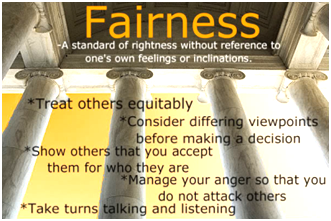
Mel thought there was such a thing as Ultimate Justice that all people must follow. She had a very strict concept of Right and Wrong. Fairness was always examined from her point of view and her point of view was the center of the universe. Mel never thought fairness was relative and influenced by culture or upbringing.

When I described to her how the Thai people charged tourists and locals differently at temples or for food, she could not understand how that could be fair. When I gave her an example of a clash between different people’s definition of fairness, she had a “system failure” in her mind.

I remember myself writing protest poems at the age of 14. My notion of fairness was very clear and naïve then. When I was 27, my youngest sister came back from a trip to India and showed me her journal, where she had written, “Is it fair to make your child blind so he can be a better beggar and bring home more money to feed the whole family?” I experience that same “system failure” about fairness at the age of 27, when I tried to answer that question. My immediate reply was, “No, of course it’s not fair!”

But as I thought about it some more, I realized it is not that simple and there is no single right way of doing things. I was already a mother and I was pregnant, which made this realization more difficult, but I understood one big lesson about acceptance: what is fair for one is not necessary fair for another. There is no ultimate fairness. Fairness is totally subjective and we cannot judge others for having a different definition of fairness to ours.

Read Acceptance (2) »

Published: September 22, 2010 by Ronit Baras
Last modified: March 19, 2021In: Personal Development, Beautiful people Tags: emotional intelligence, how to, beliefs, motivation, communication styles, lifestyle, acceptance / judgment / tolerance, focus, self confidence / self esteem / self worth, projection, personal development / personal growth / personality development / self improvement, success

Acceptance (1)

I chose to tell you about Mel because she was generally miserable. On the surface, she ticked all the boxes of a wonderful life – she was a college profession, she had the cutest kids and she loved them very much, she was married and loved her husband deeply and she was financially secure. Yet, nothing made her happy – thoughts were her allies, but she found people most unreasonable. She was unhappy with the way they behaved and kept saying they did not make any sense.
Although I am not convinced there is a formula for being happy, I think there is formula for being miserable. Mel had that formula and lived by it every day of her life. Through clients like Mel, I have seen how the mind can create this suffering. As a very smart, curious person, Mel had some beliefs, thoughts and ideas that made her miserable and caused her to think she did not understand the world and could not make sense of it. What Mel missed was the understanding of acceptance. She confused acceptance with having low standards, with compromising on mediocrity and with giving up.

Mel was an amazingly smart woman, but she could not understand why others did not understand what she did. She did not understand why people did things that hurt others. She did not know how to relate to people without knowing their motives. She did not understand emotional (she called them “illogical”) decisions. When I told her that I never make logical decisions, because I am kinesthetic, she looked at me shocked. “What else is there?” she asked.

For me, 6 things summed up Mel’s thoughts and ideas and contributed to her self-torture.

Read Acceptance (1) »

Published: September 20, 2010 by Ronit Baras
Last modified: March 18, 2021In: Personal Development, Beautiful people Tags: communication styles, lifestyle, acceptance / judgment / tolerance, focus, self confidence / self esteem / self worth, projection, personal development / personal growth / personality development / self improvement, success, emotional intelligence, how to, beliefs, motivation

Perspective for Kids

One of our main challenges in life is that we don’t know what we don’t know. To overcome this challenge, we must actively question our own point of view and make conscious choices, instead of accepting what we have grown into as the only possibility.

A few weeks ago, Ronit had a few sessions with a lovely little boy called Lenny (not really). He was very intelligent and very curious and bombarded Ronit with “unfiltered” questions, which got me thinking about perspective.

While he was working away on one of his assignments, Lenny asked Ronit, “Do you know that you sometimes talk to me in a different language?”

She explained to him that because we talk to our kids in a different language, she sometimes confused the languages.

He asked, “So they don’t understand what you’re saying too?”

Ronit explained that our kids understand her when she speaks the other language, because they know two languages.

Lenny said, “I don’t know any language”.

Ronit said, “You know English”.

He looked at her surprised and then said in excitement, “Yes!”

Being only 6 years old, Lenny accepts everything in his life as the only thing possible, so sometimes, he does not even need to call it by name. It is just “the thing that is” for him. The language he speaks is so obvious to him, he had never counted it as such. It was just part of life. And it never occurred to him that other kids might know other languages, simply because he doesn’t.

Read Perspective for Kids »

Published: August 25, 2010 by Gal Baras
Last modified: March 18, 2021In: Personal Development, Parenting Tags: how to, practical parenting / parents, choice, beliefs, identity, change, relationships / marriage, society, lifestyle, cultural, focus, acceptance / judgment / tolerance, projection, love languages

  • « Go to Previous Page
  • Page 1
  • Interim pages omitted …
  • Page 4
  • Page 5
  • Page 6
  • Page 7
  • Page 8
  • Interim pages omitted …
  • Page 15
  • Go to Next Page »

Get Happiness by Email

Sign up to receive posts by email and get my free mini-course Seven Emails with Seven Secrets for Seven Weeks to boost your personal development


    Books by Ronit Baras

    • What motivates your child? Read Motivating Kids by Ronit Baras Motivating Kids From: $9.95
    • Reflections by Ronit Baras Reflections From: $5.99
    • Be Special Be Yourself for Teenagers by Ronit Baras Be Special, Be Yourself for Teenagers From: $5.99
    • In the Outback with Jasmine Banks by Ronit Baras In the Outback with Jasmine Banks From: $5.99
    • The Will by Ronit Baras The Will From: $5.99

    Be Happy in LIFE logo
    Book your private life coaching with Ronit Baras and learn how to be happy in life

    Girl speaking at student leadership programLeaders are not born. They are made. Bring this Student Leadership Program to your primary school or high school and you will create a community of empowered, inspired student leaders, parents and teachers.

    You’re Reading a Top Parenting Blog

    Feespot Parenting Blogs
    Top 50 Family Blog Award Top 50 Amazing Parenting Blogs 2017

    Related Links

    • Be Happy in LIFE – Life Coaching
    • Personal Growth Web
    • Tsoof Baras – percussionist, composer and producer
    • Noff Baras – Screen Actor & Model

    Primary Sidebar

    Your Cart

    Ready to be happy?

    Happy woman holding a cup in the snow
    Be empowered and set your spirit free!

    Engage Ronit as Your Life Coach »

    Speaker Bookings

    Ronit Baras - Practical Parenting Blogger
    Book Ronit as a Speaker for Your event »

    Join Us on Social Media

    Facebook logo Twitter logo Linkedin logo Pinterest logo RSS feed icon

    Give to Receive

    Kiva - loans that change lives

    Contact Us · Subscribe · Terms of Use / Privacy Statement · Return & Refund Policy · Sitemap

    Copyright © 2026 Be Happy in LIFE · Built and powered by Get Business Online

    Secure HTTPS

    • Home
    • Series
    • About Ronit Baras
    • Books by Ronit Baras
      ▼
      • Motivating Kids
      • Be Special, Be Yourself for Teenagers
      • Reflections
      • In the Outback with Jasmine Banks
      • The Will
      • * Your Cart
      • * Secure Checkout
    • Contact
      ▼
      • Join Us