
• Skip to primary navigation
  • Skip to main content
  • Skip to primary sidebar

Family MattersPractical Parenting Blog

  • Home
  • Series
  • About Ronit Baras
  • Books by Ronit Baras
    • Motivating Kids
    • Be Special, Be Yourself for Teenagers
    • Reflections
    • In the Outback with Jasmine Banks
    • The Will
    • * Your Cart
    • * Secure Checkout
  • Contact
    • Join Us

Home » emotional intelligence » Page 48

Acceptance (3)

This is the second part of a series of posts about acceptance through the story of Mel, a fascinating client of mine. To know a bit about Mel and how this story started, read Monday’s post, Acceptance (1). For a description of Mel’s views on life that made her miserable, read Wednesday’s post, Acceptance (2).

Today, I would like to introduce a solution, a cure, a way out of this endless search for the right and only-sensible thing to do, to think or to be. If you are like Mel in some way, I hope this will help you find peace, just as she did. If you know others like Mel, I hope you will share this series of posts with them so they may find their own peace.

The first step toward change is awareness. The second step is acceptance
– Nathaniel Branden

Every time Mel left, I wrote my reflections on the session, as I always do after a session. In the Strategies section, I wrote, “Teach acceptance”. For me, acceptance was a peaceful place, where I acknowledge things around me without resistance (every time I think of the word “resistance”, I remember The Borg from Star Trek saying, “Resistance is futile”. Sometimes it is useless and ends only in sorrow).

Mel thought acceptance was a form of giving up. “Do you accept wars?” she asked me (she knew how to press my buttons).

I said, “I do. I acknowledge the fact that there are wars. It does not mean I am happy about them, but they are part of life”.

Read Acceptance (3) »
Like this:

Like Loading…

Published: September 24, 2010 by Ronit Baras
Last modified: December 25, 2019In: Personal Development, Beautiful people Tags: self confidence / self esteem / self worth, projection, personal development / personal growth / personality development / self improvement, success, emotional intelligence, how to, beliefs, motivation, communication styles, lifestyle, acceptance / judgment / tolerance, focus

Acceptance (2)

This is the second part of a series of posts about acceptance through the story of Mel, a fascinating client of mine. To know a bit about Mel and how this story started, read Monday’s post, Acceptance (1).

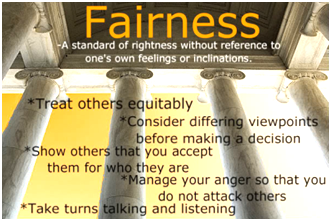
Mel thought there was such a thing as Ultimate Justice that all people must follow. She had a very strict concept of Right and Wrong. Fairness was always examined from her point of view and her point of view was the center of the universe. Mel never thought fairness was relative and influenced by culture or upbringing.

When I described to her how the Thai people charged tourists and locals differently at temples or for food, she could not understand how that could be fair. When I gave her an example of a clash between different people’s definition of fairness, she had a “system failure” in her mind.

I remember myself writing protest poems at the age of 14. My notion of fairness was very clear and naïve then. When I was 27, my youngest sister came back from a trip to India and showed me her journal, where she had written, “Is it fair to make your child blind so he can be a better beggar and bring home more money to feed the whole family?” I experience that same “system failure” about fairness at the age of 27, when I tried to answer that question. My immediate reply was, “No, of course it’s not fair!”

But as I thought about it some more, I realized it is not that simple and there is no single right way of doing things. I was already a mother and I was pregnant, which made this realization more difficult, but I understood one big lesson about acceptance: what is fair for one is not necessary fair for another. There is no ultimate fairness. Fairness is totally subjective and we cannot judge others for having a different definition of fairness to ours.

Read Acceptance (2) »

Like this:

Like Loading…

Published: September 22, 2010 by Ronit Baras
Last modified: March 19, 2021In: Personal Development, Beautiful people Tags: motivation, communication styles, lifestyle, acceptance / judgment / tolerance, focus, self confidence / self esteem / self worth, projection, personal development / personal growth / personality development / self improvement, success, emotional intelligence, how to, beliefs

Acceptance (1)

I chose to tell you about Mel because she was generally miserable. On the surface, she ticked all the boxes of a wonderful life – she was a college profession, she had the cutest kids and she loved them very much, she was married and loved her husband deeply and she was financially secure. Yet, nothing made her happy – thoughts were her allies, but she found people most unreasonable. She was unhappy with the way they behaved and kept saying they did not make any sense.
Although I am not convinced there is a formula for being happy, I think there is formula for being miserable. Mel had that formula and lived by it every day of her life. Through clients like Mel, I have seen how the mind can create this suffering. As a very smart, curious person, Mel had some beliefs, thoughts and ideas that made her miserable and caused her to think she did not understand the world and could not make sense of it. What Mel missed was the understanding of acceptance. She confused acceptance with having low standards, with compromising on mediocrity and with giving up.

Mel was an amazingly smart woman, but she could not understand why others did not understand what she did. She did not understand why people did things that hurt others. She did not know how to relate to people without knowing their motives. She did not understand emotional (she called them “illogical”) decisions. When I told her that I never make logical decisions, because I am kinesthetic, she looked at me shocked. “What else is there?” she asked.

For me, 6 things summed up Mel’s thoughts and ideas and contributed to her self-torture.

Read Acceptance (1) »

Like this:

Like Loading…

Published: September 20, 2010 by Ronit Baras
Last modified: March 18, 2021In: Beautiful people, Personal Development Tags: acceptance / judgment / tolerance, focus, self confidence / self esteem / self worth, projection, personal development / personal growth / personality development / self improvement, success, emotional intelligence, how to, beliefs, motivation, communication styles, lifestyle

Dedicated kids

Happy Tsoof with an award

As a coach who works with parents, I usually meet with those who think kids need to be managed better. Coming from a family where saying good things about your own kids is bragging, it took me a while to get over that and use my kids as inspiration for others, just like they are an inspiration for me.

You see, as a kid, I lacked something that was very important for success in life and only when I found it at the age of 16, my life changed course. My kids have grown up with it. It is called “dedication”.

Dedication is the act of giving yourself totally to a course of action. An oath you give yourself to do something, a commitment or a promise that people make to themselves and/or to others to be true to a course.

This is the story of some great kids who are dedicated and therefore win awards and prizes. In ten years, they will probably not remember all these wins (there are so many of them), but they will still posses that trait so essential to winning in the game of life – dedication.

Read Dedicated kids »

Like this:

Like Loading…

Published: September 17, 2010 by Ronit Baras
Last modified: June 30, 2019In: Parenting, Kids / Children, Success / Wealth Tags: dreams, academic performance, kids / children, focus, behavior / discipline, inspiration, practical parenting / parents, success, goals / goal setting, emotional intelligence, choice, motivation

I Believe in You (4): The Letters of Encouragement

Stack of letters

This is the last post in a series about a leadership camp activity where I asked parents to write their kids a letter of encouragement, confidence and trust and a promise to be there for them always.

I ran this camp for 2 years in a row. Each time, there were about 30 students from 5 different schools. This leadership camp was run by an organization for which I am the QLD State Coordinator, called Together for Humanity. In this camp, we wanted the kids to recognize their strengths, develop their leadership skills, identify their support structure and learn how to take a social stand in their school, community and one day, in leading social change.

First, I wrote about what happened when I asked the parents to write a letter to their kids. Then, I wrote about what happened to the kids when they opened their letters and how hard it was for them to believe they had been genuinely written by their parents. Last week, I wrote about how the kids confused being proud – recognizing and sharing your strengths and achievements – with bragging – being arrogant and full of yourself, and how 12 hours and a letter helped me take them to a different place.

Today, I want to show you some of the letters parents wrote to their kids. I have left them intact, other than names and other personal details. These parents only had my sample letter to help them with ideas, but I hope you will be in a better position after reading more letters and knowing how kids responded and how meaningful it was for each of them to receive such a letter.

Read I Believe in You (4): The Letters of Encouragement »

Like this:

Like Loading…

Published: September 13, 2010 by Ronit Baras
Last modified: September 25, 2026In: Parenting Tags: love, relationships / marriage, values, family matters, skills, k-12 education, inspiration, leadership, men, kids / children, success, emotional intelligence, self confidence / self esteem / self worth, how to, practical parenting / parents, trust, communication, beliefs, school, motivation

Good Parenting is Easy

Go online any day, open your email inbox, read the papers or turn on the television and you are sure to find heaps of parenting advice, all claiming to teach you good parenting. Since you are here, even this blog is full of ideas, stories and tips on how to be the best parent you can be for your kids.

The downside of having so much information and possibly conflicting views on the same issues is that it can quickly become confusing and give you the impression that being a good parent is really hard. In fact, maybe it is so hard you are never going to be good at parenting.

Nonsense.

Good parenting is easy.

It is as easy as … 1, 2. Not even 3, just 1, 2. In parenting, the most important things are love and consistency.

Yes, really.

Read Good Parenting is Easy »

Like this:

Like Loading…

Published: September 8, 2010 by Gal Baras
Last modified: March 19, 2021In: Parenting Tags: how to, choice, trust, beliefs, relationships / marriage, communication, kids / children, focus, behavior / discipline, love, love languages, abuse, practical parenting / parents, values, emotional intelligence

I believe in you (3): Being Proud

Proud scout boys with flag

During the camp, I noticed the kids did not display a sense of pride in themselves. They talked freely about being proud of a team they admired in sport, but had quite a different attitude towards being proud of themselves, their family or their class.

I discovered the difficulty of the “pride” feeling at a very early stage, when I asked each of the kids to introduce themselves and then to tell the group something about themselves they were proud of. Everyone, kids and adults, looked at me in surprise.

Recognizing my own feelings is the basic level of emotional intelligence, so I thought that when we address leadership, recognizing things I am good at as a starter would be a good way for the kids to start appreciating their strengths. I was not surprised to see how much easier it was for kids (and grownups) to talk about things they were not proud of, as if they had practiced those so much they came to them naturally.

Most of the kids struggled with the idea of being proud. I pushed them by giving an example. I said, “I’m Ronit (we were still getting to know one another) and I’m very proud of myself for organizing this camp”. Some shy kids said hesitantly they were proud of themselves for having been chosen to be in this camp, but most of them said they did not know what to say. They used words like “boasting” and “bragging”, being “full of themselves” and “arrogant” as the reasons they could not find anything they were proud of.

Read I believe in you (3): Being Proud »

Like this:

Like Loading…

Published: September 6, 2010 by Ronit Baras
Last modified: March 19, 2021In: Parenting Tags: inspiration, kids / children, success, emotional intelligence, self confidence / self esteem / self worth, how to, practical parenting / parents, beliefs, motivation, relationships / marriage, perception, family matters, communication, k-12 education, love, leadership

Leaving Home

Now that I am of what is considered ‘adult’ age, many of my friends have started talking about leaving home. Some of my high school buddies moved out long ago and have even started families. This is obviously a stage in life that everyone experiences sooner or later.

One of the most common reasons my age-mates have suggested is that they clash very strongly with one (or both) of their parents. They are sick of being bossed around and they just need space and freedom. When this happens, I find they don’t always make the best decisions. They are so intent on running as far away as they can that they don’t realize where they are going.

Sometimes they make off with some would-be drug dealer or with a complete idiot, because “anything is better than home”. Like many people out there, when they hit 40, they realize they made a terrible mistake.

But it doesn’t have to be that way.

When I was quite young (maybe 4 or 5 years old), my mom told me that one day I would have a family of my own and live in a house of my own. And I said to her, “Mom, don’t be silly, I’m always going to live at home with you and Dad”.

Read Leaving Home »

Like this:

Like Loading…

Published: September 1, 2010 by Eden Baras
Last modified: December 25, 2019In: Parenting, Teens / Teenagers Tags: change, motivation, relationships / marriage, lifestyle, family matters, teens / teenagers, love, practical parenting / parents, emotional intelligence, choice, safety, beliefs

I Believe in You (2): The kids

Hand writing a letter

After a full day of me challenging the way they think and manage themselves, the kids were relaxing at dinner and we heard laughs and discussions from tables all around. In came the girl from the office, holding envelopes in her hand. “You’ve got mail”, she said and the kids rushed from their tables to mine and wondered who she was talking to.

I held up each envelope, acting as surprised as they were, and said, “Oh, this is for Jack … and this is for Amy” and gave each one of them their letter. Among the kids’ letters, I got a letter from Gal, Derek, the principal who had organized the camp with me and attended the camp, got a letter from his wife and so did Ahmad, the other presenter.

At first, there was an excited buzz around the room, but as soon as the letters were opened, there was total silence. The kids left my table and each found a corner to read their letters. Some of them seemed to be crying. For about 10 minutes, no one said anything.

Then, the kids started looking at each other, trying to figure out what others were going through. We, the adults, also read our letters, which were given to us sealed by our partners.

Read I Believe in You (2): The kids »

Like this:

Like Loading…

Published: August 30, 2010 by Ronit Baras
Last modified: May 27, 2019In: Parenting Tags: love, leadership, inspiration, kids / children, success, emotional intelligence, practical parenting / parents, how to, trust, beliefs, motivation, relationships / marriage, family matters, communication, k-12 education

I Believe in You (1): The parents

Man writing a letter

Success is climbing upwards and for kids (and grownups) to succeed, they need someone to hold the ladder for them – a support structure that is there to remind them to move forward – like the caddy of a champion golfer. Parents are the best support group for their kids, because they have the purest interest in their kids benefit and good fortune. As a teacher, I cannot hold one kids’ interest higher than others’ and I have 30 of them at any given time. That is why parents are so important in this process.

Two years ago, I organized a leadership camp for Grade 7 student leaders from 5 different schools. Unlike any other camp that is meant to be just fun, this one was meant to be challenging (and fun). We wanted the kids to go through a process of recognizing their individual strengths and needs in order to build their leadership skills.

I brought students to that camp, but found a wonderful and moving way to bring their parents their too. And you know what? Bringing parents into a leadership camp is way more effective than taking only the kids.

This year, I ran another camp and organized the same parental participation and the experience highlighted (again) many things about the relationship between students, parents and schools.

Read I Believe in You (1): The parents »

Like this:

Like Loading…

Published: August 23, 2010 by Ronit Baras
Last modified: May 27, 2024In: Parenting Tags: motivation, relationships / marriage, family matters, communication, k-12 education, love, leadership, inspiration, kids / children, success, emotional intelligence, practical parenting / parents, how to, trust, beliefs

  • « Go to Previous Page
  • Page 1
  • Interim pages omitted …
  • Page 46
  • Page 47
  • Page 48
  • Page 49
  • Page 50
  • Interim pages omitted …
  • Page 86
  • Go to Next Page »

Get Happiness by Email

Sign up to receive posts by email and get my free mini-course Seven Emails with Seven Secrets for Seven Weeks to boost your personal development


    Books by Ronit Baras

    • What motivates your child? Read Motivating Kids by Ronit Baras Motivating Kids From: $9.95
    • Reflections by Ronit Baras Reflections From: $5.99
    • Be Special Be Yourself for Teenagers by Ronit Baras Be Special, Be Yourself for Teenagers From: $5.99
    • In the Outback with Jasmine Banks by Ronit Baras In the Outback with Jasmine Banks From: $5.99
    • The Will by Ronit Baras The Will From: $5.99

    Be Happy in LIFE logo
    Book your private life coaching with Ronit Baras and learn how to be happy in life

    Girl speaking at student leadership programLeaders are not born. They are made. Bring this Student Leadership Program to your primary school or high school and you will create a community of empowered, inspired student leaders, parents and teachers.

    You’re Reading a Top Parenting Blog

    Feespot Parenting Blogs80 Best Family Blogs to Follow in 2026Top 50 Amazing Parenting Blogs 2017

    Related Links

    • Be Happy in LIFE – Life Coaching
    • Personal Growth Web
    • Tsoof Baras – percussionist, composer and producer
    • Noff Baras – Screen Actor & Model

    Primary Sidebar

    Your Cart

    Ready to be happy?

    Happy woman holding a cup in the snow
    Be empowered and set your spirit free!

    Engage Ronit as Your Life Coach »

    Speaker Bookings

    Ronit Baras - Practical Parenting Blogger
    Book Ronit as a Speaker for Your event »

    Join Us on Social Media

    Facebook logo Twitter logo Linkedin logo Pinterest logo RSS feed icon

    Give to Receive

    Kiva - loans that change lives

    Contact Us · Subscribe · Terms of Use / Privacy Statement · Return & Refund Policy · Sitemap

    Copyright © 2026 Be Happy in LIFE · Built and powered by Get Business Online

    Secure HTTPS

    • Home
    • Series
    • About Ronit Baras
    • Books by Ronit Baras
      • Motivating Kids
      • Be Special, Be Yourself for Teenagers
      • Reflections
      • In the Outback with Jasmine Banks
      • The Will
      • * Your Cart
      • * Secure Checkout
    • Contact
      • Join Us
    %d