When talking about bullying, it is very important for parents (and teachers and kids) to understand what is not bullying. Many times, a single act or behavior is out of proportion, but it is not considered bullying.
Some people think that bullying is any aggressive behavior and although such behaviors are a source of concern and need attention, it is important to separate them from bullying. As I said in the first chapter of the bullying series, bullying is recurring and deliberate abuse of power.
It is not easy for kids to understand the difference between a deliberate act and an accidental one, but it surprises me that many grownups also talk about things people do to them as if they were done intentionally to hurt them.
Such perception is very dangerous, because every minor act of conflict, done without any intention to harm, can escalate and become a big conflict.
Much like in any communication, whether it is verbal or not, there are two sides involved. Bullying is a form of communication and depends not only on the giver but also on the receiver.

For an incident to be considered bullying, the aggressor must want to hurt someone and the victim must perceive the incident as a deliberate act of abuse.
It is very important for the victim to know what is not bullying to make sure that when things seem hurtful, they will not fall immediately into the category of bullying, because the way to overcome bullying is different from the way to overcome other hurtful acts.
Not bullying list
This incidents on this list are NOT considered bullying:
 Not liking someone – It is very natural that people do not like everyone around them and, as unpleasant as it may be to know someone does not like you, verbal and non-verbal messages of “I don’t like you” are not acts of bullying.
- Being excluded – Again, it is very natural for people to gather around a group of friends and we cannot be friends with everyone, so it is acceptable that when kids have a party or play a game at the playground, they will include their friends and exclude others. It is very important to remind kids they do the same thing sometimes too and, although exclusion is unpleasant, it is not an act of bullying.
- Accidentally bumping into someone – When people bump into others, the reaction depends mostly on the bumped person’s mood. If they have had a bad day, they think it was an act of aggressive behavior, but if they are in the good mood, they smile back and attract an apology. This is also relevant for playing sport, like when kids throwing the ball at each other hit someone on the head. It is very important for teachers and parents to explain that some accidents happen without any bad intention and it is important not to create a big conflict, because it was NOT an act of bullying.
- Making other kids play things a certain way – Again, this is very natural behavior. Wanting things to be done our way is normal and is not an act of bullying. To make sure kids do not fall into considering it as an aggressive or “bossy” behavior, we need to teach them assertiveness. If your kids come home and complain that Jane is very bossy and she always wants things to be done her way, you can show them that they want it too and that Jane is miserable, because she is not flexible enough and she will suffer in life for insisting that things be done her way. Again, although it is not fun or pleasant, this is NOT bullying.
- A single act of telling a joke about someone – Making fun of other people is not fun for them, but the difference between having a sense of humor and making fun of someone is very fine. It is important to teach kids (and grownups) that things they say as jokes should also be amusing for the others. If not, they should stop. Unless it happens over and over again and done deliberately to hurt someone, telling jokes about people is NOT bullying.
- Arguments – Arguments are just heated disagreements between two (or more) people (or groups). It is natural that people have different interests and disagree on many things. Think about it, most of us have disagreements with ourselves, so it is very understandable to have disagreements with others. The argument itself is NOT a form of bullying, although some people turn arguments into bullying, because they want to win the argument so much. They use every means to get what they want and find a weakness in the other person, abuse knowledge or trust they have gained and use it against the other person. It is very important to distinguish between natural disagreements and bullying during an argument.
 Expression of unpleasant thoughts or feelings regarding others – Again, communication requires at least two players. Although it may be unpleasant to hear what someone thinks about you, it is NOT a form of bullying but a very natural thing. In every communication, there are disagreements and some form of judgment about each other’s attitude and behavior. If someone says to you, “I think this was not a nice gesture” or “You insulted me when you said this”, this is NOT bullying but an expression of thoughts and feelings.
- Isolated acts of harassment, aggressive behavior, intimidation or meanness – The definition of bullying states that there is repetition in the behavior. Bullying is a conscious, repeated, hostile, aggressive behavior of an individual or a group abusing their position with the intention to harm others or gain real or perceived power. Therefore, anything that happens once is NOT an act of bullying. As a parent, it is important that you pay attention to what your kids are telling you and find out if things are happening more than once.
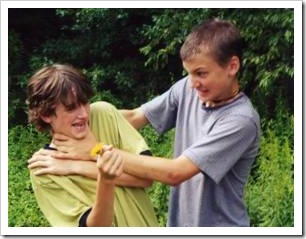 Not liking someone – It is very natural that people do not like everyone around them and, as unpleasant as it may be to know someone does not like you, verbal and non-verbal messages of “I don’t like you” are not acts of bullying.
 Expression of unpleasant thoughts or feelings regarding others – Again, communication requires at least two players. Although it may be unpleasant to hear what someone thinks about you, it is NOT a form of bullying but a very natural thing. In every communication, there are disagreements and some form of judgment about each other’s attitude and behavior. If someone says to you, “I think this was not a nice gesture” or “You insulted me when you said this”, this is NOT bullying but an expression of thoughts and feelings.
All the behaviors above are unpleasant and need to be addressed, but they are not to be treated as bullying. Many times, labeling a single act of aggression can turn it into bullying just by perceiving it that way.
Until next time, happy parenting,
Ronit
Bullying Post Series
- Bullying Facts and Myth
- Bullying Statistics are Scary
- What is NOT Bullying?
- Types of Bullying
- Why Do People Bully?
- Victims of Bullying
- Bullying Bystanders
- Home of the bully
- Home of the bully (2)
- Workplace Bullying
- Workplace Bullying (2)
- How to Help Bullying Victims
- How to Help Bullying Victims (2)
- How to Help Bullying Victims (3)
- How to Help Bullying Victims (4)
- How to Help Bullying Bystanders
- How to Help Bullying Bystanders (2)
- How to Stop Workplace Bullying
- How to Stop Workplace Bullying (2)
- How Workplace Bullying Bystanders Can Break the Cycle
- How Organizations Can Stop Bullying
- How Organizations Can Stop Bullying (2)
- Bully Parents
- How to Stop Parental Bullying
- How to Stop Parental Bullying (2)
- How to Stop Parental Bullying (3)
- How to Stop Parental Bullying (4)
- How to Stop Parental Bullying (5)
- How to Stop Parental Bullying (6)
- How to Stop Parental Bullying (7)
- How to Stop Parental Bullying (8)
- How to Stop Parental Bullying (9)
- How to Stop Parental Bullying (10)
- How to Stop Parental Bullying (11)
- How to Stop Bullying with Empathy: The Story of Two Apples