The concept of free choice has been examined since the dawn of time across all traditions and philosophies. At any moment of life, we are constantly choosing. We are choosing what to say, what to think, what to do, how to do it… It makes me wonder: do we truly have free choice?
The question here is not about choice but about freedom.
We always have a choice, but we don’t always have free choice. Even choosing not to choose is still a choice.
Ronit Baras
The concept of free choice has fascinated philosophers, psychologists, and spiritual traditions for thousands of years. The debate between free will and determinism has never been fully resolved.
The illusion of free choice
Even in the Bible, after Cain killed his brother Abel, God told him that he had the freedom to choose, but did he?
For centuries, you can see many books and movies focusing on the same dilemma.
Do we really have free choice, or are our decisions determined by forces we cannot see?
As a life coach, I teach people to choose every day. I can tell you that as a mother, I do exactly the same thing. My eldest is now 37 years old, and I have practiced teaching her to choose for many years.
I chose the slogan “Happiness is a Choice” for my Be Happy in Life coaching business many years ago because choosing is a big thing for me. I believe in all my heart that happiness is a choice but maybe it is not a free choice.
Sometimes people who read my slogan ask me:
“Does that mean you are always happy? Is happiness really a choice? Do we truly have free choice?”
Their questions are valid.
This becomes even more complicated when we talk about parenting. After all, we believe we are teaching our children to choose between right and wrong.
But…
If children succeed, we say they made good choices.
If they struggle, we say they made bad choices.
The truth is subtle. We have choices, but often they are influenced by pressure—internal and external—that limit our freedom.
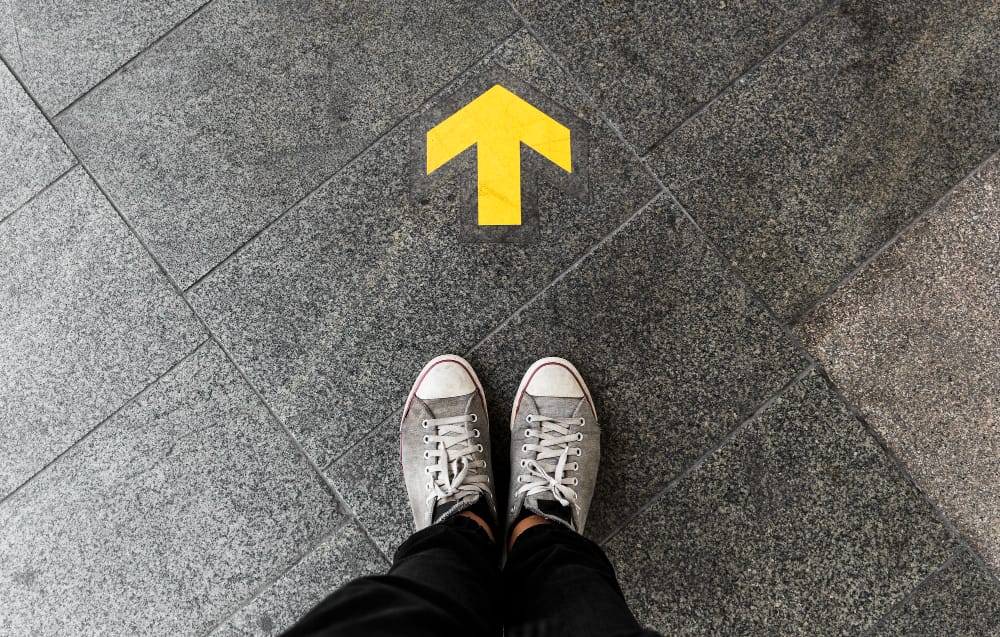
We Have Choices — But Not Always Free Choice
Every moment of our lives is made up of choices.
- What we say.
- What we do.
- How we react.
- How we spend our time.
But while we always have a choice, that does not necessarily mean we have free choice.
I realized something profound about choice many years ago.
My husband and my son went to Africa for a drumming camp for a month. It was the first time in many years that I had four weeks almost entirely to myself.
Excited about this opportunity, I made a list of 160 things I wanted to do.
I stayed awake until 5am reading books.
I sorted the kids’ photo albums.
I ate whatever I wanted.
Then, one week before they returned, I panicked.
I had not finished my list.
And suddenly, it hit me! Every time I chose one thing, I was automatically choosing not to do 159 other things.
Every time we choose something, we also choose everything we will not do.
Ronit Baras
When I chose to sort the photo albums, I was choosing not to exercise.
When I stayed up reading a book, I was choosing not to sleep.
Every second of our lives we are choosing something.
Even when we say we are not choosing, that itself is a choice.
So yes — we are constantly choosing.
But are we always choosing freely? Is it really a free choice?

No pressure!
I find “Free Choice” a nice slogan and nothing more. The freedom to choose only exists when there is no pressure. If there is any pressure, real, or just perceived associated with that choice, there is a choice there but not free choice.
If you need, read it again!
The thing with pressure is that some people can stand the pressure, and some can’t but none of them is free.
You never know if standing up to pressure is just an expression to surrendering to something else that has more pressure.
Going to study something you don’t like, just because there is a family pressure to study finance is no different than a social pressure to study at all. Any decision is not “clean” from pressure; therefore, no decision is free.
Why do teens struggle with choices
Teens struggle with such things on a daily basis. While as kids, they were subject mainly to pressure from parents, when they become teens, they are more aware of how much they are pressured by others.
Teens start rebelling when there are too many sources of pressure, and they contradict each other. This is the “Right of passage” they go through throughout teen years, figuring out what they do want, what is FREE within their mind and what does not belong to them.
Being teens is hard because they mostly realize there is so much pressure on them, they are not FREE at all (I wrote a book about it).
This is the reason it is easy to sell anything to teens. Teens feel they have no free choice so if you sell them “freedom,” they don’t notice they are pressured and they think they choose it “freely.”
Notice that most things sold to teens (and by the way the age is dropping significantly) tells them it is their choice, tells them they have the power to choose it, and it easily masks the pressure put on them. This is why it is hard to explain to children and teens early in the years, what “Peer pressure” is.
It is even harder to explain it when parents themselves don’t notice they are under internal, social, physical pressure. It is simple, you can’t teach awareness to something you have no awareness to.
No decision is truly free when pressures, expectations, or limitations shape it.
Ronit Baras
Pressure, pressure and more pressure
Our life is full of pressure. While in the past the pressure (stress) was survival: Jungle predators and the elements, now, everything is survival.
- What do our parents think or feel about it?
- What will happen to me if I …?
- Will they like me?
- Can I fulfill their expectations?
- Do I belong?
- Am I good enough?
And the list is huge. We all have pressures that strip us of our free will.

External pressures come from family, peers, society, or even marketing tactics.
For example, when choosing strawberry jam:
One option is cheap, another expensive.
Your decision may be influenced by money concerns, social image, or ethical beliefs.
But what happens when there are twelve different jams?
- organic jam
- sugar-free jam
- local jam
- imported jam
- jam with fruit pieces
- jam with blended fruit
- jam with artificial color
- jam with fancy packaging
Suddenly, your brain begins calculating values.
- Do I choose organic?
- Do I choose cheap?
- Do I support local businesses?
Every value creates pressure. Your brain tries to balance them all and suddenly, choosing a jar of jam becomes stressful.
This is the Paradox of Choice. Too many options combined with internal or external pressures can create anxiety and decision fatigue.
Awareness of the pressures that shape our choices is the first step toward reclaiming freedom.
Barry Schwartz, The Paradox of Choice

Internal pressure and free choice
Not all pressure is external.
Sometimes the strongest pressure lives inside our own minds.
Internal pressures come from beliefs, upbringing, and past experiences.
When I was sixteen, I went to a restaurant for the first time with my boyfriend (who is still my boyfriend today).
My family was very poor, and I felt uncomfortable ordering anything expensive. So, I always ordered chips or ice cream.
Years later, when I was financially comfortable, I noticed something interesting.
Even when money was no longer a problem, I still chose meals based on price.
The pressure from my childhood still lived in my mind.
Sometimes the pressure that shapes our choices comes from the past, even when the past is no longer real.”
Ronit Baras
Childhood and the Formation of Choice Patterns
Children learn early that their freedom is often limited by others’ expectations.
When my youngest daughter invited friends to a sleepover, one friend said: “If Sarah is invited to the sleep over, I’m not coming.”
That is pressure.
This created a dilemma for my daughter: to give up her choice to please someone else or assert herself. This was a choice she had to make because someone else created it.
In our house we used to say jokingly, “We do not negotiate with terrorists.”
But the real lesson was about protecting freedom of choice.
It was not easy for my daughter and I’m sure you had similar situations in your life when someone forced you to choose but there is no way around it.
Children must learn that they have the right to choose their friendships without being manipulated
These early experiences teach children about negotiation, compromise, and the limits of their freedom.
Being aware of how choices are influenced from an early age helps us understand our adult decision-making patterns.
Ronit Baras

Awareness Creates More Freedom
Although perfect free choice may not exist, awareness can bring us closer to it.
When we examine our decisions carefully, we can begin to recognize the forces influencing them.
A client of mine recently experienced this.
She realized she had spent years dressing according to what her family expected.
Her husband.
Her children.
Her mother.
One day she rented a bold golden dress she loved and wore it to a party. She was terrified. But she did it anyway. Many people complimented her. And for the first time, she felt something powerful.
Freedom.
Not perfect freedom — but more freedom than before.
Practical Exercises to Reclaim Free Choice
No one is inherently free from pressure. Even monks or individuals in structured environments experience constraints: hunger, loneliness, and rules shape their decisions.

The key is awareness: noticing the pressures that shape your decisions allows you to navigate them more consciously. This is as close to free choice as we can achieve in daily life.
Below are practical exercises to bring you closer to free will as possible.
- Daily awareness check: Notice every decision you make today. Which is influenced by pressure?
- Limit external pressure: Identify one situation where someone tries to limit your freedom and consciously assert your choice.
- Imagine no constraints: Ask, “If I could do anything, what would I do?” List three actions, then see which you can implement today.
- Reflect on past choices: Journal about a decision made under pressure and one made intentionally. How did each make you feel?
- Examine your childhood: Ask yourself: “Which decisions in my childhood felt pressured, and which felt truly mine?”
Every difficulty we conquer, we bring some ease to the system… to be able to conquer the next difficulty.
Ronit Baras
The Core Insight to free choice
Free choice is often more of an ideal than a reality.
Our decisions are shaped by:
- habits
- beliefs
- fears
- expectations
- social rules
Though we rarely have fully free choice, awareness can expand our freedom.
When we learn to notice why we are choosing something — whether it comes from internal motivation, values, and desire, or from external pressure, guilt, or fear of disapproval — we reclaim a piece of that freedom.
Awareness may not remove pressure, but it gives us space between pressure and our response.
Ronit Baras
In that space, we can begin making more intentional decisions.
Not perfectly free choices. But more conscious choices.
Cheers for your choices, even if they are not so free,
Ronit