Posts Tagged ‘Life Coaching’
Know Your Partner: Appearance, Work, Money and Health
Welcome to the third installment of “Know Your Partner”. In this series war are talking about questions you and your partner should discuss before you move in together, get married or have kids. These questions will help you find your partner’s “musts”. To read more about “musts”, check out Know Your Partner: Musts. In the last post in the series, we listed questions about relationships, every day life, family background and friends. This post covers questions about appearance, work, money and health.
Know Your Partner: Questions to Ask
Last week, we talked about how every person has “musts”, things they absolutely cannot live without. It is important for each person in a couple to know their partner’s “musts” before they decide to move in together, to get married or to have kids. This week, I thought I would give you a list of questions to help you along your journey. This list includes questions about relationships, everyday life, family background and friends.
This list is very important to use in different relationship situations:
Before moving in with someone.
Before marriage.
Before deciding to have kids.
On anniversaries – in order to update each other about the ways we have changed.
When experiencing relationship conflict.
Before making the decision to break up a partnership.
There are a few rules to remember when asking these questions. This will make the question and answer process more effective and successful:
Know Your Partner: Musts
Any relationship is a form of agreement between two or more people. The deeper the relationship, the more things you will need to agree on for your relationship to stay positive. Some relationships, like marriage and having children together, are more important than others. They have a huge impact on our lives and our futures. I call them love agreements.
Love agreements will change over time. Just how they change will depend on the circumstances. Each person changes within themselves and their agreements with each other change accordingly. For couples, it is very important for each side to make sure they are “sailing in the same direction”. While each of them may change in different ways, together, they want to be going the same way. If one wants to sail north and the other’s greatest desire is to sail south, then their relationship will suffer. One or both of them will have to compromise.
When we talk about relationships, the word compromise pops up as a desired outcome. I think compromise is important, but I also believe that some compromises cannot last for very long. They are often the source of conflict and can cause much heartache.
Inspiration for Success: The Climb
Some goals are very hard to reach. That is why climbing is often used as an inspirational metaphor. Imagine yourself wanting to reach the top of a very high mountain. You know that it is going to be hard and maybe even long. You can prepare yourself for some of the paths you will need to take to reach the top of the mountain, but for others, you can’t.
In life coaching, we say that we can only work on the things we can prepare for. Why? Because “we do not know what we do not know” so we cannot prepare for it. We are not fortune tellers. Often we are able to think of a few challenges we might encounter on the road to wherever we are going, but we never know exactly what we will face. We cannot carry absolutely everything we might need for any possible unforeseen event.
Every mountain requires a climb. Sometimes the hill is steep and sometimes it is moderate. Some people have smaller legs and they need more steps, while others have giant legs and require less energy. Sometimes, you are physically strong, have lots of muscles and can run up the hill. Sometimes, you are a bit weaker and must rest every 2 meters. Regardless of your circumstances, climbing requires effort. The thing that determines if we make it to the top is whether we believe we can. Because as the saying goes, “if you believe you can or believe you can’t, you are right”.
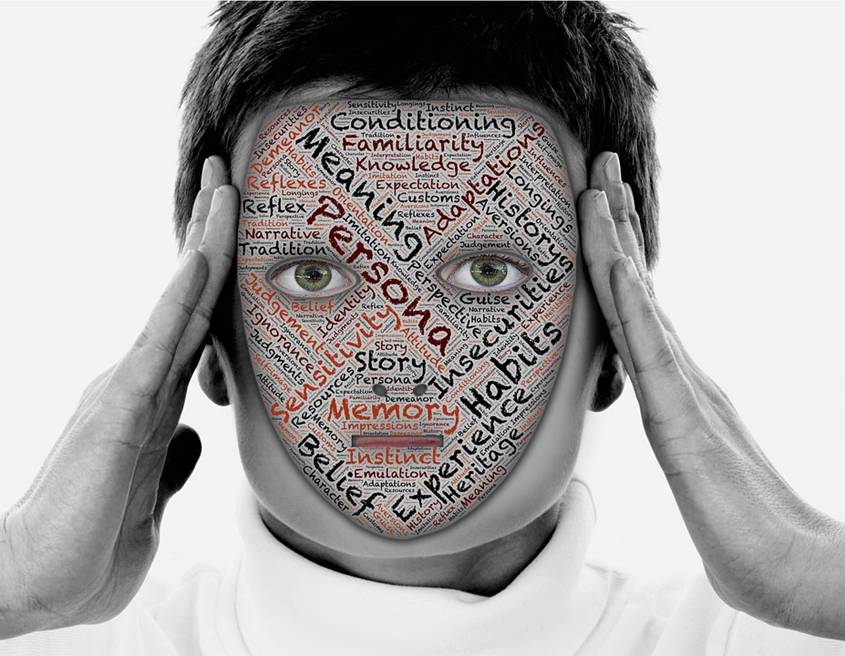
Be Yourself: Who Am I?
When my clients come to the Be Happy in LIFE program and I ask them, “What do you want?” they are confused by my question. They could easily tell what everyone else wants. Their wife, husband, mother, father, boss, children. But they do not really know what they want. Often times, all they want is for something someone else wants to stop. I tell my clients that when you don’t have a definition of who you are, it is easy for people to offer their definitions, regardless of whether they suit your or not. If you are confident in who you are, your self-concept will not change because of something someone says to you. For example, if a friend comes up to you and says, “You are not a good friend because you didn’t come to my wedding”, you might think to yourself that you did not come to the wedding because you were being a good son and your mum was in hospital. Your definition of yourself as a good friend would remain, despite your friends feeling. Conversely, if you do not have a good definition of yourself, you will probably accept it as “fact” that you are just not a very good friend, because your friend said so.
Every person has an image of perfection that they wish to achieve. It is an image of the perfect person, someone who is all knowing, smart, healthy, wealthy, loving and successful. There is no other person on earth who is exactly like you and has managed to find the perfect balance of all those things we want in life. Despite knowing this, we create an image of the perfect person by picking and choosing attributes form different people. Our perfect person is the miss universe beauty queen, who is a perfect mother, a great chef, a celebrity, with a PHD in something brainy, with bucket loads of money like the Queen of England and the spirit and dedication of Mother Teresa. Although I think it is good to be inspired by others, when we lose ourselves in the quest for this perfection, we chase our tails endlessly and never reach our final goal.
Be Yourself: Everyone Else is Taken
We all go through a journey to define ourselves and develop our self-identity. Be the person you want to be instead of the person others want you to be.
During a very tough time in my life, I started a search to find out who I was and define my “self”. Much like everyone else, I grew up in a society in which the “self” was a very vague concept that kids never considered. I was 16. I went through a bit of crisis when I discovered that I did not know who “I” was. I needed to find and define “me”, to make the choice to be myself.
The second step of my journey was during the first year of my degree. I was studying psychology with one of the most incredible teachers I have ever met when I realized that self-concept, regardless of when you start defining, is something we all have to figure out. In our very first lesson, the teacher walked into a room full of students and asked, “Who are you?”. It sounded like such a simple questions, but we struggled, big time!
How to Raise Gifted Children: With Art
For most of us, gifted children and creativity go hand in hand. Not all gifted children are creative. A child can be very gifted at memorizing things which requires no creativity. Yet all creative kids are gifted because creativity opens the kids’ minds to lots of opportunities.
I think parenting requires creativity. Not all parents master parenting. Some parents are not very creative in their philosophy and actions. But that does not mean they cannot develop that creativity, that drive and flexibility to search for, and find that switch in their kid’s brain.
In my last “Gifted Children” post, I shared an assignment our 11 year old daughter, Noff, had to do for school. Mr. Martin was very impressed with her work and showed it to all the teachers and even the principal. In a way, he turned on Noff’s switch. She was so “switched on” that she would get up early in the morning to work on her assignment.
The Art of Letting Go: Resistance to Change
As I wrote before in the letting go series, attachments bring us comfort and stability, but once we make an attachment part of our identity, change becomes an enemy. Do not get me wrong, attachment is important. It is when we panic, see change as a threat and go into “fight or flight” mode (subconsciously) that things get out of control.
Some people are very terrified of change. They can manage the devil they know and although they complain about it, they do not have the skills, courage and strength to do anything different.
Fear of change creates many conflicts in relationships, even when we talk about our relationship with ourselves. It is always a conflict between one side’s attachment and the other side’s comfort zone. Whether you are on the side that wants the other to change or you are the one being asked to change, you have an attachment. The person who wants the other to change is attached to an outcome in their mind and the person who is being asked to change is attached to what they are currently doing, thinking or feeling. The desire to change someone else in this format creates a lose-lose situation. Fear of change limits movement and the desire to change limits peace of mind.
The Art of Letting Go: Negative Self-Talk
People think in words. Every thought, feeling and idea we have, we give it a name. Naming (or labeling) is a very easy way to experience the world. Think of the color pallet. If you work with computers, you know that when choosing a color, it is not good enough to say “red”, because there are many shades of red, but in our life as humans and not computers, whenever we talk about scarlet, burgundy, ruby, magenta, maroon, coral or rose, we simply say “red”. Life is so much easier that way.
Words can be empowering or limiting. They can be our protectors, our guardian angels, or our demons, our tormentors. People who value words very much and find their power may wonder, “How can words be limiting?”
I think they are limiting for two reasons: they cannot describe the whole range of human experiences they make it difficult to recognize change.
When making a choice about letting go of some of our habits, letting go of the power we give words is highly important and can provide a lot of comfort and peace of mind. Think about it this way: using words to describe an experience is like trying to fit a giant into a space large enough for a grain of sand.
One of the ways in which words can limit us is negative self-talk.
How to Make Happy Choices
Every person wants to have a crystal ball to predict the future. I know I do. You have to be a complete Buddhist with a different definition of time in order to see life as a single point in time that the only guarantee is that it exists in experiencing the “now”.
Although everyone would like to see a piece of the future in order to give them strength in the present, the difference between people is how much energy they spend in order to be able to predict the future. Most people would like to be able to tell the future, at least a bit, but some people are tortured by the desire to control the future by analyzing the past in order to improve the prediction of the future. I call them “the fortunetellers”.
In coaching, I meet some fortunetellers. I meet amazing people who are tortured by anxiety and are very unhappy. These people struggle with their decision making and find it hard to make decisions. If the average person takes an hour to make a decision, they need 5-10 hours to make the same decision. So they are pretty much time wasters and, being very smart people, they know time is precious, but they constantly feel they do not have enough time. In worse cases, when making a decision, they repeatedly second-guess themselves with “Was this the right/best choice? What if I checked another school/product? Did I check the back label?” Or they keep searching for the product they already bought, just to make sure they have made a good choice.
| Book your private life coaching with Ronit Baras and learn how to be happy in life |