Happy parents raise happy kids

Posts Tagged ‘anorexia’

Anorexia: Healing through Creativity

Gentle woman

Creativity and self-expression are wonderful ways to recover from an eating disorder. Not eating and overeating are ways to control your life. Creativity happens when there is full control and can even be a form of meditation.

When I was young, I had many throat infections. My mom’s solution was always to take me to the doctor and give me antibiotics. This was a major part of my life for about 10 years. I took antibiotics about 6 months every year as a kid. It freaks me out to think about it now. When I grew up and learned more about the connection between physical problems and emotional states, I discovered that my throat infections could have been a result of being unable to express myself. Funnily enough, when I started writing at the age of 14, they disappeared.

I also learned that self-expression can be a cure, so since then, whenever my throat starts playing up and I have that familiar dry tingle threatening to flare, I sing! I turn the music on at full volume, or do it in the car, and sing! It does magic. One day and the infection is gone.

Using art for self-expression is a wonderful way to regain control over your life. You are on your own, creating what is in your mind. No criticism, no expected outcomes, just you and your creative flow, so you can feel how your body obeys your commands.

In any creative form, there is a sense of freedom that anorexic people desperately need. They have the freedom to try new things, the freedom to make mistakes, the freedom to express themselves, the freedom from rules and boundaries – basically, the freedom to be themselves.

Also, immersing ourselves in creative art can work as a great distraction from thinking about the emotional challenges that take over otherwise. Anorexic people continually think about their “distorted body”, about food and about their problems. Keeping busy and doing something creative is like putting a sign on the door saying “time out” from thinking and hopefully those thoughts will never come back.

People are different and find different forms of self-expression, but all of them are wonderful and can help in healing and recovering from anorexia or other eating disorders.

This post is part 7 of 7 in the series Anorexia

Anorexia: Love Your Body

Hands making a heart on belly

Women with Anorexia have issues with their body image and a feeling of helplessness and inability to control their life. The combination of these challenges makes them seek control in any way and not eating seems to them a great way to gain control.

Society around us obviously contributes a lot to the negative body image and self image girls have during childhood, through their teenage years and later on into adulthood. The image of an anorexic teen girl can be misleading. There are also many women are anorexic who need help.

One way of healing is learning to love your body.

Loving your body is giving yourself the permission to feel good physically and it must be done slowly, with love and with patience. If you are a parent or someone who wants to help an anorexic person, just saying, “You need to love your body”, will not make the required difference.

The best idea is to help the anorexic person search for good things – positive thoughts, encouragements, small bits of progress and every little achievement – to help change their perception of their life’s reality.

This post is part 6 of 7 in the series Anorexia

Anorexia: How to stop worrying

Anorexic girl seeing chubby girl in the mirror

Anorexia is a very debilitating disease. While it looks like there is a physical problem, the real problem is the one we cannot see with our eyes but the one we can see with our heart. As hard as it is to accept, choosing not to eat is a way to deal with difficult emotions.

Most eating disorders are the same. Eating (too much) or not eating (at all) is the solution to worry, to fear, to shame, to confusion, to failure and to guilt, and gradually, the simplest strategy seems to be to shut down the desire for food.

I do not know if you have ever fasted for fun, for health or for weight loss. There is a point when you no longer feel hungry at all. I think it is important for people to feel this point to understand that we can eat or not eat at will. To survive, we really do not need much food, so someone who chooses not to eat, really does not feel hungry, but still has those emotions that he or she tries to keep away. If you want to help a person who has anorexia, remember that focusing on the food is (again) working on the symptom and not the problem.

The best solution to anorexia is increasing the emotional intelligence. The first step is to recognize the feelings and the second step is to manage the feelings.

Today, I will focus on tips to mange worrying.

This post is part 5 of 7 in the series Anorexia

Anorexia: Exaggerated Perception

Magnifying glass

People with eating disorders like anorexia often have an exaggerated perception of life. It is as if they see the world through huge magnifying glasses and things that seem minor to others seem huge and overwhelming to them.

If you have anorexia or any other eating disorder, or if you have a child that has it and you want to help, it is important to focus on the thoughts and the mindset and not on the food. Not eating is not the problem. It is the solution that people with a distorted perception find for their problems.

Avoid trying to convince them to eat. It only makes things worse. Anorexic people need control, not a nagger.

Avoid punishing a child who has anorexia. It only increases their helplessness and their desire to control something (ANYTHING) in their life, like what they eat, when they eat and how much they eat.

Generally, anorexic people have a very bad self-image, considering self as useless, not worthy, a failure, stupid, an idiot, etc, and they use every little thing that happens in their life to reinforce it. They use their glasses to look for proof they are worthless and they do not consider single events as temporary or coincidental, but as part of their identity.

Here is a list of thoughts that make big things out of small things and demonstrates the effect of the huge magnifying glasses anorexic people wear. Each one you get rid of will reduce the magnifying effect.

This post is part 4 of 7 in the series Anorexia

Anorexia: Warning Signs

Anorexic image of Lindsay Lohan

One of the things every parent will tell you when his/her daughter is diagnosed with Anorexia or any other eating disorder is that they could not see it coming. I am sure they mean it. Parents do not want to believe their child is having a problem, including me. It is mainly because most of us think that it says something about us. Maybe it says we have failed and we are not good parents. The problem with this fear is that it clutters our thinking and makes us blind to the warning signs of anorexia.

Be brave! Keep reading and look carefully at every photo, even though they are scary.

Having a child with Anorexia or any other eating disorder requires strong, brave parents who manage to help their child despite what others might say about them. The problem with Anorexia is that everyone can see it. Most kids do not do a very good job hiding it.

A couple of years ago, I worked with an anorexic woman who was 40 years old and weighed about 25kg (55lbs). Trust me, that was scary! It is not something you can hide very well. When I was in hospital with her, in the mental ward, there were other girls there and not all of them were teens. They looked like skeletons! But it is much harder to notice anorexia when it is developing and people often say, “She’s just a bit skinny, that’s all. She’ll get over it”.

This post is part 3 of 7 in the series Anorexia

Anorexia: Model Parenting

Thin young model

We happened to watch a TV piece on top models’ body image, eating habits and self-inflicted damages.

Top model Jessica Gomes (24) said the pressure on models to be slim was enormous and that models are afraid to miss out on work opportunities in the highly competitive fashion industry, so they use some excessive methods to keep themselves trim. She said models run for days on a mix of lemon juice and maple syrup, which also “cleanses”. To keep their energy up and be able to work, they drink coffee and use Cocaine.

The article mentioned Ana Carolina Reston (see her in the pictures), a famous Brazilian model who died from Anorexia at the age of 21, weighing 40kg (88lbs). Her mother told the press Ana had eaten nothing but apples and tomatoes for 2 months before she died.

Although the article did a very good job showing models who decided to eat normally and still got excellent jobs, Ronit and I were left with a very painful question:

Where are those top models’ parents?

This post is part 2 of 7 in the series Anorexia

Stories: Fact or Fiction?

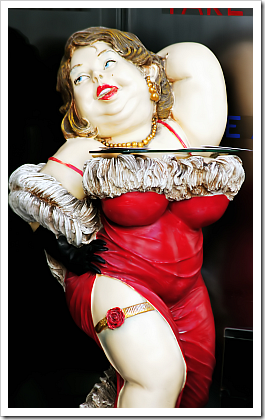
Fat woman figure

As an author, people ask me about the origin of my stories. Almost every person who has read my stories has asked, “Are they real?” Maybe this is a good opportunity for me to write how I came up with them, because some of the stories are so real it was painful. All my characters are based on real people whose personalities I borrowed without their knowledge, but some parts of the stories are twists I created to convey a message.

My kids don’t eat the food I make. What should I do?

Kids’ eating habits are very important for parents and it is very frustrating to prepare food and find out your kids do not like it.

If you look at this issue from an emotional point of view, it has to do with control. Your kids are exercising control over what and when they eat, while you try to keep that control. Once you look at it this way, though, the solution is simple.

Anorexia: Dying to Be Thin!

Anorexic model

I recently spent some time coaching a woman suffering from Anorexia Nervosa. She weighed 32kg and would not eat to save her life!

A study in high schools in Canada found that 50% of girls were on a diet because they thought they were overweight. If your daughter is young and you think, “I’ll deal with it when she is a teen”, think again. Records show that eating disorders are increasingly seen in children as young as 10. A research in Canada in 2002 found 37% of Canadian females aged 11, 42% aged 13 and 48% aged 15 say they need to lose weight. By the way, 52% of them started dieting before the age of 14.

What can we do about it? I think we can do a lot.

This post is part 1 of 7 in the series Anorexia

Ronit Baras

Be Happy in LIFE logo    Book your private life coaching with Ronit Baras and learn how to be happy in life
Keep up to date

RSS icon

Facebook

Enter your email address:

Delivered by FeedBurner