Mistakes only make us stronger
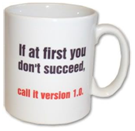 If you are familiar with my writing in over 500 posts already, you know I do not use the word “mistake” often, because I think it has a negative connotation for most people. Personally, I do not think we make mistakes. We do the best we can and only think of our actions as mistakes when we realize they did not get us the results we expected.
We always do the best we can, because as humans, we do not have the capacity to do anything else. Can you imagine yourself looking around for options and saying to yourself, “This is the most horrible option I have, so let me choose it”?
I did not think so!
Before you continue with this activity, remember it is not meant for you to find out ways to beat yourself up for things you have done wrong. Kicking yourself hurts and it is not very productive. You can do much better feeling good about yourself.
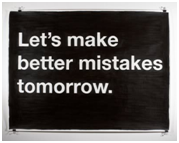 To succeed with this list, remember that you are judging yourself with a different perspective. When looking at the past now, you have knowledge you did not have back then. You know now how things turned out and you can put tags on them. You can say which was a good choice and which was not so good (I am sure you may even say some were bad choices).
If you say things like, “I should have known”, “I regret this”, “I could have done it differently”, “I should have said something else”, “I didn’t think properly” or any other variation of judging yourself harshly, you had better let go of this activity and explore other chapters of the Make a List series first.
It is neither good nor bad, but thinking makes it so
– William Shakespeare (Hamlet)
Please make sure:
- These things happened to you (not to your wife, your husband, your mother, etc). Distinguish between what happened to others and what happened to you as a result of it.
- You did something or did nothing, but it effected the situation (this can be not defending someone who got hurt, not expressing your real feelings, not intervening, not taking things seriously, etc).
- Now that it happened, armed with the knowledge of how it turned out, your think the outcome was not in your favor.
How to list mistakes and make the most of them
 Mistakes are not as bad when you take learning from them, therefore the first part of this activity is to find mistakes and the second is to find learning. If you are not getting to the learning, this activity may frustrate you rather than give you hope. Focus on opportunities for personal growth.
- Keep asking the same question “Now that I know something I could not predict before, what will I do differently next time?” and be happy that next time will be easier, because you already know something you did not know before and you better prepared.
- Start with old stuff first, because you are now far away from it in time and space and may be less involved emotionally. Also, the change in perspective is bigger and can help you release some old thoughts that no longer serve you. Go down memory lane to your childhood and try to remember things that did not turn out in your favor. Go from there to school, high school, family gatherings and so on.
- Regrets are a wonderful way of finding mistakes. Usually, when we regret something, it means there is some important work we must do on forgiving ourselves, so list your regrets.
- Situations when you think you should have stood up for yourself or someone else are a good source of mistakes for your list.
- Was it something that I did/did not do, or was it out of my control? It is important to understand that having a car accident while driving safely and being hit by someone else who was drinking and driving may mean you were involved in the accident, but you had no control over what happened. Learn to let those events go. They are not mistakes, because there was nothing you could do differently. Many people experience grief this way. They keep saying to themselves, “I should have, would have, could have”, but in fact, when someone else dies and you had no direct impact on their death, it is too late and it is not a mistake on your part. Let it go!
- When you find things others have highlighted to you as mistakes, be careful. Your actions may not have resulted in a good outcome for THEM, but this is YOUR list. Ask yourself, “Do I agree this was a mistake?” and “What can I learn from the fact that someone else thinks it was a mistake?”
 When you examine situations in life that did not turn out the way you wanted, ask yourself, “What was the REAL mistake?” What was it I did/did not do that would have made it all turn out differently? Roll the event backwards and find the point at which a thought, an emotion or an action started making things fall apart. Was it a misunderstanding? Was it an overwhelming feeling? Was it an accident? What triggered the chain of events that led to the undesirable results?
- When you write about something you see as a mistake, ask yourself, “Was it really that bad?” Sometimes, we remember having bad feelings, but when taking space and time to reflect, we realize they were not as bad. I sometimes say to myself, “Let me get back to it in a week” or “Let me sleep on it”. When we are emotional and feel we have done something wrong, we are more judgmental than when we look back at things. You may find the real mistake was to carry a negative impression of the event in your mind all this time.
- The best tip I can give you that is the essence of NLP (Neurolinguistic Programming) is to go over all your mistakes and ask, “What good has come out of this?” I believe this is the most important trick in every healing and recovering – finding good in any perceived bad. I have been suggesting this technique to countless people for many years. Some of them get very upset with me and tell me, “Ronit, how can you ask me to do this? It was cruel to go through something bad. Why would I want to cheat myself into thinking something good has come out of it?” I tell them that if I can say that something good has come out of losing my two babies, they can get there too. Can you imagine me asking myself “What good has come out of the death of my two kids?” Well, I have done it and it has made the whole difference between dragging myself down to a life of agony and finding happiness. Ask yourself, “How has this bad thing helped me become better, stronger, wiser, kinder, more successful or happier?” and I believe in “Ask and you shall receive!”
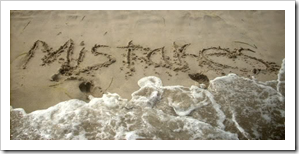 Mistakes are not as bad when you take learning from them, therefore the first part of this activity is to find mistakes and the second is to find learning. If you are not getting to the learning, this activity may frustrate you rather than give you hope. Focus on opportunities for personal growth.
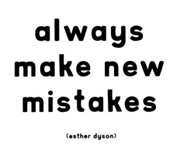 When you examine situations in life that did not turn out the way you wanted, ask yourself, “What was the REAL mistake?” What was it I did/did not do that would have made it all turn out differently? Roll the event backwards and find the point at which a thought, an emotion or an action started making things fall apart. Was it a misunderstanding? Was it an overwhelming feeling? Was it an accident? What triggered the chain of events that led to the undesirable results?
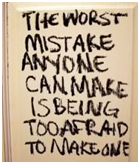 This is a tricky list, because you come up with 100 unpleasant events that NOW you think did not work in your favor, but attached to it you need to find about 200 to 300 learnings about yourself – new understanding, new knowledge and new hopes for the future.
Have a happy and productive list making time (and if you have read last week’s post about productivity, you know what that means).
Join me next week for making the list of “100 expectations I have”.
Happy learning,
Ronit
This post is part of the series Make a List:
- Make a list: List Making
- Make a list: About Myself
- Make a list: Friends and Friendships
- 100 Things I Want to Be, Do and Have in My Lifetime
- 100 Things that Make Me Happy
- Make a list: Childhood Memories
- How to Clean Away Resentment and Be Happy
- 100 Ways to Say “I Love You!”
- Make a list: What I like about me
- Make a list: Birthday Presents to Ask for
- Make a list: Improve My Life
- Make a list: Things to tell my parents
- Make a list: Beliefs about Money
- 100 Feelings I Want to Feel (and how to feel them)
- Make a list: If I Could Live Forever
- Make a list: Beliefs about Kids
- Make a list: Beliefs about Kids cont.
- Make a list: Events that Have Shaped Your Life
- Make a list: Ways to be kind
- Make a list: Be More Productive
- Make a list: Mistakes (and what I can learn from them)
- Make a list: Expectations
- Make a list: Beliefs about Traveling
- Make a list: Rules I Follow
- Make a list: Good Parenting Qualities
- Make a list: Excuses
- Make a list: Quotes to live by
- Make a list: How to use my time better
- If I Were Santa Claus
- What I Would Do If I Had One Year to Live
- 100 Things that Make Me Happy
- Make a list: Movies I loved
- Make a List: My Fears
- Make a List: Find your Happy-ism
- Make a List: Inspiring People
- Make a List: Books that have changed my life
- Make a list: Inspiring Movies
- Things to Be Grateful for
- Make a List: Ronit’s Gratitude Examples List
- Make a list: Life Lessons Learned
- Make a List: Self-Kindness
- Make a List: 100 Ways to Be Kind to Myself
- 100 Things I Want People to Think of Me
- Make a List: Judgment of Right from Wrong
- Make a List: 100 Reasons to Be Wealthy
- 100 Great Insights I Got from the Coronavirus
- How to Make Every Relationship You Want Good
- If I Only Knew: How to Learn from the Past